Study of 11,000 infected adults during the Delta wave in Israel sees vaccine’s protection disappearing at six months and restored by third dose.
An Israeli study has found that the two-dose Pfizer/BioNTech vaccine against Covid-19 is initially effective in reducing the viral load of breakthrough infections — even with the Delta variant of the SARS-CoV-2 coronavirus.
The lower the viral load, the lower the chance of transmitting the virus and developing symptoms.
But after analyzing viral loads of over 11,000 infected adults during the summer Delta-dominant wave in Israel, the researchers saw the vaccine’s protection starts declining two months after the second dose and disappears by about six months.
“Encouragingly, we find that this diminishing vaccine effectiveness on breakthrough infection viral loads is restored following the booster vaccine,” the researchers write.
In fact, the third vaccination caused a more than four-fold reduction in viral loads.
The study results, posted September 1 on the medRxiv website prior to peer review, was carried out by a multidisciplinary team of researchers from the Technion-Israel Institute of Technology, Tel Aviv University and Maccabi Health Services.
The findings seem to support Israel’s unprecedented decision, in July, to begin offering booster shots to citizens at least five months past their second vaccine dose.
As of now, more than 3 million Israelis have gotten that third shot. A recent Israeli study in the New England Journal of Medicine confirms the effectiveness of the booster at preventing both infection and severe illness.
How long the booster’s protection remains effective is a question that can be answered only by further research.
The study was supported by a grant from the Israel Science Foundation as part of the KillCorona-Curbing Coronavirus Research Program.
The study, which has yet to be peer-reviewed, analyzed samples from 11,000 people infected with the COVID delta variant in Israel and found booster shots reduced viral loads by a factor of four
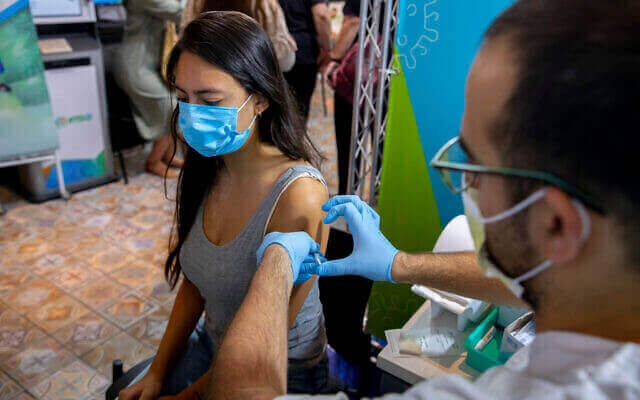
A vaccination center in Jerusalem, last monthCredit: Emil Salman
A booster shot of Pfizer’s coronavirus vaccine significantly reduces viral load in patients infected with the delta variant, and therefore reduces the chances of transmission, a new Israeli study has found.
The study was conducted jointly by the Technion – Israel Institute of Technology and KSM – the Maccabi Research and Innovation Center. It was published on the MedRxiv website, which is for papers that haven’t yet been published in a scientific journal.
The researchers concluded that about six months after someone receives the second dose of the vaccine, its effectiveness at reducing viral load dissipates. But a third dose slashes viral loads by a factor of four, thereby restoring the vaccine’s effectiveness to what it was shortly after the second dose was administered.
The researchers analyzed 11,000 PCR swab tests conducted by the Maccabi health maintenance organization on patients who had been infected with the delta variant. These patients were divided into three groups – people who were never vaccinated, people who were infected within six months of getting the second dose and people who were infected after getting the booster shot.
“What we discovered is that the vaccine’s effectiveness with respect to viral load gradually wanes over time, until after six months, [viral load] reaches a high level, similar to that of an unvaccinated person,” said Matan Levine-Tiefenbrun, a doctoral student at Tel Aviv University who is also affiliated with the Technion and was the lead researcher. “Nevertheless, we discovered that the booster shot brings the viral load back down by a factor of four, to what it was before.”
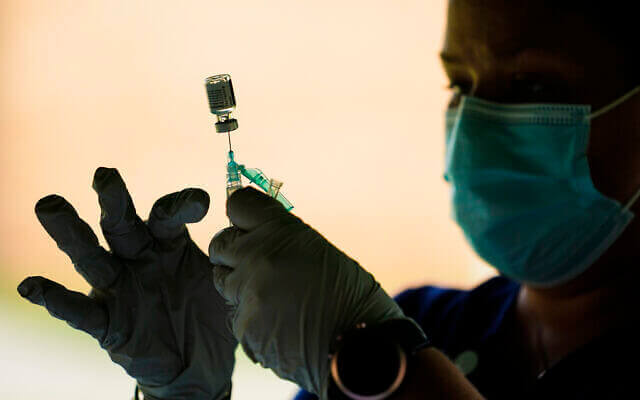
A medical worker prepares a coronavirus vaccine dose in Jerusalem, last month.Credit: Ohad Zwigenberg
The PCR test enables researchers to assess the size of the viral load based on how many times sequences of the virus’ DNA needed to be replicated to produce a result. The greater the number of replications required, the lower the initial viral load was. Analyzing large numbers of such tests enables researchers to identify broad trends – in this case, the relationship between and how long it has been since the patient’s last vaccine dose.
Viral load is a significant factor in both the likelihood of developing symptomatic illness and the likelihood of transmission, since someone who is coughing and sneezing will spread the virus more than an asymptomatic patient would.
The study found that people infected less than two months after their second dose had lower viral loads than unvaccinated people. Consequently, they also had milder symptoms and were less infectious.
But after those first two months, the researchers said, immune protection gradually begins waning and viral loads rise. This process peaks after about six months.
Aside from Levine-Tiefenbrun, the other researchers were Prof. Roy Kishony and Dr. Idan Yellin, both of the Techion, and a group of researchers from KSM led by Dr. Tal Patalon.
In March, this same group published an article in the journal Nature Medicine showing that Pfizer’s coronavirus vaccine starts significantly reducing viral load as early as 12 days after the first dose. But that study involved the alpha variant, also known as the U.K. variant, rather than delta.
“We’re seeing that the vaccines are also effective in the fourth wave, against the delta variant,” Kishony said. “The effectiveness seems very similar to what it was against the British variant after receipt of the first two doses.”
However, he added, the results of the earlier study can’t be compared directly to the results of the new study, “because the British variant has been pushed aside and disappeared.”
The new study bolsters the data from another Israeli study, this one peer-reviewed, that was published last week in the New England Journal of Medicine, and which FDA experts made use of in discussing whether to recommend booster shots in the United States. That study found that the vaccine’s effectiveness in preventing transmission declines significantly after six months, but even then, vaccinated people are roughly 50 percent less likely to infect others than unvaccinated people.
After the booster, however, Pfizer’s vaccine is 95 percent effective in preventing transmission, that study said.
The risk of severe disease dropped by factor of almost 20 in people over 60—but some dispute the benefits of offering an additional dose
Older Israelis who have received a third dose of a COVID-19 vaccine are much less likely to test positive for SARS-CoV-2 or to develop severe COVID-19 than are those who have had only two jabs, according to a highly anticipated study published on 15 September.
The standard regimen for messenger RNA-based COVID-19 vaccines is two doses, but some governments, including Israel’s, have started administering third ‘booster’ shots. The latest study evaluated 1.1 million Israelis over the age of 60 who had received their first two doses at least five months earlier. Twelve or more days after receiving a third jab, participants were about 19.5 times less likely to have severe COVID-19 than were people in the same age group who had received only two jabs and were studied during a similar time period.
“It’s a very strong result,” says Susan Ellenberg, a biostatistician at the University of Pennsylvania in Philadelphia, who adds that the data might be the most robust she has seen in favour of boosters. But potential biases in the data leave some scientists unconvinced that boosters are necessary for all populations—and the data do not dispel concerns about vaccine equity when billions of people are still waiting for their first jab.
Israel, which got an early start on vaccinating its population, began offering third doses of the Pfizer–BioNTech vaccine in July, to people aged 60 and over. The latest analysis links the third jab not only with a significant reduction in severe COVID-19, but also with an 11.3-fold reduction in SARS-CoV-2 infections.
But Ellie Murray, an epidemiologist at Boston University in Massachusetts, cautions that observational studies such as this analysis can contain biases that are difficult to identify and account for. For example, people who sign up to get a booster might have a different risk of COVID-19, or behave differently, from people who do not get a third jab.
Ellenberg says that the authors try to address some of these potential biases. Even if not all biases have been eliminated, she says, the magnitude of the effect suggests that the booster offers some protection, at least in the short term. The authors of the study could not be reached before publication.
GLOBAL RAMIFICATIONS
The findings come as a slew of wealthier nations consider offering booster shots. An advisory committee of the US Food and Drug Administration (FDA) will discuss Pfizer’s application to supply boosters in the United States on 17 September. One of the authors of the Israeli study is slated to present data to the committee.
Murray argues that the potential biases in the data, and insufficient evidence for waning immunity after vaccination, mean that the latest findings don’t indicate a “strong need” for boosters. “From a public-health perspective, it’s way, way more impactful to get more people vaccinated than it is to boost the vaccine effectiveness by a few percentage points in those who have already gotten the vaccine,” she says.
Murray is not alone in finding the Israeli results insufficient to justify boosters. A review published on 13 September by a team that includes two high-ranking FDA scientists cites a preprint of the study and notes that the short-term protective effect documented in Israel “would not necessarily imply worthwhile long-term benefit”.
Dvir Aran, a biomedical data scientist at Technion—Israel Institute of Technology in Haifa, says that Israel has deployed boosters to stop transmission in younger people and to prevent severe disease and deaths in older people.
“Is it the best way? Whether a two-week lockdown would have given a similar result, I can’t answer that question,” he says. “But it’s an interesting approach, trying to stop an outbreak like this with vaccinations.”
Study: COVID booster recipients 20 times more protected against serious illness
As US officials set to mull okaying Pfizer’s 3rd dose, data from a million Israelis shows it boosts protection from infection tenfold compared with eligible people who got 2 shots
A syringe is prepared with the Pfizer COVID-19 vaccine at a clinic at the Reading Area Community College in Reading, Pennsylvania, September 14, 2021. (AP/ Matt Rourke)
A new study conducted in Israel shows that individuals given a third COVID-19 vaccine dose are nearly twenty times more protected against serious illness and more than ten times more protected against infection, compared with those who received their second dose at least five months previously.
The research, published on Wednesday by The New England Journal of Medicine, showed that 12 days after receiving a booster shot of a Pfizer-BioNTech COVID-19 vaccine, the chance of infection was 11.3 times less than among those eligible for a third shot but didn’t get one.
And the chance of suffering serious illness as a result of COVID-19 among those who had received a booster shot was 19.5 times less, the research said.
The study was conducted by researchers from the Weizmann Institute of Science, the Ministry of Health, the Technion, the Hebrew University, Sheba Medical Center, and the KI Institute.
Even with a more conservative analysis, which attempted to control possible behavioral differences between the two groups, the infection rate was at least 5 times lower in the group that had received the booster shot, the Health Ministry said in a statement.
The research includes data from more than 1 million Israelis. Among those who hadn’t received a booster shot despite being eligible, there were 4,439 confirmed infections, including 294 serious patients. Among those who received the booster at least 12 days previously, there were 934 infections including 29 serious cases.
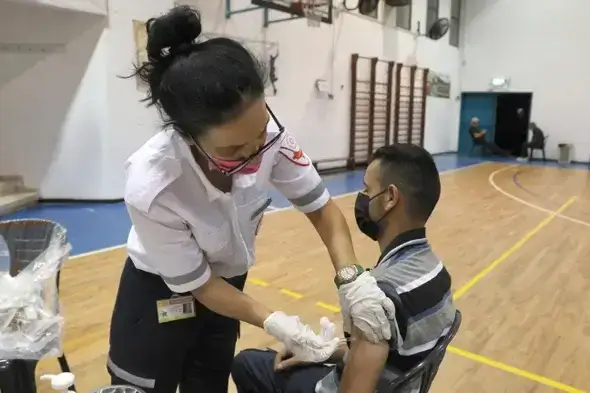
An Israeli woman receives a third dose of the COVID-19 vaccine at a Clalit clinic on September 1, 2021 in Jerusalem. (Olivier Fitoussi/Flash90)
The Israeli data could not say how long the boosted protection lasts.
But a separate study conducted at Sheba Medical Center in Ramat Gan, outside Tel Aviv, has stoked optimism as to the amount of time for which the booster shot retains its protection.
The study found that the antibody levels a week after the third COVID-19 vaccine dose was administered to its staff were ten times higher than their levels a week after the second dose was administered.
Israel — the first country to officially offer a third dose — began its COVID-19 booster campaign on August 1, initially rolling it out to those over the age of 60. It then gradually dropped the eligibility age, eventually expanding it to everyone aged 12 and up who received the second shot at least five months ago.
As of Thursday, nearly 3 million Israelis had received their third dose.
Meanwhile in the US, influential government advisers will debate Friday if there’s enough proof that a booster dose of Pfizer’s COVID-19 vaccine is safe and effective — the first step toward deciding which Americans need one and when.
The Food and Drug Administration on Wednesday posted much of the evidence its advisory panel will consider.
Pfizer’s argument is that while protection against severe disease is holding strong in the US, immunity against milder infection wanes somewhere around six to eight months after the second dose.
More important, Pfizer said, those antibodies appear strong enough to handle the extra-contagious Delta variant that is surging around the world.
A man receives his third dose of the COVID-19 vaccine at a temporary health care center in Jerusalem, on August 29, 2021. (Yonatan Sindel/Flash90)
To bolster its case, Pfizer pointed the FDA to the new data from Israel.
Pfizer said the data published on Thursday translates to “roughly 95% effectiveness” against Delta — comparable to the protection seen shortly after the vaccine’s rollout earlier in the year.
In Israel, the R-value — the reproduction rate of the virus measuring the average number of people each positive person infects — rose to 1.14 on Thursday, after it had hit a 4-month low of 0.81 just days earlier.
Any number over 1 indicates infections are rising, while a figure below that signals that an outbreak is abating.
There were 8,601 new COVID-19 cases diagnosed on Wednesday, according to the Health Ministry.
Of the 83,704 active cases, 654 are in serious condition. Since the start of the pandemic last year, 7,465 people have died of COVID-19 complications in Israel.
Robots have captured the imaginations – and often raised the fears – of people for at least a century. These programmable machines perform boring, repetitive and dangerous tasks that people prefer not to or are unable to do because of size limitations or because they function in extreme environments such as in outer space or at the bottom of the sea.
The term comes from a Slavic root, robot-, with meanings connected to the word “labor” and was first used to denote a fictional humanoid in a Czech-language play R.U.R.(Rossumovi Univerzální Roboti – Rossum’s Universal Robots) written 101 years ago by Karel Čapek, (although it was apparently Karel’s brother Josef who first gave the concept a name).
A robot may be guided by an externally controlled device or the control may be embedded inside its body. Robots can be constructed to look like humans or even dogs, but most robots are functional machines that perform tasks efficiently and thus designed without much attention to aesthetics.
They can be programmed to function autonomously or semi-autonomously and include humanoids such as Honda’s ASIMO (Advanced Step in Innovative Mobility) – the apex of 20 years of robotics research that can run, walk on uneven slopes and surfaces, climb stairs, turn smoothly, reach for and grasp objects and even understand and respond to simple voice commands. Robots are beginning to assist in hospitals, take hotel guests to their rooms, accept and deliver food orders and carry out numerous other tasks. But more common are industrial robots that build cars and perform other manufacturing work in factories, medical operating robots, high-flying drones that observe and even attack enemies, patient-assist robots and dog therapy robots that assist and reduce loneliness among the elderly and the disabled.
The 1966 American science fiction movie Fantastic Voyage about a submarine crew who are shrunk to microscopic size and float inside the body of an injured scientist to repair damage to his brain even presaged microscopic nano robots that today are hinting that they are no longer science fiction.
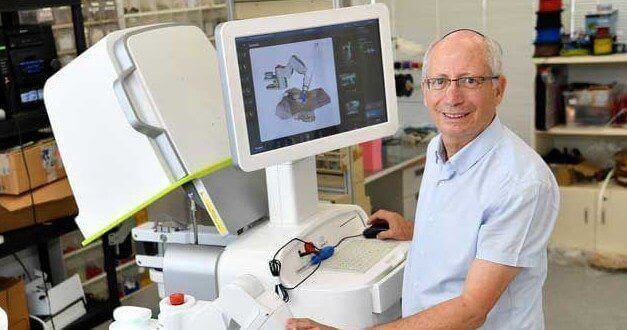
One of the world’s leaders in medical robots – the founder of numerous companies, the inventor with more than 100 individual patents publisher of more than 200 technical papers and three books and the teacher who has inspired many young people in Israel and around the world to enter the field – is Emeritus Prof. Moshe Shoham, who was born in Haifa. His official title is bearer of the Tamara and Harry Handelsman Academic Chair and director of the robotic laboratory in the department of mechanical engineering at the Technion – Israel Institute of Technology in Haifa.
In 1978, Shoham earned his bachelor of science degree from the Technion in in the Faculty of Aeronautical Engineering, worked in Israel Aerospace Industries followed four years later by a master’s degree from its Faculty of Mechanical Engineering and a doctorate in 1986 from that same faculty. His main professional interests are robotic systems (kinematics and dynamics of robots), multi-fingered hands, sensor-based robots and medical robotics.
There were no approved medical robots in the world when he began. The pioneer in this area was a company named ISS, which developed a robot for replacing the hip joint, thereby opening the market, but eventually it failed to obtain approval from the US Food and Drug Administration (FDA). The company closed down in 2005, exactly when Shoham’s company, Mazor Robotics Ltd., got its marketing approval. In 2001, he founded Mazor, which was acquired in 2018 by the global medical electronics company Medtronic for $1.64 billion.
After working in the Israel Aerospace Industries, Shoham served as an assistant professor at Columbia University in New York and established the robotic laboratory at the department of mechanical engineering, a visiting professor at Stanford University in California. He is also a Fellow of the Institute of Electrical and Electronics Engineers (IEEE) Fellow of the American Society of Mechanical Engineers (ASME) and a International Member of the US National Academy of Engineering,
Among his numerous awards, are honorary membership – Israel Society for Medical and Biological Engineering, 2020; the Maurice E. Müller Award for Excellence in Computer Assisted Surgery, 2019; Innovation Award – Surgical Robot Challenge, Imperial College, London, 2016; Fellow –Institute of Electrical and Electronics Engineers (IEEE), 2015; International Member – US National Academy of Engineering, 2014; Thomas A. Edison Patent Award – American Society of Mechanical Engineers, 2013; Hershel Rich Innovation Award, 2011; Technology Award – the Society for Medical Innovation and Technology (SMIT), 2008; Fellow – The American Society of Mechanical Engineers (ASME), 2008; Outstanding Israeli project – ROBOCAST: ROBOt and sensors integration for Computer Assisted Surgery and Therapy, European Union 7th Framework Program for Research and Technological Development. Awarded by the European Commission to the State of Israel, 2007; Kaplan Prize for Creative Management of High Technology, 2002; and the Juludan Award for Outstanding Scientific Research Achievements, 1999. Shoham is particularly proud of the recent 2021 Yigal Allon Prize for Pioneering Excellence – given annually to individuals, entities or organizations whose activity serves as a model of pioneering excellence and a significant contribution to Israeli society – that he received recently.
The 2021 prize was awarded jointly to Shoham and Start-Up Nation Central for their work in promoting Israeli innovation in industry. “The entire state of Israel walks in your path,” Israel’s President Isaac Herzog said in congratulatory remarks.
Among the most memorable and thought-provoking award for Shoham was in 1999, when he received a research award for the development of a robot that performs knee replacement surgery with great precision.
“Next to me, Prof. Gershon Golomb from the Hebrew University of Jerusalem’s Faculty of Medicine also received the award. The winners’ families were invited to the award ceremony. At the entrance to the hall, I saw and was shocked that instead of coming to me, my mother fell into the arms of the mother of Prof. Golomb whom I did not know and burst into tears. When they stopped crying, my mother told me that Golomb’s mother shared with her a wooden bunk in the Auschwitz concentration camp during the Holocaust. They encouraged and strengthened each other during all that terrible time.”
This moving event “made me wonder: how many more people could have received the prize but did not because they were murdered in the Holocaust.” Among them were potential writers, poets, musicians, scientists, rabbis, actors, geniuses, shoemakers, carpenters, tanners. “How many worlds will no longer be created, and why?!”
Indeed, if the mothers of Prof. Shoham and Prof. Golomb had (God forbid) perished in the gas chambers of Auschwitz, their sons would never had been born and their great healing and lifesaving accomplishments would have been lost to the world.
Shoham’s father was born in Romania and escaped from Europe during the Nazi era, fortunately moving to Israel, where he settled in the youth village and agricultural settlement of Mikve Yisrael and helped establish a kibbutz called Tehiya. His mother was born in Czechoslovakia, and after being liberated from the concentration camp, moved to Palestine where she met her future husband at the kibbutz.
Moshe, who recalls that his family lived in modest circumstances, liked from boyhood to build and fix things. That hobby led to his outstanding mechanical engineering career.
Today, he and his wife live in Hoshaya, a national-religious community settlement in the Lower Galilee. The village was established in three decades ago as a Nahal settlement, originally planned for soldiers from moshavim in the Galilee and later manned by soldier of the Religious Nahal Youth Aliyah, Three years later, it was transferred to civilians, and 15 families moved into caravans on the site, with some of the original Nahal soldiers remaining.
At Stanford, Shoham began to think about developing medical robots, which were then in their infancy. “I returned to Israel and called surgeons in all the hospitals. Even though medicine is very conservative, some of them were very supportive of the idea,” he recalled in an interview. “Some were opposed to the use of robots in surgery, and a few of them said it will not work and no robot would ever replace a human surgeon.” “we would like to apply robots at those tasks in which robots excel – accuracy and accessibility – but the decision making will always remain with the surgeon.”
Shoham established Mazor Robotic company, specializing in spinal surgery. Shoham founded a number of companies, each with a robotic surgery specialty. One company that is based on technology developed in his medical robotic laboratory donated by the late Betty and Dan Kahn, is Xact robotics, which has developed a robot for precise navigating of flexible needle within the body. This technology is suitable for a variety of types of operations requiring penetration by a narrow instrument to a precise point deep within the body, such as biopsies, injections of drugs into internal organs, ablation (precise searing of tissue within the body) and drainage from within the body.
Another company he founded, Diagnostic Robotics, aims at dramatically reducing the time spent in emergency rooms. Shoham does not discuss what this robot can do, so it is possible that it can already perform several physical examinations even before the doctor.
ForSight Robotics is developing a surgical robotic platform for eye surgery to assist ophthalmologists. Microbot Medical (a company listed on Nasdaq as MBOT) that he co-founded has developed a system that includes miniature robots for internal cleaning of an implanted medical device, including devices implanted in the brain. His Microbot ViRob, an autonomous advancing micro robot – less than one millimeter in diameter, has the ability to crawl within cavities and lumens, allowing physicians to target a disease site with amazing precision.
So far, the device has completed animal trials; in the future, the product is likely to also prove suitable for cleaning blood vessels so as prevent heart attacks and strokes.
A company based on his doctoral student Hadas Ziso’s thesis is Tamar Robotics, which is developing a surgical robot for revolutionizing brain surgery, finally giving doctors a safer, minimally invasive tool to remove tumors and blood clots and treat other life-threatening brain conditions that now require major surgery.
“We hope we will be able to let the people suffering from these conditions get back to their lives,” Shoham says. “We believe that our robotic system is additional outstanding armament in the surgeon’s hand that can be used at those instances they perform better than a surgeon’s free hand.” The neurosurgery robot has been tested so far on rodents, removing tumors from their brains, and removing blood hemorrhages from the brains of pigs. Shoham expects it will be permitted to be used in clinical trials in two years or so.
In many cases of robot-assisted minimally-invasive surgery, instead of directly moving the instruments, the surgeon uses telemanipulation one or several robot hands to administer the surgery. A telemanipulator is a remote manipulator that allows the surgeon to perform the normal movements associated with the surgery. The robotic arms carry out those movements using end-effectors and manipulators to perform the actual surgery.
One advantage of using the computerized method is that the surgeon does not have to be present, leading to the possibility for remote surgery.
In 1985 a robot, the Unimation Puma 200, was used to orient a needle for a brain biopsy while under computerized tomography guidance during a neurological procedure.
Another surgical system in which Shoham was not involved is the da Vinci Surgical System, made by the US company Intuitive Surgical. Approved by the by the FDA in 2000, it is designed to assist doctors in surgery using a minimally invasive approach and is controlled by a surgeon from a console. The system is used to remove prostate glands and increasingly for cardiac valve repair and hysterectomies. It was called “da Vinci” partly because 15th-century Italian genius Leonardo da Vinci’s “Study of Human Anatomy eventually led to the design of this first-known surgical robot.
“Da Vinci works as a telemanipulation, just following what surgeon does,” noted Shoham, “but we are involved in developing robots that are not telemanipulators but have higher sense of autonomy. not just following the surgeon’s hand motion,” said Shoham. “The robot will not be just a remote manipulator, but it will proceed to be fully autonomous. There are only two companies in world approved FDA to be autonomous, and this type is more of a challenge than semi-autonomous ones.”
He is very proud that many of his students have become chief executive officers or other senior developers in other companies involving medical robots. Israelis are world leaders in medical robots, thanks to the Technion professor.
As for the concern among some people that robots will put them out of a job, Shoham stresses that they will replace low-paying, tedious jobs but create many new positions.
Just as a few decades ago, they didn’t dream that everybody would carry a mobile phone around with them instead of being dependent on a land line.
On a larger scale, the initial steps for personal robots are already being sold in the form of Siri, a virtual assistant that is part of Apple Inc.’s operating systems. The assistant uses voice queries, gesture-based control, focus-tracking and a natural-language user interface to answer questions, make recommendations and perform actions by delegating requests to a set of Internet services. The software adapts to users’ individual language usages, searches and preferences, with continuing use.
People will soon get used to the idea that everybody will have his or her own personal robot, Shoham concludes, and they will be better off. Unwilling to predict exactly where robotics will be in a decade or two, he ventured: “They definitely will be a substantial part of our lives. Combining robots with artificial intelligence and machine learning equips humanity with a strong new power. I hope it will be used wisely.”
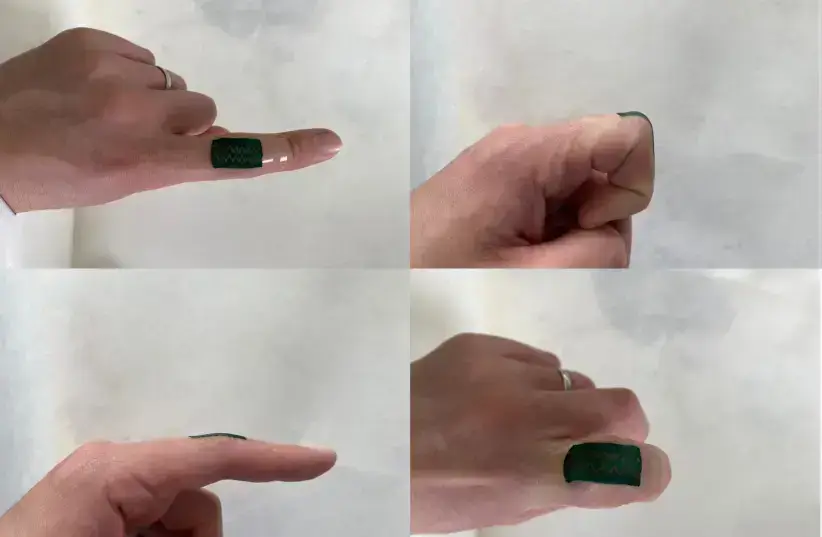
Researchers at the Technion have developed a highly stretchable electronic material and a wearable sensor capable of identifying precise bending and twisting motions.
Scientists at the Technion-Israel Institute of Technology have produced a highly stretchable electronic material and a wearable sensor capable of identifying precise bending and twisting motions.
Essentially, it is an electronic skin.
The development will be able to help identify ailments and disease, for example, the early onset of Parkinson’s, or help amputees adapt to prosthetics, the developers have said.
It recognizes the range of movements that human joints normally makes with the precision of up to half a degree. This breakthrough is the result of collaborative work, headed by Professor Hossam Haick from the Wolfson Faculty of Chemical Engineering.
It was recently published in Advanced Materials, a peer-reviewed journal.
Professor Haick’s lab focuses on wearable devices. Wearable motion sensors can currently recognize bending movement, but not twisting. Sensors that recognize twisting are large and cumbersome.
Ph.D candidate Yehu David Horev and postdoctoral fellow Dr. Arnab Maity have found a way to overcome this problem. Horev found a way to form a composite material that is both usable as a sensor and is flexible, stretchable, breathable, biocompatible, and does not change its electrical properties when stretched.
Dr. Maity was able to solve the mathematics of analysing the received signal.
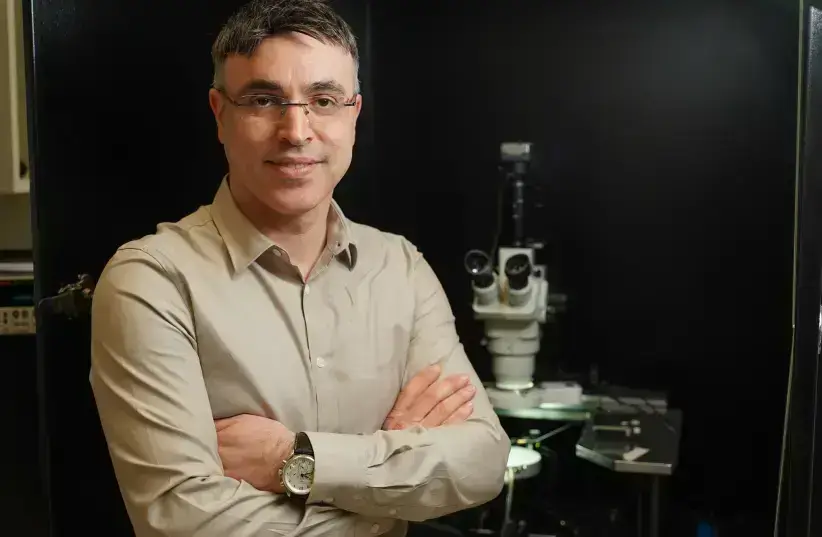
Professor Hossam Haick (credit: TECHNION SPOKESPERSON’S OFFICE)
The novel sensor is breathable, durable and lightweight, allowing it to be worn by humans for long periods of time.
“This sensor has many possible applications,” Prof. Haick stated.
“It can be used in early disease diagnosis, alerting of breathing alterations, and motor system disorders such as Parkinson’s disease. It can be used to assist patients’ motor recovery and be integrated into prosthetic limbs. In robotics, the feedback it provides is crucial for precise motion. In industrial uses, such sensors are necessary in monitoring systems.”
TECHNION SCIENTISTS CREATED A WEARABLE MOTION SENSOR CAPABLE OF IDENTIFYING BENDING AND TWISTING
One doesn’t pay much attention to sensors, but they are omnipresent in modern life. A sensor is a device that responds to a physical stimulus such as heat, light, sound, pressure, magnetism or a particular motion and transmits a resulting impulse as for measurement or operating a control. It measures physical input from its environment and converts it into data that can be interpreted by either a human or a machine.
The most frequently used types of sensors are classified according to hat they react to – electric current or magnetic or radio sensors, humidity, fluid velocity or flow, pressure, temperature sensors, proximity sensors, optical sensors or position sensors.
Sensors are used in everyday objects such as touch-sensitive elevator buttons, lamps that brighten or dim by touching the base, along with innumerable applications of which most people are unaware.
Aside from home use, sensor applications include manufacturing, medicine, machinery, planes and aerospace, vehicles, robotics and many other aspects of life.
Wearable strain sensors have been attracting special attention in the detection of human posture and activity, as well as for the assessment of physical rehabilitation and kinematic, but it is a challenge to fabricate stretchable and comfortable-to-wear permeable strain sensors that can provide highly accurate and continuous motion recording while exerting minimal constraints and maintaining low interference with the body.
Now, scientists at the Technion-Israel Institute of Technology in Haifa have created a wearable motion sensor capable of identifying bending and twisting. Made from a highly stretchable electronic material, it is essentially an electronic skin capable of recognizing the range of movement human joints normally make, with up to half a degree precision.
This breakthrough is the result of collaborative work among researchers from different fields in the Laboratory for Nanomaterial-Based Devices, headed by Prof. Hossam Haick from the Wolfson Faculty of Chemical Engineering. It was recently published in Advanced Materials under the title “Stretchable and Highly Permeable Nanofibrous Sensors for Detecting Complex Human Body Motion”
and was featured on the journal’s cover.
The new sensor has many possible applications,” said Haick. “It can be used in early disease diagnosis, alerting of breathing alterations, and motor system disorders such as Parkinson’s disease. It can also assist patients in their motor recovery and be integrated into prosthetic limbs. In robotics, the feedback it provides is crucial for precise motion. In industrial uses, such sensors are necessary in monitoring systems, putting them at the core of the Fourth Industrial Revolution.”
This breakthrough is the result of collaborative work between researchers from different fields in the Laboratory for Nanomaterial-Based Devices, which Haick heads.
At present, existing wearable motion sensors can recognize bending movement, but not twisting. Existing twisting sensors, on the other hand, are large and cumbersome and cannot be worn.. This problem was overcome by doctoral candidate Yehu David Horev and postdoctoral fellow Dr. Arnab Maity.
Horev found a way to form a composite material that was both conductive – and thus, usable as a sensor – and flexible, stretchable, breathable and biocompatible, I also did not change its electrical properties when stretched.
Maity then solved the mathematics of analyzing the received signal, creating an algorithm capable of mapping bending and twisting motion – the nature of the movement, its speed and its angle. The novel sensor is breathable, durable and lightweight, making it possible to be worn on the human body for prolonged periods.
“Electrically conductive polymers are usually quite brittle,” explained Yehu about the challenge the group had overcome. “To solve this, we created a composite material that is a little like fabric. The individual polymer ‘threads’ cannot withstand the strain on the material, but their movement relative to each other lets it stretch without breaking. It is not too different from what lends stretch to T-shirts. This allows the conductive polymer withstand extreme mechanical conditions without losing its electrical properties.”
What makes this achievement more important is that the materials the group used are very inexpensive, resulting in a cheap sensor. “If we make a device that is very expensive, only a small number of institutions in the Western world could afford to use it. We want the technological advances we achieve to benefit everyone, regardless of their geographic location and socioeconomic status,” said Haick. True to his word, among the laboratory’s other projects is a tuberculosis-diagnosing sticker patch, which is sorely needed in developing countries.
Haick is an expert in the field of nanotechnology and non-invasive disease diagnosis who earned his doctorate from the Technion in 2002. After graduation, he completed two postdoctoral fellowships – first at the Weizmann Institute of Science in Rehovot and then at California Institute of Technology. He returned to the Technion at the end of 2006 as an assistant professor, becoming a full professor in 2011.
He has published more than 220 publications in top-level journals in the field of nanotechnology, advanced/applied materials/chemistry and medicine, and technologies he and his team developed have led to the production of more than 42 patents and patent applications – many of which have been licensed to six international companies.
An Arab-Israeli scientist and engineer, Haick is a pioneer known for inventing the Nano Artificial Nose for detection of disease from exhaled breath. He was included in more than 80 top-rank listings worldwide, including the “MIT Technology Review” list of 35 leading young scientists in the world, the “50 Sharpest Israeli Minds” and the world’s top-100 influential innovators in the Digital Technology by Nominet Trust in London.
A team of scientists has found why elderly people are more susceptible to COVID-19 and are working to reverse the aging process of the body’s immune system
Prof. Doron Melamed and doctoral student Reem Dowery sought to understand why the elderly population is more susceptible to severe cases of COVID-19 and why the vaccines seem to be less effective and wane faster among this population.
The results of their work were published this month in the peer-reviewed, online medical journal Blood.
The secret begins with B cells, also known as B lymphocytes. These are the cells that produce antibodies against any pathogen that enters the body. They play a key role in protecting people from viruses and diseases.
B cells are produced in bone marrow and then travel through the blood to lymph nodes and the spleen, where they wait for pathogens to enter and then attack them.
“When you are young, you have young cells, and young cells have a very diverse ability to recognize anything [pathogenic] that comes into your body,” Melamed told The Jerusalem Post.
B cells do not live long, but they are constantly being replenished by new ones sent from the bone marrow, creating what Melamed calls “homeostasis,” a state in which the total number of B cells in the bone marrow and outside remains constant.
However, B cells do not just disappear. They turn into “memory” B cells so that if the body is exposed to a previous pathogen, the individual will not get sick. That is because the immune response will be fast and robust, and it will eliminate the pathogen, often without the individual knowing he or she had been exposed to it.
Unlike B cells, memory cells are long-lived.
“Imagine you are growing into adulthood, and you become an adult and then an older person,” Melamed said. “You accumulate in your body many memory cells. You are exposed all the time to pathogens, and hence you make more and more memory cells. Because these are so long-lived, there is no room left for new B cells.
”What happens when a new pathogen, such as the coronavirus, comes along? There are no young B cells that can recognize it.
That is one of the reasons why older people are more susceptible to severe COVID-19 and many other diseases.
As noted, this happens because of the body’s need for homeostasis, something that Melamed’s lab discovered a decade ago.
BUT THIS year, they took the discovery another step and figured out a mechanism to override the system.
“We found specific hormonal signals produced by the old B cells, the memory cells, that inhibit the bone marrow from producing new B cells,” Melamed said. “This is a huge discovery. It is like finding a needle in a haystack.
”It also means that, over time, specific drugs or treatments can be found to inhibit one of the hormones in the signaling pathway and get the bone marrow to produce new B cells.
Melamed Research group (credit: NITZAN ZOHAR/TECHNION SPOKESPERSON’S OFFICE)
What happens when a new pathogen, such as the coronavirus, comes along? There are no young B cells that can recognize it
.That is one of the reasons why older people are more susceptible to severe COVID-19 and many other diseases.
As noted, this happens because of the body’s need for homeostasis, something that Melamed’s lab discovered a decade ago.
BUT THIS year, they took the discovery another step and figured out a mechanism to override the system. “We found specific hormonal signals produced by the old B cells, the memory cells, that inhibit the bone marrow from producing new B cells,” Melamed said. “This is a huge discovery. It is like finding a needle in a haystack.
”It also means that, over time, specific drugs or treatments can be found to inhibit one of the hormones in the signaling pathway and get the bone marrow to produce new B cells.
To validate their theory, Melamed’s lab collaborated with the departments of hematology and rheumatology at Sourasky Medical Center in Tel Aviv and Rambam Health Care Campus in Haifa. As part of treatment for some medical conditions, such as lupus, lymphoma and multiple sclerosis, patients undergo B cell depletion, meaning a significant amount of memory B cells is removed from their bodies.
Examining older patients who underwent this procedure, the group found that their immune systems rejuvenated, and their bodies could produce new B cells again.
An effect similar to B cell depletion can be produced by inhibiting one of the hormones in the signaling pathway that suppresses the production of new B cells.
“Now we understand that there is some kind of conversation between compartments in the body, between how B cells are produced and what controls that,” Melamed said.
In the interim, he recommended that doctors use this knowledge to protect the elderly better, such as by instituting a vaccination program targeted just for the adult population that preempts variants with an additional shot.
“Even every three or four months, vaccinate them again and again to ensure they maintain high antibodies,” Melamed said.
He also suggested mixing vaccines, such as combining a shot of a Pfizer mRNA vaccine with an AstraZeneca booster given several months later, “which may generate better stimulation of the elderly immune system.
”At the same time, clinical trials would be needed to determine how to safely inhibit the hormones to find a longer-term solution, hopefully before the next pandemic, Melamed said.
Overall effectiveness of coronavirus vaccines has not dropped much yet for most vaccinated Americans, US Centers for Disease Control and Prevention vaccine advisers were told Monday.
CDC’s Advisory Committee on Immunization Practices met Monday to discuss the potential eventual need for booster doses of coronavirus vaccine — although they did not vote. The White House has said it’s planning to offer booster doses at the end of September, although it’s up to the US Food and Drug Administration and the CDC to decide on this.
So far, in data that goes through July, the vaccines still appear to provide strong protection, the CDC’s Dr. Sara Oliver told ACIP Monday.
“Since the introduction of the Delta variant, VE against infection ranges from 39 to 84%. VE against hospitalization, though, remains high from 75% to 95%,” Oliver said, citing global data.
“Regardless of the vaccine evaluated, all vaccines remain effective in preventing hospitalization and severe disease. But they may be less effective in preventing infection and mild illness recently,” Oliver added. “These reasons for lower effectiveness likely include both waning over time and the Delta variant.”
One US study showed vaccine effectiveness against hospitalization in adults 65 and older may have decreased, but only slightly, over time, she said. Unpublished CDC data shows vaccine effectiveness remains very high, at 94% or higher in adults 18 to 74, she said.
“Preliminary VE against hospitalization in adults 75 years of age and older … decreased in July but still remained over 80%,” Oliver said.
Vaccine efficacy has fallen from 75% at first to just over 50% among long term care facility residents, Oliver said. These were the first people vaccinated after the shots became available in December and January.”
The data we have seen today has demonstrated that Covid vaccines continue to maintain high protection against severe disease, hospitalization and death. Protection against infection, including asymptomatic and mild infection, appears to be lower in recent months,” she said.
All three companies making vaccines for the US market — Pfizer/BioNTech, Moderna and Johnson & Johnson — are evaluating the effects of booster doses, she said.
The major questions are whether booster doses are safe and work to improve protection, she said.
“Will booster doses of Covid-19 vaccines reduce Covid-19 incidence, hospitalization and/or mortality?” she asked.
ACIP will meet in the coming weeks to discuss data about vaccine efficacy in August, Oliver said. “We will announce meetings as soon as we have dates,” the CDC’s Dr. Amanda Cohn said at the end of Monday’s meeting.
The CDC and FDA endorsed the use of boosters in certain immunocompromised people earlier this month. While the White House has pressed for booster doses to be offered more widely, the CDC and FDA are waiting for more information from the companies.
But White House officials say they’re looking at data from Israel as well as from the US, and want to be sure to be ahead of any changes in the pandemic.
On Monday, Israel started offering a booster to everyone 12 and older who had been vaccinated at least five months ago.
Researchers in Israel reported Monday that people who chose to get a third dose of vaccine had a much lower risk of becoming infected, even as the more transmissible Delta variant swept across the country.
“Conclusions: In conjunction with safety reports, this study demonstrates the effectiveness of a third vaccine dose in both reducing transmission and severe disease and indicates the great potential of curtailing the Delta variant resurgence by administering booster shots,” Yair Goldberg of the Technion-Israel Institute of Technology and colleagues wrote in their report, posted online by the Israeli government.
The researchers noted that it is difficult to account for differences among people in a real-world study. People who choose to get a booster dose may be different from those who choose not to, and people behave differently after they’ve received a shot.
One major difference: recently vaccinated people are less likely to be tested for coronavirus infection, which means fewer infections would be detected in that group. Recently vaccinated people may also take more care to prevent infection.
These biopolymers can be used for solar energy generation, medicine, biomedical engineering and more. * They are affordable and are a viable alternative to petroleum-based polymers.
The new Technion-made biopolymer above an oleander shrub.
(photo credit: TECHNION)
Researchers at the Technion-Israel Institute of Technology have been advancing a groundbreaking technology that allows for converting food byproducts into energy-conductive biopolymers.
These biopolymers are, essentially, based on recycled food industry byproducts that would otherwise have been thrown away as waste. However, it is possible to convert them into biopolymers that can be used for solar energy generation, biomedical engineering and more.
The Technion’s approach is a combination of two main approaches, environmental chemistry and sustainable chemistry. The former deals with creating environmentally friendly materials and the latter uses available degradable materials and an energy-efficient process.
Essentially, what the researchers did was use an environmentally friendly production process for the purpose of creating environmentally friendly materials and products, specifically polymers.
Polymers themselves are long chains of various different building blocks, which are, fittingly, called monomers. These can be formed naturally, such as silk and cotton fibers, and synthetically, such as nylon.
But conductive polymers are a specific subgroup that have a vast number of possible applications, ranging from electronics to fuel cells to medicine and more. However, creating them is very costly, and having to use derivatives of gas, oil and fossil fuels means they also cause pollution.
But the Technion researchers have found an alternative with their focus on using food industry byproducts, which they have dubbed protein polymers.
“The inspiration to use proteins to create conductive polymers originated in the unique function of proteins in nature – they are exclusively responsible for transporting various charge carriers in flora and fauna; for example, in cellular respiration or in photosynthesis in plants,” lead author Prof. Nadav Amdursky of the Schulich Faculty of Chemistry said in a statement.
The transparent biopolymer films created by the researchers have a high degree of conductivity. As they are natural and non-toxic, it can be used for biological and biomedical applications. It can be stretched to around 400% of its original length without significantly impacting its electrical properties, and its conductivity is some of the highest found in biological materials.
“The production of the film in our research was a one-pot process, spontaneous, inexpensive, fast, energy efficient, and nonpolluting,” Amdursky explained. In their study, which was published in the academic journal Advanced Materials, “we demonstrate the use of the film as ‘artificial skin’ that noninvasively monitors electrophysiological signals. These signals play a meaningful part in brain and muscle activity, and therefore their external monitoring is a highly important challenge.”
These findings are significant not only for the scientific and environmental implications of this method, but also the economic aspect.
The method is affordable, and has a low production cost, something that Abdursky emphasized as being important as it allows the product to be something that can viably compete on the market with the petroleum-based polymers that currently dominate the field. That way, with the technology more accessible, it can become more widespread and help reduce pollution.
ISRAEL RECYCLES NATURAL POLYMERS FROM THE FOOD INDUSTRY FOR A VARIETY OF PRODUCTS AND PROCESSES
Hashem took the man and placed him in the garden of Eden, to till it and tend it.
A tremendous amount of packaging waste is thrown out by the food industry all around the world and in Israel as well. But they can – and should be recycled for reuse.
Scientists at the Technion-Israel Institute of Technology in Haifa have just published details in the journal Advanced Materialsunder the title “A Protein-Based Free-Standing Proton-Conducting Transparent Elastomer for Large-Scale Sensing Applications” about their success in creating conductors that can be used for solar energy generation, biomedical engineering and more using by-products of the food industry.
The technology they presented makes possible the simple, fast, cost-effective and environmentally friendly production of biopolymers, which include application for electrophysiological signal sensing.
Polymers are materials made of long, repeating chains of molecules an d have unique properties depending on the type of molecules being bonded and how they are bonded. Synthetic polymers include plastics, that use costly processes that cause pollution because they are made from derivatives of oil, gas and fossil fuel.
Biopolymers are natural polymers produced by the cells of living organisms. Among the natural ones are collagen, fibrin, starch, hair, fur, nails, cotton, gelatin, natural rubber, cellulose, wool and silk (created by silkworms).
Polypeptides such as collagen and silk are inexpensive biocompatible materials that are being used in groundbreaking research, as these are easily attainable materials. Gelatin polymer is often used on dressing wounds as an adhesive. Scaffolds and films with gelatin allow for the scaffolds to hold drugs and other nutrients that can be used to supply to a wound for healing.
Another widely used biopolymer is chitosan derived from the exoskeleton of crustaceans and insects, it can biodegrade which can eliminate a second surgery for implants, can form gels and films/ Ot cam also be used to improve drug absorption and stability and for gradual release of anti-cancer drugs.
In the food industry, biopolymers that are transparent. Biodegradable and water resistant are being used not only for packaging but also for edible encapsulation films and the coating of foods.
The Technion study was conducted in the Schulich Faculty of Chemistry under the leadership of Assistant Prof. Nadav Amdursky, head of the biopolymers and bioelectronics laboratory, and doctoral students Ramesh Nandi and Yuval Agam. “The current global green trend has not bypassed industry, and numerous groups worldwide are working on new solutions that will limit the pollution caused by the production of synthetic materials and by their very presence,” explained Amdursky. “One of the options is, of course, the use of natural materials, and the big challenge is to adapt them to meet needs.”
The two main approaches in environmentally conscious chemistry are environmental chemistry (the creation of environmentally friendly materials) and sustainable chemistry (production based on available degradable materials and energy-efficient processes). The new research integrates the two approaches in an environmentally friendly production process that yields environmentally friendly products in the context of conductive polymers.
The protein polymers used by the Technion researchers are by-products of the food industry that would otherwise be thrown into the garbage. “The inspiration to use proteins to create conductive polymers originated in the unique function of proteins in nature – they are exclusively responsible for transporting various charge carriers in flora and fauna; for example, in cellular respiration or in photosynthesis in plants,” he continued.
The researchers created transparent polymer films with high conductivity. This film is suitable for biological and biomedical applications since it is non-toxic and can be stretched to approximately 400% of its original length without significantly impairing its electrical properties. Its conductivity is among the highest detected in biological materials.
The team used bovine serum albumin (from cows), one of the most affordable proteins that results in the ability to create large-scale materials at a low cost. Due to the inherent biodegradability and biocompatibility of the elastomer, it is promising for biomedical applications, he said, and it can be used immediately as a solid-state interface for sensing electrophysiological signals,
“The production of the film in our research was a one-pot process, spontaneous, inexpensive, fast, energy efficient and nonpolluting,” said Amdursky. “In the article, we demonstrate the use of the film as ‘artificial skin’ that noninvasively monitors electrophysiological signals. These signals play a meaningful part in brain and muscle activity, and therefore their external monitoring is a highly important challenge.”
He stresses that since this technology is designed for application and commercialization, “the economic consideration is key, and consequently, it is most important to lower the costs of production processes so that they will yield a product that is competitive, also in terms of price, with petroleum-based polymers, and happily, we have succeeded. This is in addition to the reduction in environmental damage in the production phase as well as during use. The new polymer is fully biodegradable in less than 48 hours, as opposed to synthetic polymers, which are not biodegradable and as result, pollute our planet.”
The Faculty of Aerospace Engineering at the Technion Israel Institute of Technology has signed a cooperation agreement with the Space Division at Israel Aerospace Industries to develop and launch a nanosatellite that will enter low-altitude orbit around the moon and collect data using a payload of scientific instruments.
The student-performed project will start in October. It is expected to continue until it reaches completion in a few years.
IAI’s Space Division will assist the project in a number of ways, including providing space engineers to help define, characterize and mentor the students’ mission.
At the end of the process, the students will become partners in launching the nanosatellite.
The joint project is the culmination of a faculty-wide process striving to balance two fields: aeronautics and outer space.
According to Technion faculty dean Professor Tal Shima, “while in the past, only about ten percent of the faculty syllabus was dedicated to space, over the past few years there has been an effort to change this and reach a more equal balance between the two fields. To achieve this, we updated the faculty curriculum and are in the midst of hiring new staff members with expertise in outer space. Cooperation with IAI’s space facility will allow us to expose students to additional joint projects with IAI focused on outer space.”
Technion Professor Gil Yudilevitch, who initiated and leads the faculty-based cooperation, says “the project will allow students to become partners and help them reach the end of their studies prepared to be integrated into Israel’s developing space industry.”
Technion president Uri Sivan explained that “we are working to promote close research cooperation and to turn the Technion into a hub for many industries, a platform where industry and academia meet. We are quickly working to commercialize technologies that originated on campus. The past year has been a record one in establishing a startup. Another expression of the strengthening ties comes in establishing specialized routes for learning and vocational training for people in the industry who are interested in lifelong learning.”
Is it possible? Could the vegetarian Holy Grail come from the land of carnivores? Aleph Farms states that its cultivated meat products can be found in stores in 2022…
A Feelit sensor strip monitors the health of industrial equipment. Photo courtesy of Feelit
Being a vegetarian looks like its about to get a whole lot tastier. Israeli foodtech startup, Aleph Farms, which develops animal-cruelty free cultured meat products, has secured a massive $105 million Series B round. The investment was led by L Catterton, the largest global consumer-focused private equity firm, and DisruptAD. The two were joined by Skyviews Life Science, as well as a consortium of leading global food and meat companies including Thai Union, BRF, and CJ CheilJedang. Additionally, existing investors, including VisVires New Protein, Strauss Group, Cargill, Peregrine Ventures, and CPT Capital.
Juicy cruelty-free steaks
Aleph Farms has developed a system for growing beef steaks from non-genetically engineered cells isolated from a living cow, without harming animals and with a significantly reduced impact to the environment. Unlike similar products, the company’s tech doesn’t rely on genetic engineering, but rather is based on a natural process of muscle tissue regrowth in bovine. The Israeli startup has found a way to isolate the cells responsible for this process, culturing them outside of the typical host, therefore creating optimal conditions to grow beef including fat, muscle, and other features that create a juicy steak.
Considered a rare investment in the foodtech sector, Aleph’s mega-round is further highlighted due to the fact that the company’s previous funding was back in 2019 and tallied only $11.65 million, compared to the current nine-digit round. Aleph Farms states that the capital will be used to execute its plans for large-scale global commercialization of cultivated beef steaks and portfolio expansion. Additionally, a more near-term view shows the company plans on scaling-up manufacturing, growing operations internationally, and expanding its product lines and technology platform ahead of its initial market launch in 2022.
Aleph Farms’ leadership team. From left to right: Technion Professor Shulamit Levenberg, Co-Founder & Chief Scientific Adviser; Didier Toubia, Co-Founder & CEO; Dr. Neta Lavon, CTO & Vice President of R&D. Credit: Rami Shalosh (PRNewsfoto/Aleph Farms)
“This additional capital from top-tier partners with unparalleled experience and expertise brings us significantly closer to our vision of providing secure and unconditional access to high-quality nutrition to anyone, anytime, anywhere. We see our investors as partners for building this new category of meat and it was critical to us that they share our strong commitment to improving the sustainability of our global food systems,” said Didier Toubia, Co-Founder and CEO of Aleph Farms.
Aleph Farms was founded in 2017 by Didier Toubia and Professor Shulamit Levenberg. The company has raised $118 million to date. The company is definitely doing some interesting things with cultivated meat to bring more cruelty-free and sustainable options to the world, and outside of it. During October of last year, Aleph Farms launched new food driven initiative to produce cultured meat and protein solutions for Earth’s future travelers to Mars. Yep, you heard it right.
Aleph Farms completes $105 million Series B round
The company anticipates an initial market launch in 2022 and intends to scale up manufacturing, grow its global operations, and expand its product lines and technology ahead of that
Aleph Farms, an Israeli cultivated meat company that grows steaks directly from non-genetically modified animal cells, has announced the completion of a $105 million Series B funding round. The round was led by the Growth Fund of L Catterton, a consumer-focused private equity firm, and DisruptAD, one of the largest venture platforms in the Middle East. To date, it brings its total funding to $118 million.
“We are thrilled to grow our relationships with existing partners, and welcome select new investors in this funding round,” said Didier Toubia, Co-Founder and CEO of Aleph Farms. “This additional capital from top-tier partners with unparalleled experience and expertise brings us significantly closer to our vision of providing secure and unconditional access to high-quality nutrition to anyone, anytime, anywhere. We see our investors as partners for building this new category of meat and it was critical to us that they share our strong commitment to improving the sustainability of our global food systems.”
The round saw participation from Skyviews Life Science, as well as food and meat companies including Thai Union, BRF, and CJ CheilJedang. Existing investors, including VisVires New Protein, Strauss Group, Cargill, Peregrine Ventures, and CPT Capital, also took part in the round.
Aleph Farms intends to use the funds to expand its efforts for large-scale global commercialization of its cultivated beef steaks. The company anticipates an initial market launch in 2022 and intends to scale up manufacturing, grow its global operations, and expand its product lines and technology ahead of that.
Earlier this year, CTech visited Aleph Farms to explore its laboratory in Rehovot that samples cow cells, stores them in a cell bank, develops different muscle, blood vessels, and fat cells in a cell bioreactor, and then grows the tissue in a tissue bioreactor to produce a steak. “With cultivated meat, you can control the quality and tailor the quality of the raw material you get to make exactly the type of dish, cooking, and experience you want for your consumers,” Toubia told CTech at the time.
“With cultivated whole-muscle cut steaks, an optimized platform for cost parity at scale, and a global partnership network with the world’s largest meat producers, Aleph Farms has differentiated itself as the leading cultivated meat company poised to go to market,” said Michael Farello, a Managing Partner at L Catterton’s Growth Fund. “We are excited to support their success as they prepare for global launch, and we look forward to leveraging our significant expertise in food and sustainable businesses that meet the needs of a changing consumer and a changing world.”
Mansour AlMulla welcomed Aleph Farms on behalf of DisruptAD as its first Israel-based partner, and said: “Our partnership with Aleph Farms underpins our long-term desire to accelerate the path for technology pioneers and change leaders that are building technologies of tomorrow.” Mayank Singhal, also speaking on behalf of DisruptAD, added “our belief is that the future of food will be built around evolved consumer choices and a redressal of climate concerns, with Aleph playing a central role in shaping this agenda across global markets. We are delighted to partner with them.”
Aleph Farms was co-founded in 2017 by Didier Toubia, The Kitchen Hub of the Strauss Group, and Professor Shulamit Levenberg from the Biomedical Engineering Faculty at the Technion – Israel Institute of Technology. It is represented by advs. Yoav Etzyon and Efrat Shpizaizen from Amit, Pollak, Matalon & Co (APM). L Catterton has $30 billion of equity capital across its fund strategies and has made 250 investments since 1989. DisruptAD is ADQ’s venture capital platform and invests across the UAE as well as other global markets including the Middle East and North Africa region, India, China, South East Asia, and the United States.
Israel’s Aleph Farms Raises Whopping $105 Million For Cultured, Slaughter-Free Meat
Israeli cultivated meat startup Aleph Farms has raised $105 million in a Series B funding round to bring its cultured, slaughter-free meat to market next year. The company announced on Wednesday that the investment was led by the Growth Fund of L Catterton, an American-French global consumer-focused private equity firm, and DisruptAD, the venture capital arm of Abu Dhabi’s ADQ company and one of the largest venture platforms in the Middle East.
Israeli cultivated meat startup Aleph Farms has raised $105 million in a Series B funding round to bring its cultured, slaughter-free meat to market next year. The company announced on Wednesday that the investment was led by the Growth Fund of L Catterton, an American-French global consumer-focused private equity firm, and DisruptAD, the venture capital arm of Abu Dhabi’s ADQ company and one of the largest venture platforms in the Middle East.
The funding also saw participation from Skyviews Life Science, as well as a consortium of leading global food and meat companies including Bangkok-based seafood producer Thai Union, Brazilian food multinational BRF, and South Korean food company CJ CheilJedang. Additionally, existing investors, including VisVires New Protein, Strauss Group, Cargill, Peregrine Ventures, and CPT Capital, took part in the Series B funding round. The funding brings Aleph Farms’ total capital raised to date to $118 million.
Aleph Farms was founded in 2017 by Dr. Didier Toubia and Professor Shulamit Levenberg of the Biomedical Engineering Faculty at the Technion – Israel Institute of Technology, alongside Israeli food-tech incubator The Kitchen, a part of the Strauss Group.
Aleph Farms. Courtesy
In 2018, Aleph Farms unveiled the world’s first slaughter-free steak made from cow cells and a cultivated rib-eye steak earlier this year. In January, the company announced an agreement with Japanese multinational Mitsubishi Corporation’s Food Industry Group to bring cultivated meat to Japan, followed by a deal to operate in Brazil.
As a strategic partner to DisruptAD, Aleph Farms says it will evaluate the establishment of a manufacturing facility in Abu Dhabi to supply its cultivated meat products across the UAE and the broader GCC region.
Aleph Farms’ method to produce cultivated beef steaks relies on mimicking a natural process of muscle-tissue regeneration occurring inside the cow’s body, but under controlled conditions. The startup says it implements a combination of six unique technologies that allow it to drop the production costs of the meat, including innovative approaches to an animal-free growth medium to nourish the cells, and bioreactors – the tanks in which the tissue grows.
The company has also set its sights on the stars – literally – with plans announced last year for a new program called Aleph Zero. The program’s mission is to advance food security by producing fresh quality meat anywhere, independent of climate change and natural resources, and introduce new capabilities for producing food even in the harshest, most remote environments like space. This project was preceded by an experiment in 2019 to produce slaughter-free steak at the International Space Station, in a bid to demonstrate its mission to provide sustainable food security on Earth and beyond.
A rendering of Aleph Farms’ BioFarm. Courtesy
Taking Aleph Farms forward
The founders said in an announcement published on Wednesday that the fresh funding will help them execute plans for large-scale global commercialization and portfolio expansion into new types of animal protein sometime next year. The company is currently working with regulatory agencies for market entry.
“We are preparing towards an initial market launch in 2022 of our first product – a thin-cut beef steak, and are also building the foundation for global commercial expansion, including establishing long-term commercial agreements with local stakeholders from the meat sector. We have carefully hand-picked our partners based on synergies in sustainability commitments and our core values,” Toubia tells NoCamels.
Regarding the scale of the investment, Toubia says he feels “very humbled and am grateful for our partners.”
“We are thrilled to grow our relationships with existing partners, and welcome select new investors in this funding round,” Toubia, who serves as CEO of Aleph Farms, said in the announcement. “This additional capital from top-tier partners with unparalleled experience and expertise brings us significantly closer to our vision of providing secure and unconditional access to high-quality nutrition to anyone, anytime, anywhere. We see our investors as partners for building this new category of meat and it was critical to us that they share our strong commitment to improving the sustainability of our global food systems.”
The company’s near-term milestones include scaling-up manufacturing, growing operations internationally, and expanding product lines ahead of an initial market launch in 2022.
Further, says Toubia, Aleph Farms “will expand product lines and our technology platform with new animal proteins in addition to beef, and scale our 3D bioprinting platform, following the unveiling of our proof-of-concept ribeye steak in February 2021.”
“These developments are in line with our mission to generate more range and deliver a more diverse spectrum of culinary experiences associated with eating meat. We believe that additional meat designs will drive a larger impact in the mid to long term,” he tells NoCamels.
Aleph Farms’ cultivated steak. Photo: Aleph Farms
“With cultivated whole-muscle cut steaks, an optimized platform for cost parity at scale, and a global partnership network with the world’s largest meat producers, Aleph Farms has differentiated itself as the leading cultivated meat company poised to go to market,” said Michael Farello, a managing partner at L Catterton’s Growth Fund, which manages $30 billion of equity capital across its fund strategies and 17 offices around the world.
“We are excited to support their success as they prepare for global launch, and we look forward to leveraging our significant expertise in food and sustainable businesses that meet the needs of a changing consumer and a changing world,” added Farello.
Mansour AlMulla welcomed Aleph Farms on behalf of DisruptAD as its first Israel-based partner, and said: “Our partnership with Aleph Farms underpins our long-term desire to accelerate the path for technology pioneers and change leaders that are building technologies of tomorrow.”
Israel – a clean meat hub
Israel is home to a host of startups and companies working in the clean meat and/or plant-based “meat” space.
These include Future Meat Technologies, a cultured meat developer that recently launched the world’s first industrial cultured meat facility in Rehovot; Redefine Meat, an Israeli food tech startup that is carving out an important spot in the vegan meat space and recently announced a $29 million funding round that will go toward a commercial launch; SuperMeat, a developer of lab-grown poultry extracted from chicken cells; MeaTech, a cultured meat bioprinting company focused on chicken fat; and SavorEat, a vegan burger maker and the first food tech company to go public on the Tel Aviv Stock Exchange (TASE).
Aleph Farms gets $105 million investment to bring lab-grown steaks to market
Funding round is led by private equity firm L Catterton and DisruptAD, the VC arm of Abu Dhabi’s holding company ADQ; Aleph mulls manufacturing plant in UAE
Aleph Farms ribeye steak (Aleph Farms and the Technion-Israel Institute of Technology)
Aleph Farms, a maker of cultivated meat that grows steaks from modified cattle cells, said Wednesday it has raised $105 million in a Series B funding round from investors.
The round was led by the growth fund of L Catterton, a US-French consumer-focused private equity firm with over $30 billion in equity capital, and DisruptAD, the venture capital arm of the Abu Dhabi holding company ADQ.
The round also saw participation from Skyviews Life Science as well as a consortium of global food and meat companies including Thai Union, BRF, and CJ CheilJedang. Existing investors VisVires New Protein, Strauss Group, Cargill, Peregrine Ventures, and CPT Capital also participated in the latest round, bringing the funds raised by the startup to date to more than $118 million, the company said in a statement.
Aleph will use the funds to advance the global commercialization of its cultivated beef steaks and expand its portfolio of products ahead of its planned market launch in 2022, the company said.
To produce its meat, Aleph leverages the ability of animals to grow tissue muscle constantly and isolates the cells responsible. It then reproduces the optimal conditions for these cells to grow into tissue, basically growing meat outside the animal.
The tissue is grown in tanks that act as fermenters, similar to those in a brewery. There the cells are nurtured and shaped into a 3D structure that makes the meat.
DisruptAD’s investment in Aleph Farms aims to help bolster Abu Dhabi’s long-term focus on food resilience, the statement said. As strategic partners, DisruptAD and Aleph Farms will mull setting up a manufacturing facility in Abu Dhabi to supply its cultivated meat products across the UAE and the broader GCC region, the statement said.
DisruptAD invests in startups and venture capital funds and sets up new incubators and accelerators to help Abu Dhabi become a destination for startups and to accelerate the development of its own innovation ecosystem. DisruptAD invests across the UAE as well as other global markets including the Middle East and North Africa , India, China, Southeast Asia and the United States. The VC fund aims to support and nurture over 1,000 startups by 2025, the statement said.
“This additional capital from top-tier partners with unparalleled experience and expertise brings us significantly closer to our vision of providing secure and unconditional access to high-quality nutrition to anyone, anytime, anywhere,” said Didier Toubia, the co-founder and CEO of Aleph Farms.
Mansour AlMulla, chief investment officer of DisruptAD, said Aleph Farms is the firm’s first Israel-based partner, and added that the partnership “underpins our long-term desire to accelerate the path for technology pioneers and change leaders that are building technologies of tomorrow.”
Aleph Farms was founded in 2017 by Toubia, The Kitchen Hub of the Strauss Group, and Prof. Shulamit Levenberg from the Biomedical Engineering Faculty at the Technion – Israel Institute of Technology.
A Feelit sensor strip monitors the health of industrial equipment. Photo courtesy of Feelit
Moving manufacturing from “far and cheap” to “local and smart” is the goal of the so-called Fourth Industrial Revolution (Industry 4.0).
Feelit, one of many Israeli startups in the $90 billion international Industry 4.0 technology market, enables industrial equipment to communicate its maintenance needs in real time.
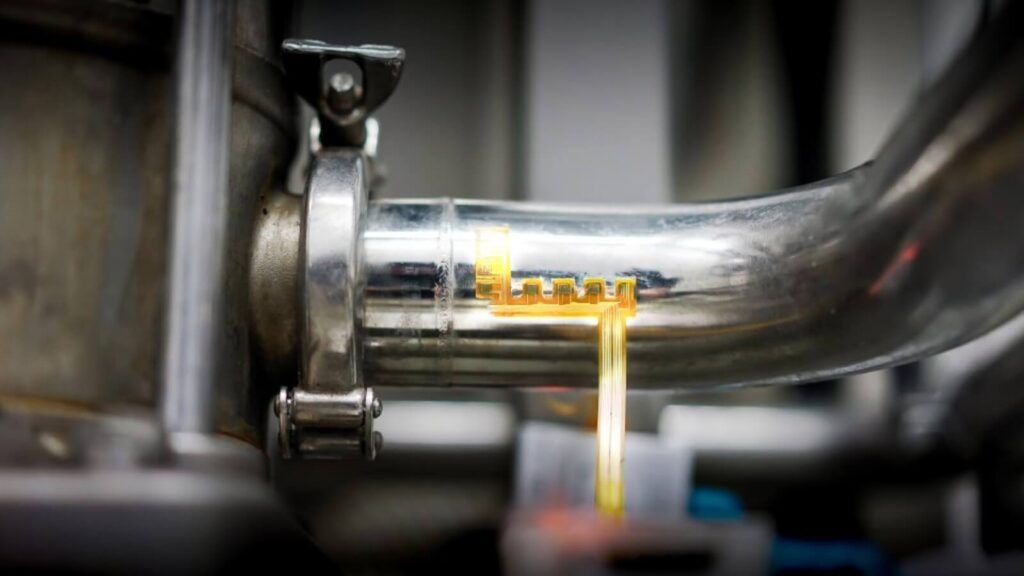
Feelit uses ultrathin flexible stickers printed with nano-ink sensors, invented by the company’s nanotech PhD cofounders.
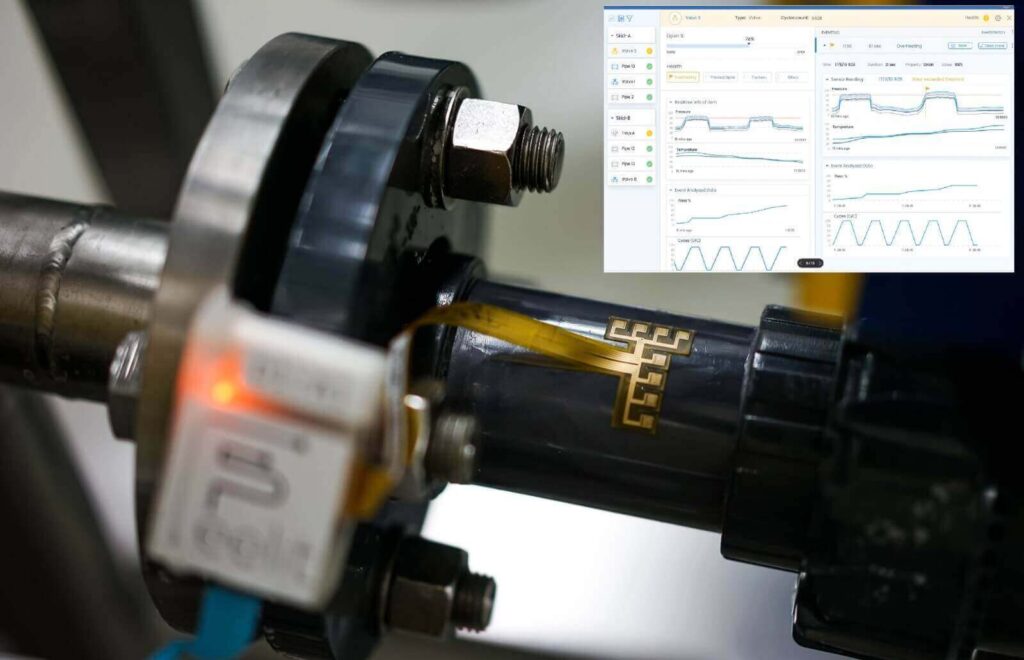
Affixed easily to any stationary or moving object — including valves, pumps or pipes — the sensors pick up on issues such as humidity, vibration, heat, pressure or micro-fractures that could impair performance and cause costly breakdowns and interruptions.
The stickers send the collected data to the cloud for instant analysis, providing human operators with live feedback on structural and performance changes in the machinery.
If the equipment “feels” it is about to fail, it sends a request for service or replacement.
“Before our graduate studies at the Technion, we worked in the semiconductor industry so we saw how faulty valves can cause millions of dollars of damage,” says Meital Segev-Bar, referring to herself and cofounder Gady Konvalina.
“We met again in Prof. Hossam Haick’s lab at the Technion, where we worked on his electronic nose concept. Then we played around with electronic ‘skin’ that attaches to an object and makes it capable of feeling when it’s being touched and when it’s in pain, just like human skin whose job is to alert to when something is wrong.”
Easy as a sticker
These projects led Segev-Bar, Konvalina and Haick to found Feelit in 2017 in the Technion DRIVE accelerator.
They got seed funding from the Technion’s tech-transfer company and a Japanese VC, as well as the Takwin VC fund supporting northern Israeli startups.
“We see a lot of Industry 4.0 monitoring solutions for assets like motor vibration, but we found that vibration, pressure and temperature cannot be monitored continuously and noninvasively in pipe and valve systems,” says Segev-Bar, the startup’s CTO.
“We wanted a solution that could be retrofitted and installed as easily as a sticker,” she tells ISRAEL21c.
An L-shaped Feelit sticker sending data to an operator’s dashboard. Photo courtesy of Feelit
Haifa-based Feelit has finished several pilot projects with its domestically produced nano-ink stickers and is starting installations in Israel and Europe.
“It’s meant for industries that have a flow process,” Segev-Bar explains. “We specialize in assets that materials flow through.”
That means food and beverages, oil and gas, pharmaceuticals and chemicals, and any industry that uses pneumatic lines, such as auto manufacturing.
Feelit stickers also could be used in robotics and other IoT-related industries, she adds.
Investment from Henkel
The company recently concluded a $7 million Series A round in which the prominent investor is Henkel Tech Ventures of Germany.
Henkel’s adhesive materials are used in more than 800 different industries including steel mills, car factories, mining equipment and power turbines around the globe.
Feelit allows manufacturers to monitor the health of machinery in real time. Photo courtesy of Feelit
Paolo Bavaj, head of corporate venturing for Henkel Adhesive Technologies, said the company looks for novel, scalable technologies that can help traditional businesses meet increasing demands for efficient industrial IoT solutions.
“The investment in Feelit perfectly fits our business strategy and underlines the value of our long-standing engagement in Israel as a major global hub for materials and technology startups,” Bavaj said.
“With Feelit’s growth potential and Henkel’s industry expertise and market reach, our unique nanotechnology will be able to benefit a broad relevant client base,” said Feelit CEO Konvalina.
“The partnership has already begun opening up new opportunities in the oil and gas industry and working with Henkel’s MRO [maintenance, repair and operations] unit will help us to develop even more verticals and applications.”