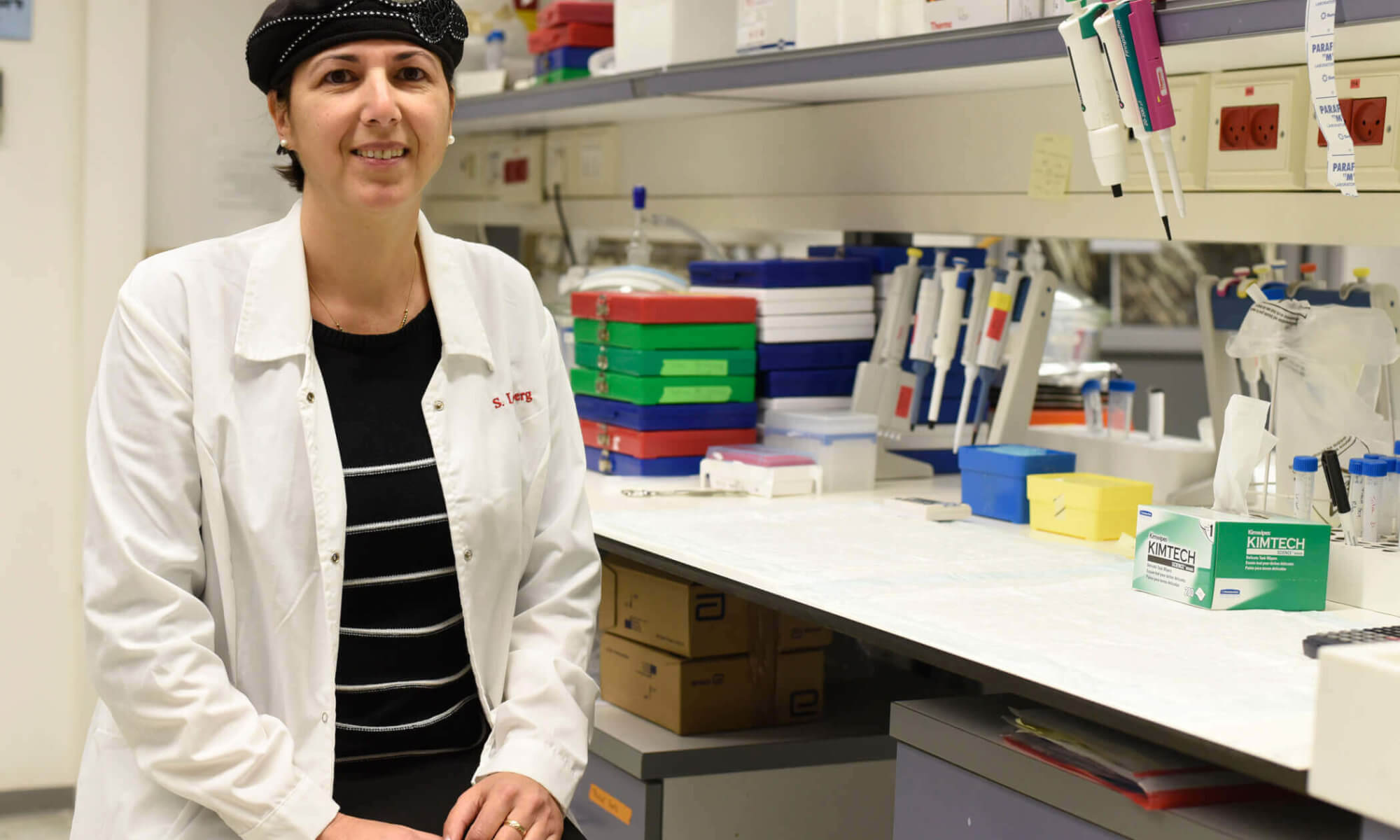
Researchers in the Technion-Israel Institute of Technology Faculty of Biology have unearthed a new role of the caspase-3 protein in organ size determination. Their discovery could pave the way for novel therapeutic approaches in regenerative medicine and tumor therapy. This research was published as a cover story inĀ Molecular Cell.

HAIFA, ISRAEL (July 27, 2018) – Scientists have long known that organ size is shaped by many factors, including the size of each cell, proliferation, cell differentiation, death, and, of course, the total number of cells. However, the molecular mechanisms directly regulating organ size had until now remained elusive, setting the stage for the current research directed by Assistant Professor Yaron Fuchs and led by Dr. Yahav Yosefzon.

The Technion researchers discovered a previously unknown molecular mechanism that regulates the size of sebaceous glands in the skin. The skin is the largest organ in the human body, weighing approximately 9 kg (almost 20 lbs.) in adults and with an overall area of approximately 2 m2Ā (21.5 square feet). It is composed of an epidermis (the outer layer) and the dermis (the lower layer). The sebaceous glands are located in the epidermis, where they produce and secrete an oily substance (sebum) that protects the skin and the hairs covering it. Since sebaceous gland abnormalities can lead to acne and cancer development, there is a great need to understand the mechanisms responsible for their normal development and size.

Assistant Professor Yaron Fuchs and led by Dr. Yahav Yosefzon.

The present study focused on the caspase-3 protein. Caspase-3 is considered a key player in apoptosis, a form of programmed cell death where dysfunctional cells ā€œcommit suicide,ā€ which is essential for preventing the emergence of cancer and ensuring organismal survival. Caspase-3 functions by cleaving other vital proteins to execute cell destruction.

The Technion researchers found that, in contrast to the accepted dogma, caspase-3 does not induce apoptosis, but rather, leads to cell proliferation and thereby influences sebaceous gland size. Therefore they sought to elucidate the molecular mechanism by which Caspase-3 regulates cell expansion and organ size.

One major protein that governs these processes is the YAP protein. YAP is a transcription factor, which drives cell proliferation when it gains access to the cell nucleus. It is therefore very tightly regulated, in order to avoid uncontrolled cell division, which can lead to the development of cancer. To prevent it from entering the nucleus, YAP is anchored to the cell membrane by the a-catenin protein. The present work discovered that caspase-3 can cleave a-catenin, thereby liberating YAP from the membrane, enabling it to translocate to the cell nucleus and promote cell division.

This discovery isĀ particularly important as it sheds light on the common cancer treatments, including radiation and chemotherapy, which intentionally accelerate caspase-3 activity to execute tumor cell apoptosis. ā€œOur discovery has various potential applications, including in hindering cancer and promoting wound healing by manipulating caspase-3. Now that we have uncovered this novel non-apoptotic role of caspase-3, it should and must be taken into consideration in treatment strategies. Our lab’s preliminary and promising results indicate that inhibition of caspase-3 may be a highly efficacious means of treating advanced cancerous tumors,ā€ said Assistant Professor Fuchs.

Assistant Professor Fuchs heads the Laboratory of Stem Cell Biology and Regenerative Medicine at the Faculty of Biology and is a researcher at the Lorry Lokey Interdisciplinary Center for Life Sciences and Engineering. His lab focuses on researching stem cells, which are responsible for tissue regeneration in our bodies. Within this framework, the lab isolates new stem cell populations, studies the mechanisms underlying stem cell apoptosis and promotes novel techniques for regenerative medicine and cancer therapy.

The study was supported by the Office of the Chief Scientist (KAMIN), RCDA, ICRF and GIF grants.

Original article can be found here.

“From Jaffa to Java” Technion celebrates over 70 years of innovation.

You can read Technion President, Peretz Lavie’s annual report for 2018, here.


Wearable health monitoring devices are among the most exciting scientific developments. Technology capable of tracking vital signs, activity, fitness, and sleep quality such as in the Apple Watch and Fitbit already have the potential to encourage healthier lifestyles and even save lives.Ā  Over the past several years, these devices have been instrumental in alerting a number of users of abnormal heart rates, driving them to seek immediate medical attention, and ultimately saving them from life-threatening conditions. In at least one case, unusual Fitbit data eventually led to the discovery of an early pregnancy.

Pushing the boundary in this field are recent Israeli developments in self-charging, self-repairing disease detectors incorporated into everyday clothing.

Spearheaded by Professor Hossam Haick of the Wolfson Faculty of Chemical Engineering at the Technion – Israel Institute of Technology and postdoctoral researcher Weiwei Wu, these devices include electrodes and sensors applied onto wearable nylon textiles and permeable skin-mimicking bandages that constantly monitor breath rate, skin odor and chemical biomarkers (saliva, sweat). Specific irregularities in these parameters will indicate the presence of a disease, according to the research results published in Advanced Materials earlier this year.

Though certain technologies already possess these capabilities, Haick’s devices set themselves apart through self-sustainability. In particular, the gadget hopes to use cutting-edge materials that heal themselves and take advantage of the body’s wasted energy. Its components harvest the energy of body heat and movement, and they use synthetics that regenerate its properties upon damage. These advances alleviate risks such as leaving a device uncharged, torn or scratched. This technology will increasingly improve the quality of life through becoming a remote nurse that constantly accompanies an individual, according to the researchers.

Due to the constant monitoring of an individual’s vitals, these sensors provide a diagnosis of diseases in early stages. This prevents diseases from progressing, which Haick cites as a motivation for his research. ā€œThe results are very encouraging,ā€ Haick tells NoCamels via e-mail, pointing to recent testing done on tuberculosis screening using sensors integrated into bandages. Among the standard ā€œhealthyā€ ranges set for the devices are 60 to 100 heartbeats and seven to eight breaths per minute.

However, the product is only in its preliminary stages. According to Haick, though the discrete devices exist, the sensor and energy units are yet to be integrated into one product. Currently, the research team awaits a patent on a breathable self-healing platform imitating skin. Haick also cites energy generation, flexibility and accuracy as challenges for the device. Although his research team waits for further results, Haick states he is already seeking investors for what he calls a ā€œpromising and prospective technology.ā€

The wearable health device sector has tremendous potential. Experts predict this market will reach nearly $20 billion by 2021. Not only do these technologies monitor a patient’s vitals, they also facilitate communication between patients and healthcare professionals around the clock and reduce the cost of human labor associated with constantly checking patients. Furthermore, they also have the potential to assist doctors, where technologies such as Google Glass help surgeons visualize CT and X-Ray scans while performing surgery consecutively, saving vital time and increasing accuracy.

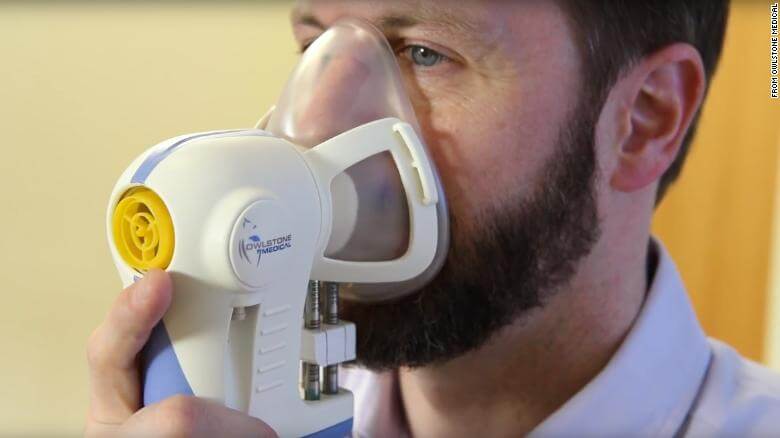
The new system is one in a long list of achievements for the award-winning scientist. In 2014, alongside Professor Nir Peled of Tel Aviv University’s Sackler Faculty of Medicine, Haick developed NaNose, a microchip incorporated into a breathalyzer capable of diagnosing various diseases such as Parkinson’s disease, multiple sclerosis, Alzheimer’s and cancer. The device uses the presence of specific volatile organic compounds, which are unique fingerprints for various forms of disease and cancer.

Haick says the NaNose is able to differentiate between malignant and benign tumors, as well as their source, with 90 percent accuracy. The European Commission awarded him $6.8 million for further development of the technology. Alongside this grant, Haick has received the Bill and Melinda Gates Foundation Award and been named on ā€œWorld’s 35 leading young scientistsā€ on MIT Technology Review for his research in non-invasive disease detection methods. He currently serves as faculty and F.M.W. Academic Chair in the Department of Chemical Engineering at Technion – Israel Institute of Technology.

Haick’s research group is currently working on other related projects. Notably, the team is developing self-repairing multipurpose health monitors that resemble tattoos imprinted on skin. This device will make use of a field-effect transistor (FET), which can modify its behavior through a varying electric field. The group is also improving existing self-generating power sources for wearable device platforms.


This article was written by Ben Huang, published on no camels Israel Innovation News on June 12, 2018.

Former Chief Rabbi praises ‘science and religion as “the great partnership our world needs’, as he accepts gong from the Israeli tech university

June 11, 2018

FormerĀ Chief Rabbi Lord Jonathan Sacks has praised science and religion as ā€œthe great partnership our world needsā€ as he was awarded an honourary doctorate by Israeli technology university Technion.

Sacks was praised for his ā€œprofound dedication to the State of Israel and the Jewish peopleā€ and a ā€œlifetime contribution to enriching Jewish identity,ā€ as he was described by the university as ā€œone of the world’s foremost Jewish thinkers and philosophersā€.

Previous honourary doctors at Technion have included Margaret Thatcher, Albert Einstein and Elie Wiesel.

In his speech, Sacks said: ā€œThe relationship between science and religion is one of the most important connections in the world today. Often portrayed as a conflict, they are radically different disciplines. Science takes things apart to see how they work. Religion puts things together to see what they mean. Both are vital.ā€

He added: ā€œIn a world of remarkable scientific discoveries, so many of them in Israel, we must remember that ethics and morality have a significant part to play in this development.

ā€œThe Jewish people and the Jewish state have always simultaneously sought to be a creative and a moral force. Nowhere in the world is better placed to maintain this balance than here in Israel, and the Technion is one of the key institutions at the cutting edge of this work.ā€

See original article on The Jewish News, Times of Israel here.

Israel’s Technion Launches Unprecedented $1.8 Billion Campaign to Support University’s World-Changing Innovation


June 10, 2018

The Technion-Israel Institute of Technology has kicked off a global $1.8 billion, ten-year fundraising campaign – the largest and most ambitious initiative of its kind ever launched by an Israeli university.

The campaign will raise support for world-changing, life-saving innovation, and better prepare for the challenges and opportunities the digital revolution brings with it, and which are expected to be at the focus of global attention well into the second half of the 21st century.

The unprecedented effort was officially launched at the June 2018 Technion Board of Governors meeting, and will conclude in 2024, the centennial of the first Technion class. The campaign will deliver funding that amplifies the Technion’s outsized impact in sectors including the environment, sustainability, alternative energy and water conservation; health and medicine; artificial intelligence, information, and communication; quantum science, matter, and engineering; and advancing Israel security, leadership, and diversity.

Through the campaign, the Haifa, Israel-based Technion—Israel’s first university—will fund crucial areas of need such as fellowships and other student support, faculty recruitment and retention, research infrastructure, and capital projects.

ā€œThis campaign is truly global in nature,ā€ said Prof. Peretz Lavie, President of the Technion. ā€œNot only does it involve our societies around the world—including the UK, Canada, Switzerland, Australia, France, Israel, and the U.S.—but it will result in global benefits, such as better quality in soil, water, and air, easy-to-use sources for clean and renewable energy, engineering aid to developing countries, advancing breakthroughs in fighting cancer, and much, much more.ā€

ā€œWe live in the era of social entrepreneurship, when top philanthropists seek to maximize the return on investment for every single gift,ā€ said Jeffrey Richard, CEO of the American Technion Society, whose donors have provided more than $2.5 billion for the Technion since 1940. ā€œIt is important that potential donors understand just how far their money goes at the Technion.ā€

The Technion has earned international recognition for its research in a myriad of fields, including regenerative medicine, aerospace, computer science, quantum engineering, nanotechnology, biotechnology, the life sciences and more. The institution has signed memoranda of understanding with more than 200 universities and research frameworks abroad, and last year inaugurated the Guangdong Technion Israel Institute of Technology, Israel’s first university campus in China, and celebrated the move of the Jacobs Technion-Cornell Institute to its permanent home, the new Cornell Tech campus on Roosevelt Island in New York.

Ambassador Ronald S. Lauder has accepted the Technion’s invitation to serve as an honorary chair of the Technion Global Campaign. In October, Ronald and Jo Carole Lauder will host a special event at their home in New York to launch the Technion campaign in the United States. The event will be attended by the President of the Technion, friends of the Technion in New York and personal friends of the Lauder family.

ā€œI feel a profound sense of commitment and responsibility to the Technion, Israel’s first and best school of engineering, the professional breeding house for so many of us, and the institution that has addressed – and that will continue to address – so many of the world’s challenges,ā€ said Zohar Zisapel, the Israeli Chair of the Technion Global Campaign. ā€œI’m honored to be a part of the Technion’s Global Campaign Committee, and to help ensure the future of this unique institution to the benefit of millions around the globe.ā€

ā€œThe standard practice of campaign communications among leading US universities is to soft launch the campaign and then make it public once one third of the campaign goal is secured,ā€ said Prof. Boaz Golany, Vice President for External Relations and Resource Development at Technion. ā€œWhen we launched the quiet phase of the campaign in October 2014, we estimated it would take four years to cross that threshold. We were glad to discover we were wrong. Thanks to the vision and generosity of our friends worldwide, we are already at a point in which we’ve raised more than 40% of our total goal of $1.8 billion.ā€

CBC Radio May 26, 2018

Listen here.

The issue of malnourished crops

Thanks to a fortuitous conversation between an Israeli chemical engineer who works on medical nanotechnology and his farmer friend, there’s a new way to deliver nourishment to nutrient-starved crops.

Avi Schroeder, the chemical engineer and cancer researcher from Technion — Israel Institute of TechnologyĀ asked his friend what are the major problems facing agriculture today. “He said, ‘You know Avi, one of the major issues we’re facing is that in some of the crops we try to grow, we actually have a lack of nutrients. And then we end up not growing those crops even though they’re very valuable or very important crops.'”

This problem is only going to become more acute in many regions of the world as global population approaches eight billion people.

“Feeding them with healthy food and nutritious food is becoming a major limiting factor. And … the land we can actually grow crops on are also becoming smaller and smaller in every country because people need to build houses too. So what we want is to get actually more crops per hectare.”

The way farmers currently deliver nutrients to malnourished agricultural crops is very inefficient. Much of what is added to the leaves of the plant is wasted. Most of it washes away or isn’t taken up by the plants.

If plants don’t get the nutrients they need, their leaves start to yellow, their growth becomes stuntedĀ and they don’t produce as much food asĀ nutrient-rich crops.

The way I imagine these packets are tennis balls, but the size of each one of these tennis balls is actually 1/1,000th the width of a human hair.– Dr. Avi Schroeder, a chemical engineer at Technion

When Schroeder heard about this problem, he immediately recognized the opportunity to apply advances made in medical nanotechnology for drug delivery to agriculture.

Using medical nanotechnology for agricultural purposesĀ 

“We work primarily in the field of medicine,” says Schroeder. “What we do many times is we’ll load minuscule doses of medicine into nanoparticles — we’ll inject them into the patient. And those nanoparticles will actually be able to detect the disease site inside the body. That sounded very, very similar to the problem the farmers were actually facing — how do you get a medicine into a crop or a nutrient into a crop and get it to the right region within the crop where it’s actually necessary.”

The nanoparticles Schroeder developed are tinyĀ packages that can deliver nutrients — any nutrients — that areĀ placed inside.

“The way I imagine these packets are tennis balls, but the size of each one of these tennis balls is actually 1/1,000th the width of a human hair. So they are about 100 nanometres in diameter.”
Therapeutic nanoparticles penetrate leaves and deliver nutrients to agricultural crops. (Avi Schroeder/Technion — Israel Institute of Technology)

These nano-sized “tennis balls” are made of phospholipids, which are very similar to molecules that make up the cell walls in our bodies, and also those of plants. In this case, the raw materials came from soybean plants.

Schroeder tested nanoparticles containing either magnesium or iron nutrients on tomato plants grown in soil missing these nutrients. What he discovered, he says, amazedĀ him.

“We know today, when you spray ordinary nutrients or different chemicals on plants, usually out of each 1,000 molecules that are sprayed on the plant, only one will actually penetrate deeply into the plant. Here what we found is out of each of 1,000 molecules that were sprayed, we actually had between 250 to 350 molecules that actually penetrated the plant.”Ā – Dr. Avi Schroeder, Technion  — Israel Institute of Technology.

Results of their study

“We were totally shocked when we saw the data,” says Schroeder.

“We know today, when you spray ordinary nutrients or different chemicals on plants, usually out of each 1,000 molecules that are sprayed on the plant, only one will actually penetrate deeply into the plant. Here what we found is out of each of 1,000 molecules that were sprayed, we actually had between 250 to 350 molecules that actually penetrated the plant.”

Not only did a good proportion of these nutrients make it into the plant, but the plants that receivedĀ the nutrients turned from yellow to green and grew into healthy plants.

Schroeder sees this technology as a “game changer.”

With this nanotechnology, he says, “We’ll start seeing crops that grow higher, give more produce, and also more than that, the produce itself — the fruits and vegetables that will be coming out of these crops — will have a higher nutritional value because they grew in an environment where they had all the nutrients they actually needed.”

Technion UK wishes to appoint a Chief Executive to run its UK office which is located in Mayfair

Technion – Israel Institute of Technology, in Haifa is Israel’s Nobel Prize winning university of science and hi-tech research and one of the world’s most prestigious and highly ranked technological institutes. It plays a vital role in every aspect of Israel’s life, from defence to computer science and medical research, with global reputation and impact.

The Chief Executive’s objectives are to raise funds for Technion, interpret the vision of Technion within the UK and promote support for and awareness of Technion and its importance to Israel within the scientific, academic and business world. Achieving these objectives will require sound strategic and leadership skills, familiarity with the UK Jewish community and the wider business community and a strong relationship with the State of Israel.

For more information and to apply for this position contact Tony Bernstein, Executive Director on 020 7495 6824.

Applications and CV to info@technionuk.org by Thursday 17th May 2018.

Israeli researchers kill a cancerous tumour with synthetic cells


Israeli scientists and researches have been at the forefront of extensive studies on cancer and cancer treatment over the past several decades. With the disease being the main cause of death in Israel, universities, medical centres, hospitals, and labs have taken the lead in developing innovative care plans and undertaking sophisticated research to help advance understanding and knowledge of cancer, of which there are over 100 types, and for which there is no known cure.

Israeli scientists at the Technion-Israel Institute of Technology have successfully treated a cancerous tumour, eradicating its cancer cells using a “nano-factory” – a synthetic cell that produces anti-cancer proteins within the tissue, the Technion announced in February.

Synthetic cells, the prestigious Haifa-based university says, “are artificial systems with capabilities similar to, and, at time, superior to those of natural cells.”

After experimenting with the synthetic cells in a lab, the technology was tested on mice where the proteins produced by the engineered particles eradicated the cancer cells once they reached the tumour, the Technion said.

Assistant Professor Avi Schroeder at the Wolfson Faculty of Chemical Engineering at the Technion who co-led the research with doctoral student Nitzan Krinsky said, “By coding the integrated DNA template, the particles we developed can produce a variety of protein medicines. They are modular, meaning they allow for activation of protein production in accordance with the environmental conditions.

“The artificial cells we’ve developed at the Technion may take an important part in the personalised medicine trend – adjustment of treatment to the genetic and medical profile of a specific patient,” he added.

Harnessing light and gold for drug-delivery in treatments including cancerĀ 

Also at the Technion, Israeli scientists announced this year that they have developed technology that enables drug delivery to target diseased tissue only, using light and gold particles, which can be used to make cancer treatments, for example, more effective.

The system harnesses the particles to specifically target the affected tissue, like a tumour, rather than dispersed throughout the body which is often harmful, the university said. “A prime example of this is the use of chemotherapy drugs, which work to block cell division, causing hair loss and bowel issues in cancer patients (hair growth and waste elimination both depend on rapid cell turnover),” the Technion said in a statement.

The scientists are aiming to tackle head and neck cancers specifically, because “a major problem in the treatment of those cancers is their resistance to traditional radiotherapy,” Aron Popovtzer, a clinical professor of oncology at the Sackler Faculty of Medicine and the Tel Aviv University, who led the study, told the Times of Israel in February.

“From previous studies, we knew that gold helps increase the intensity of the radiation absorbed by tumours,” he went on. “But if you inject gold particles into a person, it can go anywhere. The key was to get the gold to settle onto the tumours.”

The non-invasive drug-release method uses a unique polymer coating that contains nanoscale gold particles along with the drug itself, the Haifa-based university said. The drug only releases when a light shines on the gold particles, causing the polymeric coating to melt. The drugs are injected into the bloodstream but only activated at the targeted location, using the external light on the gold particles to find the location of the affected tissue.

Continue reading about the other leading breakthroughs in cancer research and detection on NoCamels.

Words taken from the article published on NoCamels on Ā April 12, 2018.

LONDON, 6 March 2018 – Technion UK is proud to host the Ron Arad lecture in London. Presenting at the Royal College of Physicians, Professor Hossam Haick from the Department of Chemical Engineering and the Russell Berrie Nanotechnology Institute at the Technion in Israel and an expert in the field of nanotechnology and non-invasive disease diagnosis, delivered a lecture on the developments into his pioneering research into nanoarrays that he is using to identify disease biomarkers as a novel diagnostic tool.

Prof. Haick is an Israeli-Christian Arab scientist and engineer and is the pioneer of the Electronic Nose – a medical device that can sniff out 17 specific diseases in a person’s breath, including Alzheimer’s, Parkinson’s, Tuberculous, Diabetes and Lung Cancer. As an active innovative scientist, he has attracted the attentions of the world’s billionaires such as Bill Gates and he has been in collaboration with Bill and Melinda Gates foundation in the diagnostics of diseases.

At the lecture, Prof. Haick said, ā€œEvery disease has a unique signature, known as what we call a ā€˜breath print’. The challenge is to bring the best science we have proven into reality by developing a smaller device that captures all the components of a disease that appear in the breath.’

Prof. Haick continued to demonstrate how current advances in his research has the potential to identify diseases though sensors in mobile phones and wearable technology. From analysing 3700 volunteers, the technology under development at The Technion also has the potential to predict the occurrence of cancer in the future, based on results of healthy people that are currently under the diagnosis with the breath analysis.

He continued, ā€œWe cannot develop this technology in Israel without developing the best science. The integration between the software, machine learning and academic intelligence will make a critical change in the early detection and prevention of cancerous diseases.ā€

Daniel Peltz OBE, Chairman of Technion UK said, ā€œWe’re delighted to welcome Prof. Haick to London to showcase this latest progressive innovation in cancer research from The Technion.’

ā€œTechnion students undertake scientific research which is powering Israel’s rapid high-tech growth; our students are brilliant at challenging, creating and inventing – skills which the Prof. Haick exemplifies. The marvellous technology and advancement in non-evasive disease detection, discoveries in nanotechnology to help detect disease from someone’s breath is the future of disease detection.ā€