Breakthrough in Regenerating Damaged Tissues. Technion and Intel Inaugurate Centre for Artificial Intelligence. Technion PhD Student Wins Google Fellowship and more…
Read here for the latest from the Technion.
Breakthrough in Regenerating Damaged Tissues. Technion and Intel Inaugurate Centre for Artificial Intelligence. Technion PhD Student Wins Google Fellowship and more…
Read here for the latest from the Technion.
A breathalyzer designed to detect multiple cancers early is being tested in the UK.
Several illnesses are known to create signature smells from the body, including typhoid fever reported to smell like baked bread and the aroma of acetone, said to be similar to rotten apples, on the breath of diabetics. Recent research has also shown that a person’s breath could also indicate the presence of cancer.
To test this theory, Cancer Research UK have launched a two-year trial into a clinical device, called the Breath Biopsy, to find out if exhaled airborne molecules can be useful for cancer detection.
In the body’s normal metabolic processes, molecules called volatile organic compounds (VOCs) are produced. It’s thought that cancer can create a different pattern of VOCs, which researchers hope to identify using the device. “Our goal is, can we spot these subtle differences?,” Billy Boyle, co-founder and CEO at Owlstone Medical which developed the device, told CNN.
The trial, which is being run by the Cancer Research UK Cambridge Centre, is recruiting up to 1,500 participants, including healthy people to act as a control group.
Patients with stomach and esophageal cancers will initially be asked to try the test, before expanding to patients with prostate, kidney, bladder, liver and pancreatic cancers.
Participants will be asked to breathe into the device for 10 minutes to provide a sample, which will be analyzed by Owlstone Medical’s laboratory in Cambridge.
The idea is to identify if cancer signals are similar or different and how early any signals could be picked up. If some people go on to develop cancer, their samples will be compared to those who don’t develop the disease.
Late diagnosis
“We urgently need to develop new tools, like this breath test, which could help to detect and diagnose cancer earlier, giving patients the best chance of surviving their disease,” Professor Rebecca Fitzgerald, lead trial investigator at the Cancer Research UK Cambridge Centre, said in a statement.
Almost half of cancers are diagnosed at a late stage in England, according to Cancer Research UK. Some of the reasons are due to patients’ fears of invasive tests, a lack of knowledge of cancer signs and symptoms, and the lack of early detection tests for certain cancers.
Early detection can be a matter of life and death added Boyle, who added that around 85% of people with lung cancer are diagnosed at a late stage, “and they will die in one or two years [because] by the time doctors diagnose it, it is too late.”There are more than 360,000 new cancer cases in the UK every year, according to Cancer Research UK. Globally, an estimated 18.1 million new cases of cancer were reported in 2018, according to the World Health Organization.
The need for trials
In 2017, researchers told CNN they had developed a device which — using nanorays to analyze breath — can identify Parkinson’s disease, various cancers, kidney failure, multiple sclerosis and Crohn’s disease with 86% accuracy.
But the experimental technology analyzing breath had a number of issues it had to address: including the problem of storing breath that is not immediately analyzed.
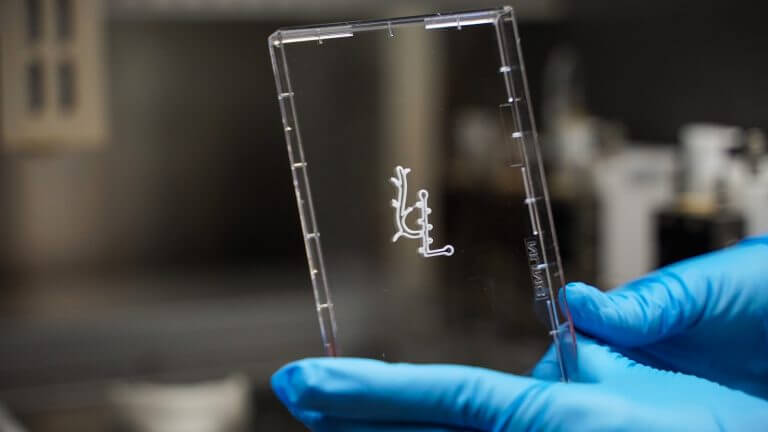
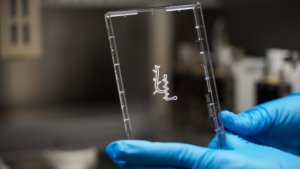
Boyle agreed that it is hard to “capture, store, and transport” breath, but added that the Breath Biopsy device has been developed to solve those issues. He said the device captures chemicals using a cartridge, which “acts like a sponge,” and it is then transported to a lab where it is analyzed.
If the trial turns into a success, both Boyle and Cancer Research hope the breath biopsies will be used in doctors’ practices to figure out whether patients should be referred for further diagnostic tests.
“Through this clinical trial we hope to find signatures in breath needed to detect cancers earlier — it’s the crucial next step in developing this technology,” Fitzgerald said in a statement.
Today’s widespread interest in breath analysis stems from the relatively recent discovery — within the past 20 years or so — that nitric oxide, a common pollutant, works as a signaling molecule in the cardiovascular system, Terence Risby, professor emeritus at the Johns Hopkins University Bloomberg School of Public Health, told CNN in 2017. The three scientists who made the discovery won a Nobel Prize for their efforts in 1998.
The theory behind the technology is that each of us has a unique chemical “fingerprint.” Each disease also has a particular chemical signature, which can be detected on our breath.
CNN’s Susan Scutti contributed to this report.
Article published on CNN, January 3, 2019
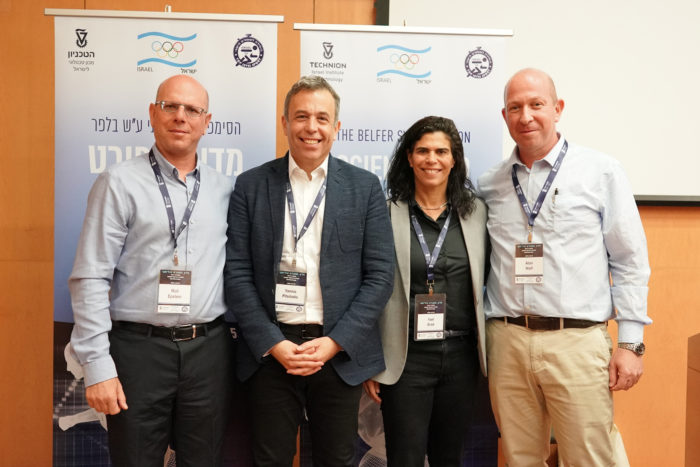
The Olympic Committee of Israel and Technion have established a joint research center to advance Olympic Sports in Israel to be headed by Prof. Alon Wolf, Technion Faculty of Mechanical Engineering
The Israeli Olympic Sports Research Center aims to encourage studies that will enhance Olympic sports in Israel in line with US and European models.
Yigal Carmi, Chairman of the Olympic Committee of Israel said, “The (joint) establishment of the center will position Israel in an advantageous position over our competitors in world sports with regards to scientific knowledge and technology. The fields of biomechanics, motion analysis, and technological development are areas of application that will now receive special attention so the performance of our athletes can be improved. The Olympic Committee of Israel welcomes and acknowledges this strategic cooperation with Technion, which involves the fusion of brilliant scientific minds for the benefit of Israeli Olympic sports. We are certain that this will push our sports performance forward.”
Technion President Prof. Peretz Lavie welcomed the establishment of the new research center and said, “The cooperation between the Olympic Committee of Israel and the Technion is exceptional and very promising. This link between Technion scientists and leading Israeli athletes will upgrade human performance and ensure future achievements.”

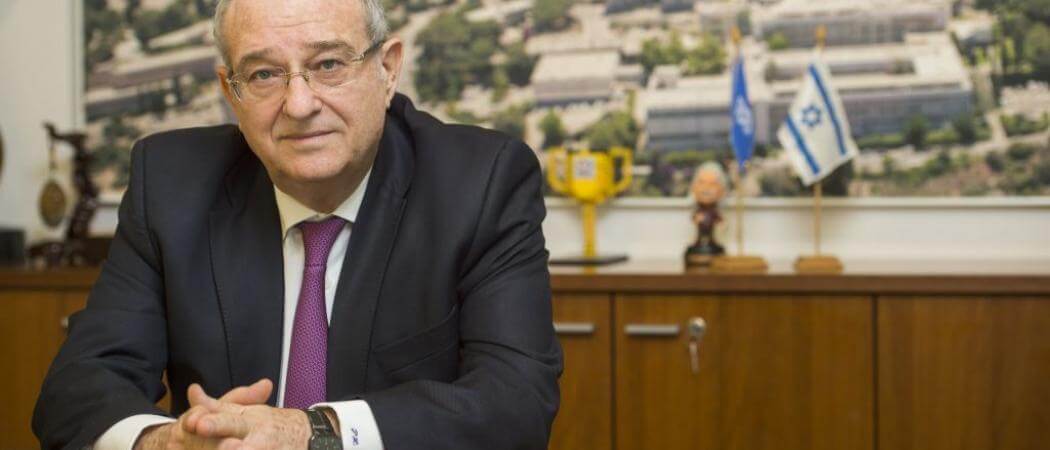
Yigal Carmi, Chairman of the Olympic Committee of Israel (on the left) and Technion President Prof. Peretz Lavie
The joint research activity has already begun. The center’s first research goal is related to windsurfing. Gur Steinberg, who coaches the Israeli windsurfing team, and Yair Talmon, Scientific and Technical Coordinator of the competitive sports unit, targeted as their first goal to research surfer/ surfboard compatibility in order to provide the athlete with best performance ability.
Steinberg explained that a certain surfboard model can have various types of fins and this can make a difference in the athlete’s performance. This difference requires each surfer to examine and test the selected fin over time, but this takes much effort and sometimes even causes the fins to break.
Steinberg and Talmon’s initiative led to a Technion study named, ‘The Mechanical Signature of Olympic Surfboard Fins,’ which makes it possible to differentiate accurately among the various fins and adapt them optimally to the surfer. The research was conducted at Technion’s Material Mechanics Center Faculty of Mechanical Engineering, headed by Prof. Daniel Rittel, and with the scientific support of Prof. Nitai Drimer and Prof. Alon Wolf who is also the Head of the Laboratory for Bio-Robotics and Biomechanics. Prof Wolf’s research encompasses many areas, including robots used for surgery, rehabilitation and rescue and recovery missions; the study of the mechanics of the body; and the development of technologies to improve the motor function of healthy and sick people.

Yael Arad, first Israeli Olympic medalist, (on the right) and Prof. Alon Wolf
“Very often we see that a fraction of a second or a few centimeters determine whether a competitor will win a gold medal. This kind of advantage is the result of scientific understanding and its implementation in training and equipment. We believe that if we implement the knowledge and capabilities that have made Israel the Start-Up Nation that it is today, into Olympic sports, we will be able to advance the achievements of our Olympic athletes and help them become role models whose achievements will infiltrate into Israel’s sports culture,” Prof. Wolf said.

Yigal Carmi, Chairman of the Olympic Committee of Israel, Technion President Prof. Peretz Lavie
The Olympic Committee in Israel is an umbrella organization for Israeli sports, one that brings together all the Olympic branches and represents Israel in the International Olympic Committee. Its main function is to ensure the optimal preparation of the athletes in Israel’s delegations to the Olympic Games and other competitions.
The new agreement was signed by the Olympic Committee in Israel, the Technion and the Technion Institute for Research and Development. The strategic agreement for the establishment of the new Israeli Olympic Sports Research Center was initiated following a seminar held at the Technion for Olympic sports coaches and in recognition of the need for extensive and in-depth research on various aspects of sports.
On behalf of the Olympic Committee of Israel, were: Chairman, Yigal Carmi; Director-General, Gili Lustig; Committee Board Member and Sports Committee Chairman, Yael Arad; Scientific Director and physiologist, Muli Epstein and European Championship silver medalist, Yoav Omer.
Technion representatives included President, Prof. Peretz Lavie; Technion Vice President for Research, Prof. Wayne D. Kaplan; Technion Vice President for External Relations and Resource Development, Prof. Boaz Golany; Dean of the Faculty of Mechanical Engineering Prof. Yoram Halevi and Prof. Alon Wolf.
Original article posted on The Technion’s website.
Article by Jenny Frazer, published on Jewish News – Times of Israel on December 31, 2018.

The British charity fundraiser, Claire Lomas, has been made an honorary Fellow by Israel’s Technion as a result of her pioneering use of the ReWalk body suit.
Ms Lomas, a former equestrian event rider, had a riding accident in 2007 which left her with severe spinal injuries.
In 2012 she became the first UK user of the ReWalk suit, completing the London Marathon in 17 days wearing the device. It was invented by a Technion graduate, Dr Amit Goffer, and was processed through the university’s Technion incubator for further development before it was used in clinical trials.
It is a bionic walking assistance system, which uses powered leg attachments to enable partially paralysed users to stand and walk upright. Dr Goffer invented the device because he himself had become quadriplegic after a life-changing accident, and although he was not able to use the ReWalk himself it became a world-wide success in helping paraplegic cases.
Each year Technion awards six honorary fellowships to international public figures who have made outstanding contributions in the field of science and technology.
Ms Lomas, who lives in Leicestershire, was nominated by Alan Aziz, now chief executive of Technion UK, who took her to Israel to meet the developers of the ReWalk in 2014.
She told Jewish News: “I am absolutely delighted to be awarded with an honorary degree by the Technion in Israel. It will be 12 years since my life-changing accident that left me half-paralysed. The ReWalk suit, which was developed at the Technion, has been a huge part in my fundraising and rehabilitation — and I have lots more more plans for the future. I am very grateful for the use of such pioneering technology and was proud to be the UK’s first ReWalk user.”
The Algalafel is enriched with environment-friendly blue-green spirulina; students nab first prize in food competition
An ecologically friendly and nutritious microalgae that used to be a daily food source for the Aztecs in central Mexico could be making its way to Western tables in the form of a new kind of protein-rich falafel, the delicious Middle Eastern deep-fried chickpea balls.
Graduate students at the Biotechnology and Food Engineering Faculty at Israel’s Technion-Israel Institute of Technology have developed what they call the Algalafel, a new kind of falafel that enriches the traditional ingredients with spirulina — a biomass of blue-green algae which in its dried form contains about 60 percent protein and is seen as a solution for food insecurity and malnutrition.
The students nabbed first prize in the EIT Food Project (European Knowledge and Innovation Community) as part of an innovative microalgae product development competition, held in early December at the Technion. EIT Food is a pan-European consortium that focuses on promoting innovation and entrepreneurship in the food sector.
“It tasted very good, almost identical to regular falafel,” said Prof. Yoav Livney, the project leader.

Dried spirulina contains also 5% water, 24% carbohydrates, and 8% fat. Its cultivation uses much less land and water to produce protein and energy than do cattle or poultry.
For their new kind of falafel, the graduates, who worked on their product for a year, added a tahini that was enriched with astaxanthin, an anti-oxidant found naturally in certain algae and seafood that is known for giving salmon its reddish color and flamingo feathers their pink hue.
Growing cows for meat has been found to have one of the largest negative impacts on the global environment, and reducing meat consumption is necessary to cut gas emissions and avoid climate change, a study in the journal Nature showed. Some 56 billion animals — cows, lamb and poultry — are slaughtered every year to feed the world, where consumption of meat is set to grow 70% by 2050, according to the Food and Agriculture Organization of the United Nations, as middle classes in Asia and Africa join the trend.
Plant and algae-based – rather than animal-based – proteins are seen as a solution that could be both inexpensive and produced quickly in a relatively small space, without contributing to global warming.
In 1974 the World Health Organization described spirulina as “an interesting food for multiple reasons, rich in iron and protein” that can be fed to children without any risk.

The students were mentored by Prof. Maya Davidovich-Pinhas, Prof. Uri Lesmes, Prof. Avi Shpigelman and the project leader Livney. The Technion team consisted of Meital Kazir, Yarden Abuhassira-Cohen, Hani Shkolnikov, Hila Tarazi and Ina Nephomnyshy.
The product developed by the students is “getting a lot of interest” from a variety of parties eager to commercialize it, said Livney in a phone interview. The idea would be to bring a protein-rich falafel to the market possibly in a ready-to-eat frozen form, he said. The Technion, however, does not allow students to work on commercializing their products while still on scholarship, he said.
Second prize was awarded to a team of students from the German University of Hohenheim in Stuttgart who developed Algini, a lentil-based vegan product enriched with spirulina. In third place were students from Finland’s Helsinki University who created Spurtti, a vegan oatmeal dessert enriched with spirulina.
Nascent industry aims to reduce environmental impact of beef production.
Article written by Damian Carrington, published in The Guardian on 14 December 2018.
The first steak grown from cells in the lab and not requiring the slaughter of a cow has been produced in Israel.
The meat is not the finished article: the prototype costs $50 for a small strip, and the taste needs perfecting, according to its makers. But it is the first meat grown outside an animal that has a muscle-like texture similar to conventional meat.
It marks a significant step forward for a nascent industry that aims to provide people with real meat without the huge environmental impact and welfare problems of intensive livestock production. Other companies are producing beef, chicken, duck and pork cells in the lab, but for unstructured items such as burgers and nuggets.
No lab-based meat products are on sale to the public yet, though a US company, Just, has said its chicken nuggets will soon be in a few restaurants.
The lab-grown steak is at least three to four years away from commercial sale, according to Didier Toubia, the co-founder and chief executive of Aleph Farms.
The steak was produced using a mixture of cell types grown on a scaffold in a special medium, and Toubia said a series of challenges lay ahead to get the steak to market, including taste.
“It’s close and it tastes good, but we have a bit more work to make sure the taste is 100% similar to conventional meat,” he said. “But when you cook it, you really can smell the same smell of meat cooking.”
He said the $50 cost was “not insane” for a prototype. The first lab-grown beefburger, in 2013, cost €250,000. Toubia said the cost would come down as the production process was moved from the lab to a scalable commercial facility.
Another challenge is to increase the thickness of the steak, currently about 5mm. Here, the company is working with Prof Shulamit Levenberg, an expert in tissue engineering, at the Technion, Israel’s Institute of Technology.
Toubia’s team have already created a growth medium that is animal-free. The current standard for cell culture is foetal bovine serum, derived from the blood of cow foetuses, but it needs optimising. A few cells are needed to start the cell culture, and these are extracted from a living animal.
Plant-based alternatives to meat, such as the Impossible and Beyond burgers, have proliferated as people try to reduce the amount of meat they eat. But Toubia said: “Today, over 90% of consumers do eat meat and we think the percentage of vegetarians will not grow significantly despite many launches of plant-based products.
“If you want to have a real impact on the environment, we have to make sure we solve the issue of production, and we grow meat in a more efficient, sustainable way, with no animal welfare issues and no antibiotics.”
A series of recent scientific studies have found that huge reductions in meat-eating are essential in order to cut greenhouse gas emissions and avoid dangerous climate change. One found that avoiding meat and dairy products was the single biggest way to reduce an individual’s environmental impacton the planet, from slowing the annihilation of wildlife to healing dead zones in the oceans.
Lab-grown beef is very likely to have a much smaller environmental footprint than intensively reared beef. But Marco Springmann, at the University of Oxford, said: “Although the technologies are evolving, there is no indication that lab-grown meat is significantly better for the environment and health than existing alternatives to beef. The latest reviews have put the emissions of lab-grown meat at several times that of chicken and far above any plant-based alternative, in particular due to the large energy inputs needed during production.”
New Visitors Centre Inaugurated. Rabbi Debates Nobel laureate. Technion Researchers Shrink Tumours. Students Reveal Security Breaches and more…..
Read here for the latest from the Technion.
Tech Women encourages outstanding female students to continue their academic studies in science & engineering

[L-R] Rosalyn August, Donor of the GEM Initiative, Prof. Marcelle Machluf, Dean of the Faculty of Biotechnology and Food Engineering
From Kiryat Shmona to Beer Sheva, Ashdod, and the Golan Heights, over 800 outstanding female high school students from all over Israel attended the Tech Women 2018 event (21st November 2018), hosted by Technion to encourage outstanding female pupils to opt for science and engineering in their academic careers. This 4th annual event was made possible through the generosity of the Rosalyn August GEM Initiative.
In honor of the event, Rosalyn August arrived at Technion with her eldest granddaughter, Lauren. Rosalyn was born in a small town in Virginia, USA. The daughter of immigrant parents who opened a small jewelry shop which in time turned into a prosperous business. As a young woman growing up during the ’60s, Rosalyn felt a dissonance between what she wanted to become and what society at large, and her own family, in particular, felt suitable for her.
Rosalyn shared with the students that her acquaintance with Technion began a decade ago. She felt an instant bond with the quiet, underplayed vibe of the place. “There are many fields worthy of a donation, yet I chose Technion,” Rosalyn said. “Even though I don’t know much about technology, it is clear to me that technology is our future and it is our duty to help integrate women into this field. Trust yourselves, find what you love and love what you do.”
All of the students who were invited to participate in the event study mathematics and other science and technology related subjects, at the highest level of accreditation. During the event, they met with female researchers, faculty, and graduate students. They visited the laboratories and heard about the various fields of research and study.

Rosalyn August [center] with Dr Adi Hanuka and PhD graduate Sara Nagosa
When Technion was opened in 1924, female students comprised 6% of the student population, a ratio of 1 to 17. Gradually, and especially during the past decade, the number of female students at Technion has grown considerably, and today they account for 40% of the student population.
The students attended lectures and visited the labs of 10 engineering and science faculties: Andrew and Erna Viterbi Faculty of Electrical Engineering, Computer Science, Biotechnology and Food Engineering, Mechanical Engineering, Aerospace Engineering, Materials Science and Engineering, Physics, Mathematics, the Schulich Faculty of Chemistry and the William Davidson Faculty of Industrial Engineering and Management.
In her opening remarks, Prof. Marcelle Machluf, Dean of the Faculty of Biotechnology and Food Engineering said, “I have always had to prove myself and being the only woman in the room drives me even further in doing so. Women are the future and I encourage each and every one of you to come and study at the Technion. You all have talent and the ability to succeed, with or without affirmative action.”
Dr. Efrat Sabach who completed her doctoral thesis at Technion’s Faculty of Physics, said, “When I said that I wanted to study physics I was told that I would be the only girl among many boys but that didn’t scare me, I always asked questions and I was always given a legitimacy for these questions.”
With regards to her thesis, under the guidance of Prof. Noam Soker, Dr. Sabach said, “I am an astrophysicist who studies processes in space and even though I am the only woman in my research team I have never felt unequal to the others.”

Students attending the Tech Women 2018 event
Sara Nagosa, a Ph.D. student at the Ruth and Bruce Rappaport Faculty of Medicine said that she chose Technion because she wanted to study at the best academic institute. “At first I was scared, but then I understood that if I don’t try I will never know if I am capable and that is how I made it to today, the final year of my doctoral thesis. Technion gave me more than knowledge, it provided me with determination, perseverance, and tools for life.”
When you think of electrical engineers you probably do not have me in mind, but here I am, a woman with a doctoral degree, at the Andrew and Erna Viterbi Faculty of Electrical Engineering, said Dr. Adi Hanuka.
Dr. Hanuka told the students about the two projects which she has been leading over the past years: the first, a miniature particle accelerator intended for use in X-ray and radiation equipment and the second, an Eyelid Motion Monitor (EMM) for diagnosing various diseases.
During my doctoral thesis, I traveled to the USA to continue my studies at Stanford University. The people in my research team were surprised that I was female, and someone even pointed out that girls are not supposed to study electrical engineering but rather psychology or economics. This leads me to say that it is not enough to strengthen only the girls and relay to them how capable they are, but also to ‘educate’ boys in a way that will make them see that girls do not fall short with regards to talent and ability.”
Article originally published on Technion.ac.il
Sir Richard Dearlove KCMG OBE, former head of the British Secret and Intelligence Service (MI6), gave a most interesting and enlightening presentation to over 100 people in the historic surroundings of the Reform Club, Pall Mall in Central London. The event was hosted by Daniel Peltz OBE, the Chairman of Technion UK, and his wife the Hon Elizabeth Peltz.
Sir Richard recognised the massive impact that Technion technology is benefitting many countries around world and that technology will be the most important factor in a future negotiated peace settlement between Israel and its neighbours.
Sir Richard emphasised the key role that Technion plays in Israel’s security and economic development. He spoke about the vital role that fast-moving technologies are impacting on the security and defence strategies of countries around the world. Sir Richard observed that some countries are using sophisticated technology to monitor and measure the behaviour of each citizen.
He spoke about the fundamental change in dynamics that is taking place in the Middle East noting the alignment of Saudi Arabia and Israel on defence and security issues and he saw Egypt as a force for stability in the future.


Prof. Hossam Haick was handed the EU Innovation Award on Behalf of the SNIFFPHONE Project
Professor Hossam Haick from the Wolfson Faculty of Chemical Engineering receives the “European Commission Innovation Prize” on behalf of the SNIFFPHONE project and partners. The award was handed in Lisbon on November 21, at The European Forum of Electronic Components and Systems (EFECS). This is a great honor rewarding the excellent concept and work that has been done in this project.
The SNIFFPHONE project was established and coordinated by Professor Hossam Haick under the auspicious support of the Horizon 2020 ICT-02a-2014 Program for Smart System Integration, in collaboration with additional 8 partners from additional five countries.

The SNIFFPHONE project aims to reach a diagnostic test that has high-accuracy, low-cost, non-invasive, easily repeatable, effortlessly operated by a lay-person and has minimal impact on the person’s daily activities.
In the SNIFFPHONE project, the partners achieved these requirements by integrating heterogeneous micro- and nano-technologies into an autonomous smart system that can be connected with smart devices and analyze disease markers from exhaled breath. In this approach, an interaction between the breath sample and a miniaturized array of highly sensitive nanomaterial-based chemical sensors can be recorded, stored and pre-processed by integrated miniature on-chip microfluidics and electronics. The relevant electrical signals are then transferred wirelessly via the smart device’s internet to an external server. Statistical pattern recognition methods are applied on the received data and a clinical report including the screening results is sent back to the designated receiver (e.g., specialist, family doctor) when results are positive.
The SNIFFPHONE represents a new concept that addresses major societal challenges in the health and well-being of the general population while accounting for ethical and security doctors. The end-product integrates functionalities that are relevant to the health screening applications with decreased size (x30-40), decreased costs (x150), and increased predictive and cognitive functions. The system provides full autonomy with energy management as well as with operation/use management.
The idea was realized in collaboration with nine partners from six countries. The core technology, containing breakthrough nanosensors for breath analysis, was developed and supported by the Technion team. Nanosensors for defining the breathing protocol were developed and provided by NanoVation-SG Ltd. – a spin-off company from the Technion. The micropump was developed by Cellix in Ireland, fluidics by Microfluidic ChipShop in Germany, and the cloud platform by VTT in Finland. The clinical studies were carried out at the University of Latvia in Riga, with further testing and technical experimentation is done in Austria at the University of Innsbruck. Siemens has taken part in the testing and validation phase of the SNIFFPHONE project and conducted usability studies. JLM Innovation, Germany provides system integration, the device software, the SNIFFPHONE App and algorithms for the measurement system.
The 2018 Innovation Award was granted on the 21st of November in Lisbon, at the European Forum for Electronic Components and System (EFECS) in presence of EU top-level leadership figures and the Israeli Ambassador in Portugal Rafi Gamzo. Dr. Jan Mitrovics – CEO JLM Innovation GmbH and SNIFFPHONE Partner – who presented in the ceremony was called on stage to join receiving the honor.
Professor Haick serves as a consultant to several commercial companies that spun out of his laboratories at the Technion, and leads three EU consortia, with dozens of contributors from the industry, academia and medical system. He holds dozens of patents and made it into many lists, including the World’s 35 leading young scientists (MIT, 2008) and the list of 100 most influential inventors by several international agencies between 2015-2018. He won an array of prizes and medals, including “Knight in Order of the Academic Palms” granted by the French Government, The Humboldt Award, The Bill and Melinda Gates Prize and the Herschel Ritz Innovation Award.
Article originally published on Technion.ac.il