Two-minute AI profile saves physician from time-consuming trawl of medical records
The average doctor’s appointment lasts about 20 minutes — 30 if you’re lucky. The physician sees dozens of patients, many with complex histories and taking a range of medications. Every detail is important, but there’s no way a doctor can keep track of it all.
Enter Navina (“Together we Understand” in Hebrew), a platform that uses AI to present a doctor, with an entire in-depth medical history that they can read and digest in two minutes.
It presents them with indications of risk factors, illnesses, and treatments of a patient, in an easy-to-read patient profile that can be accessed through a smartphone app. So they no longer need to trawl through a mass of records going back months and years from different hospitals and different specialists.
The company was founded by two former intelligence officers who revolutionized the use of AI during their time in the IDF to present military commanders with the data they needed, when they needed it.
They are now adapting that model to help busy doctors who need to have all relevant data at their fingertips the moment their patient walks into the surgery.
Navina says it turns “chaotic data into actionable patient portraits”. The portrait replaces disorganized patient data with a logical grid that makes it possible for a primary care physician to access a patient’s medical records within seconds.
Navina’s patient portrait provides a one-page summary with critical information from many sources, including images, emails, and faxes that are hard for physicians to find on their own.
The team teaches the machine how to extract the proper data no matter what the source. To do this, Navina developed NLP (natural language processing) models which extract and structure the data through deep learning. with special codes for specific terminology.
Ronen Lavi, co-founder and CEO of Navina, compares the profile to what happens when you do a Google search on a person, where clicking to search will get you a page that is a roundup of the person with a photo, biography, information about life experiences, and articles correlated with the person. Similarly, Navina would present a contextual summary of a patient’s most pertinent medical information so that physicians can understand their health status.
Navina presents the doctor with a two-minute in-depth patient profile. Deposit Photos
“We built algorithms to do two main things. First, you have a lot of unstructured data — a lot of text. In a process called entity extraction, we extract all the right relevant codes out of the text, all the labs, all the meds, all the problems, all the diagnoses, through machine learning (ML) capabilities. Then, we build a knowledge graph that links all the data,” he tells NoCamels.
“For a problem like blood pressure, [the profile] will show you the right medication, the right consult notes, the right lab tests, everything is correlated and explained to the physician. That’s the two main things we’re doing behind the scenes,” he says, noting that it’s about taking all the information, doing a correlation, and then creating a link that gives you a contextual understanding of your subject.
“What we saw was one of the main problems of physicians. They can address one or two problems — maybe three — if they know them in advance,” Lavi adds. “Five minutes before having to leave, the patient remembers – ‘Oh, hey, I have to ask you about this medication. I have to ask you about the new problem I have. I have to ask you about my family — and the physician hates this. The patient also hates it because they get the answer, ‘Sorry, my friend, I can’t deal with this right now. I have to go to the next meeting. And the patient doesn’t get the full attention he needs.”
The Navina app is currently being used by some 1,500 physicians and at leading clinics across the United States. The company is also marketing the product to health providers and risk adjustment teams , that predict future health care expenditures of individuals based on diagnoses and demographics.
Cutting through the clutter of patient data
The healthcare industry has amassed a huge amount of data over time, which has quickly become disorganized and difficult to manage. With so much data to analyze so quickly, health professionals often turn to AI to organize and interpret the data for improved insights.
This isn’t easy, Lavi tells NoCamels. In fact, it’s “complicated technology,” which explains why it hasn’t been done before. But Navina has a number of AI and medical experts on its team, including two co-founders with experience in the elite 8200 unit of the IDF, where they focused on bringing AI from theory into practice.
Lavi spent 24 years in 8200 and at the Prime Minister’s Office, where he established and led the AI Lab of Israel’s Military Intelligence, which collaborates with leading tech companies and academia to develop cross-functional platforms that provide insight into challenging data. Shay Perera, CTO at Navina spent a decade in elite intelligence units, where he was involved in R&D and held leadership positions. He also has a Master of Science in electrical engineering from the Technion with a specialty in machine learning.
Perera says a relative of his was diagnosed very late with cancer due to mistakes by the family doctor and his condition deteriorated as a result. The pair realized GPs were missing out on many critical diagnoses because they couldn’t absorb the volume of patient data they had to deal with.
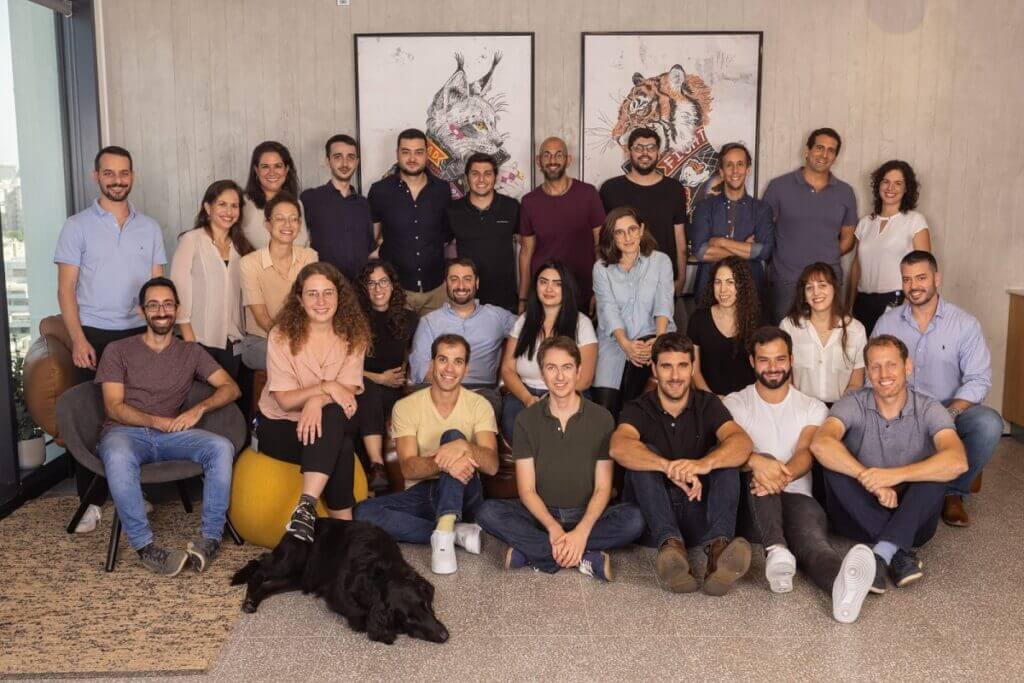
The Navina team behind the app that turns chaotic data into clear information for doctors. Courtesy
Lavi and Perera were responsible for one of the greatest revolutions that took place in 8200 and later in the IDF – the smart data revolution that is presented to commanders in real-time. The two built the AI / ML-based information systems of the cyber units that processed data and upgraded the capabilities of cyber commanders and won a National Security Award for their efforts in 2018.
After being released from the army, the two used their knowledge and expertise in data, AI, and machine learning to make a difference in people’s lives. For Naviana, founded in 2018, the two replicated the data model they built in the IDF to implement it in health institutions around the world.
“I think the gain for the patient is very obvious,” says Lavi, “They want to get everything to be addressed. And the physician should be with the patient, not with the computer. And that’s what Navina allows them to do because everything’s summarized for you in two or three clicks.”
“Navina is disruptive because it’s one of the first digital health applications that I know of, which the physician is actually willing to use. It’s not a burden. The machine behind the scene does a lot of stuff for them that allows them to understand the patient very easily. And every time I say that, people ask how did nobody think about it before and why hasn’t it been done.”
These Israeli companies use mobile phones to gather and/or transmit health data and keep tabs on chronic conditions.
Social entrepreneur Ariel Beery and optics expert David Levitz had the inspiration to use the built-in camera of a smartphone to screen for cervical cancer — the fourth most common cancer affecting women globally and the second most common cancer for women in low-resource settings.
“More than five billion people around the world have access to mobile phones, but not to a physician,” Beery told ISRAEL21c in 2014, when the prototype was being piloted in five countries.
“We can do what a $100,000 device can do on a mobile phone, with 10 times better magnification than using just the naked eye, raising diagnostic accuracy significantly.”
Today, the EVA point-of-care device from MobileODT is used by primary care providers in 30-plus countries to conduct specialist-level visual screenings for thousands of women.
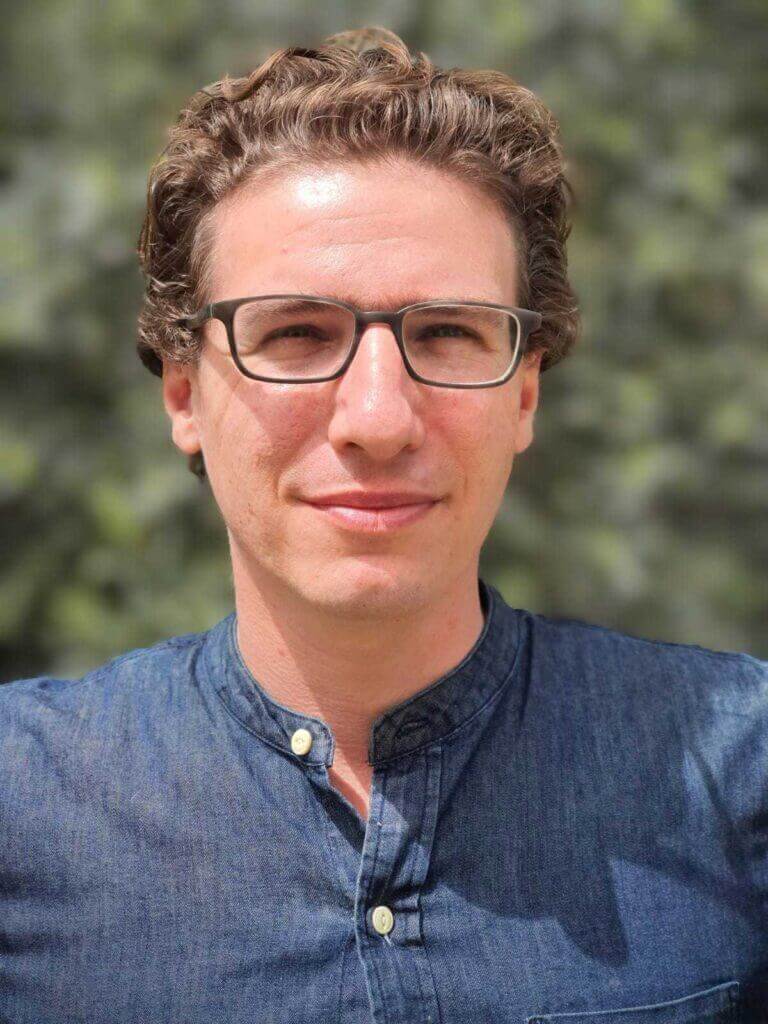
Ariel Beery, general partner of CoVelocity Health. Photo by Erin Kopelow
“MobileODT was the first company to build an FDA Class 2 medical device — a regulated medical device that replaces an existing medical system — around a mobile phone,” says former MobileODT CEO Beery, now general partner at CoVelocity Health, a strategic commercialization partner for medical technologies.
Since then, many other companies have harnessed the mobile phone – either to help healthcare professionals gather data (as with MobileODT) or to help patients transmit data from home to the practitioner and facilitate communication during a remote exam.
“There are a number of reasons why mobile phones make sense to be the core platform for a medical device,” says Beery.
“The first one is that every single person on the planet knows how to use one. And that is so important, because training and onboarding for a medical device is very difficult. When you have something based on a mobile phone platform, it’s relatively easy for the practitioner to watch a few tutorials and very quickly start using the device. That’s not the case with anything else, and it’s super important because then you can expand into rural areas and low-resource settings efficiently.”
There are other advantages of using smartphones for healthcare.
“From a regulatory perspective, most mobile phones in the market have received both electrical testing and broadcast certificates. Wi-Fi is intermittent around the world, but when you have a SIM card and a device that will be connected or integrated with medical information systems, a mobile phone shortcuts a whole host of regulation and registration — things that are really hard and expensive to do,” Beery adds. “For any [medical] device that requires communication, mobile phones already have all that already baked in.”
Below are descriptions of 13 companies using the smartphone as a basis or adjunct for smart healthcare.
MobileODT
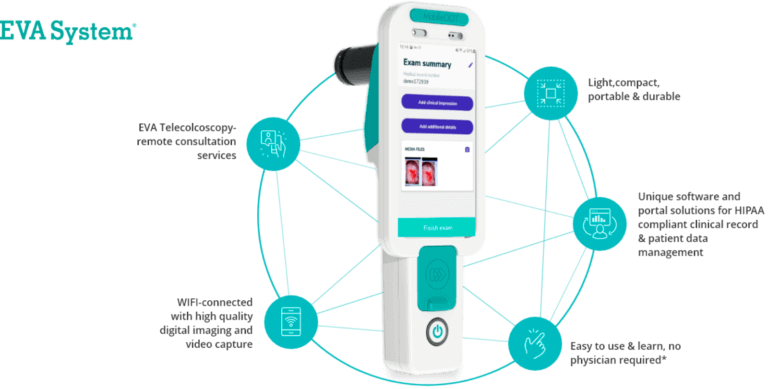
Photo of the EVA system courtesy of MobileODT
Beery and Levitz originally envisioned EVA as a colposcope addon for the healthcare practitioner’s own phone. The current version instead has a dedicated Samsung J530 built in for all-in-one visualization, documentation and teleconsultation.
“We learned that there’s a big difference between things that assist a health worker in decision-making or communication functions, where using their own mobile phone makes sense; and information-gathering or diagnostic functions, in which case a dedicated mobile phone makes sense,” Beery explains.
“Diagnostic functions require your device to touch the patient. That brings up issues of security and sterilization. Also, a dedicated phone doesn’t have the same wear and tear and memory issues that you have with someone’s personal phone and doesn’t conflict with their images and WhatsApp and what have you.”
The EVA product line now includes separate devices for cervical cancer screening, cervical examination and sexual assault forensics. It’s also used to train clinicians in colposcopy; telecolposcopy or remote colposcopy.
Binah.ai
Remotely or onsite, Binah.ai’s video-based solution provides medical-grade vital signs measurements — heart rate, heart rate variability, mental stress level, oxygen saturation, respiration rate and more — within 2 minutes via a video of the patient’s upper cheek taken with a smartphone, tablet or laptop.
The signal processing and AI technology compensates for motion and imperfect lighting, and supports any age, gender and skin color. It can even detect subtle changes that might otherwise go unnoticed. Binah.ai works with healthcare, insurance and wellness industries in several countries.
Binah.ai is headquartered in Ramat Gan with offices in Maryland and Tokyo.
Healthy.io
This Tel Aviv-based startup, founded in 2013, leverages the image-processing capability of any smartphone camera for four at-home Minuteful medical tests – kidney function, wound management, urinary tract infection and urinalysis — whose results are transmitted to the clinician instantly.
Healthy.io’s partners in the US and UK include, among others, the National Kidney Foundation, the National Health Service, Modality and the Boots chain. The company recently acquired its American competitor, Inui Health, for $9 million.
K Health
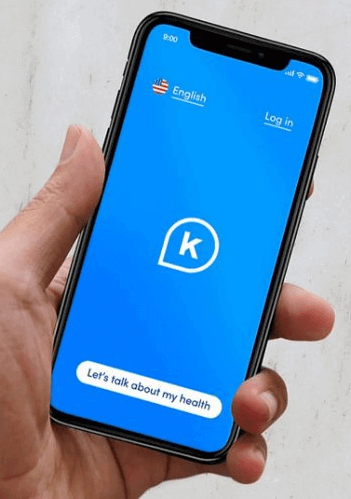
K Health, billed as “healthcare without the system,” provides 24/7 phone access to board-certified doctors in 48 US states for $29 per month (no insurance necessary), where it has some 6 million users. The entire intake process is done on the smartphone, and users text K Health when they are free for a consult.
K Health provides 24/7 access to physicians as well as a free symptom checker. Photo courtesy of K Health
Members can download a free AI-powered symptom-checker app and obtain on-the-go prescriptions and refills. Primary care, urgent care, mental health and pediatric care (as well as Covid-related services) are all included. K Health is based in New York with development offices in Tel Aviv.
Sweetch
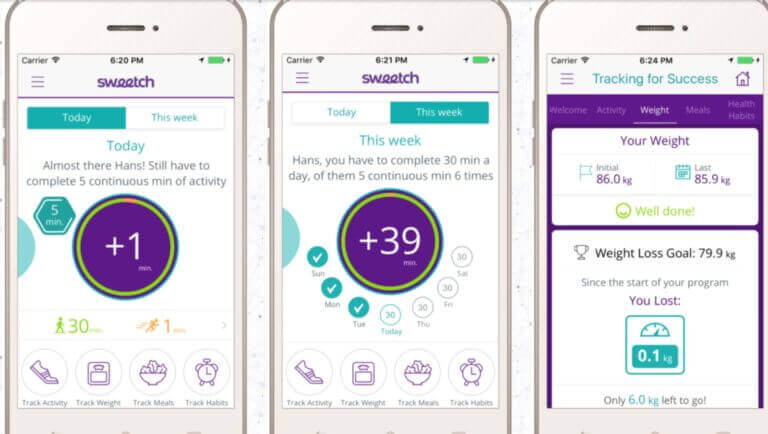
Sweetch provides a personalized digital coach for preventing and managing chronic diseases. Image: screenshot
Sweetch is a mobile based digital coach providing personalized recommendations for preventing and managing chronic conditions, generated from analysis of millions of datapoints on the individual’s smartphone and other connected devices.
In addition to the Sweetch app, the technology is available as a white-label app or as an SDK to be integrated within an existing app. Headquartered in Tel Aviv, Sweetch is used in countries across the world.
Montfort
Montfort bridges technology and neurology, turning any standard smartphone into a personalized neurological medical testing device.
Using smartphone sensors and AI, Montfort’s EncephaLog app provides FDA-cleared digital neurological tests for early diagnosis of conditions such as Parkinson’s disease, Huntington’s disease, anxiety, depression, post-Covid-19 neurological symptoms and more.
In the app, patients see the specific tests prescribed with reminders about when to take the tests and instructions in the patient’s preferred language. Montfort is used in more than 10 countries.
The tests measure parameters in three dimensions — motor (such as balance, gait, tremor), cognitive (memory, response time, pattern recognition) and mood indicators. It merges those measures with a fourth dimension of physiological records (genetics, brain scans, data from wearable devices) for a holistic picture.
Nonagon
Nonagon, backed by Phillips and Teva, has FDA and CE approval for its smartphone-based telemedicine device.
Four embedded sensors interface with the user’s smartphone to provide readings of nine common tests required for primary medical care: a stethoscope check (lung, heart and bowel sounds), otoscopy of the ear, oximeter (pulse rate and saturation), thermometer (body temperature), and a throat and skin test that uses the smartphone’s camera.
The device works with patients as young as two years old. The clinical data is sent in real time to the physician, enabling near immediate diagnosis, referral or prescription. Formerly known as MyHomeDoc, Nonagon is based in Caesarea with offices in New York.
TytoCare
This company’s award-winning TytoHome remote exam device ties in with the user’s and physician’s iOS or Android smartphone (or other device) via an app that allows the practitioner to control and guide the entire exam in real time.
For example, the clinician can take control of the stethoscope adapter to listen to lung and heart sounds or use the otoscope adapter to check ears for infection. After confirming a diagnosis, the clinician can send further instructions or a prescription.
OneStep
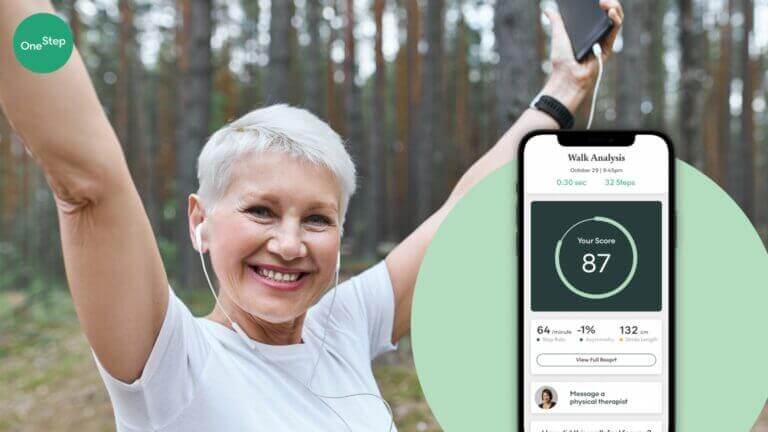
Photo courtesy of OneStep
OneStep of Tel Aviv developed an app-based physical therapy platform providing comprehensive gait analysis using only smartphone sensors.
The user needs nothing more than a smartphone nearby while doing the prescribed exercises. The app gives a detailed assessment of walking and overall mobility and allows physical therapists to communicate and provide effective treatment to patients 24/7.
Lumen
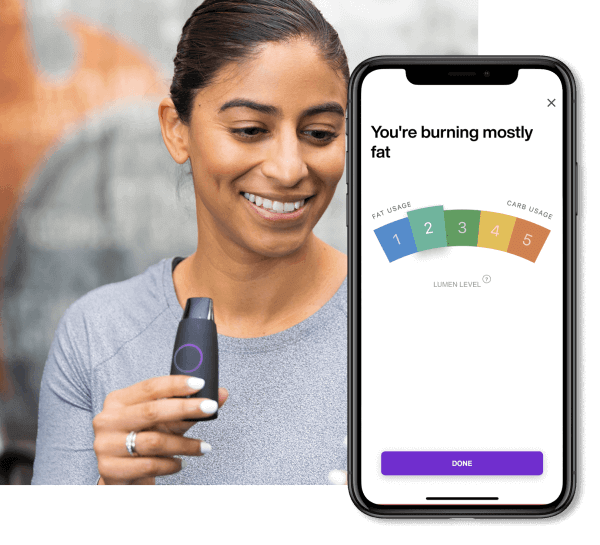
Lumen’s handheld device allows users to analyze and monitor their metabolism with their smartphone. It reveals the body’s current source of energy — fats or carbs — on a scale of 1 to 5, based on the respiratory exchange ratio.
Image courtesy of Lumen
The score helps users adjust their daily diet and physical activities accordingly: Low-carb days decrease the insulin spike, improving insulin sensitivity and enhancing mitochondrial function, while high-carb days ensure the body’s ability to use carbs for energy and keep hormones in balance.
MindReset
This app built on eye-tracking technology from Jerusalem-based Umoove helps thousands of users “reset” their response to depression, trauma, anxiety, stress and other emotional triggers.
Image courtesy of MindReset
An audio guide takes the user through each daily two-minute session of a 10-day program tailored to specific conditions. The eye tracker on the phone’s camera detects patterns in eye movement that indicate a stress trigger. Users are directed to do certain tasks with their eyes that interrupt the pattern and thus create a therapeutic effect by clearing the triggers.
The unique method behind the app was published last November in the journal Frontiers.
Yitzi Kempinski, founder-CEO of Umoove and CTO of MindReset, says results are so encouraging that the company is researching other ways people can use the app, such as for work burnout or emotional barriers to learning.
Neuralight
Using ocular metric data captured with a standard webcam or smartphone, this Tel Aviv- and Texas-based startup is building an AI-driven platform to accelerate and improve drug development and patient monitoring, as well as introduce precision care for patients with neurological disorders.
A physician records a five-minute video of a patient’s eye movements. Neuralight’s imaging tools clean up the video, then artificial intelligence and machine learning decipher what’s behind the eye movements.
The concept is based on scientific studies over the past 20 years showing correlations between various oculometric measures and the neurological status of patients suffering from a range of neurodegenerative and psychiatric disorders.
Cordio Medical
Cordio Medical’s HearO technology can sense fluid accumulation related to congestive heart failure through a patient’s speech and send an alert. This noninvasive monitoring solution is based on true speech signal processing augmented with machine learning.
The user speaks into a smartphone app whose algorithms allow near real-time monitoring and early detection of condition deterioration. The system is patient-tailored, constantly learning the patient’s voice. HearO noninvasively.
The company recently raised $18 million and aims to enter the US market in 2024.
Israeli researchers from the Technion are developing a solution that addresses the shortages in seasonal harvesters: robots that pick fruit for us.
Throughout history, early summer has often signaled the time to harvest. Harvesting, of course, has evolved considerably. As opposed to ancient times when mobilizing the whole community was necessary to fully harvest grain, there are sophisticated machines nowadays run by just a few individual operators that quickly navigate through fields and efficiently process many acres at a time.
However, in the case of fruits, there is still a need for a great deal of manual labor throughout the harvesting process today, but workers are in short supply. The farming labor and resource shortage is reported in many countries across the world including the United States, Australia, the United Kingdom, Vietnam and Brazil. Unharvested produce leads to a loss of food quality and spurs enormous economic losses, a fact that will become more evident and problematic as the world population continues to increase.
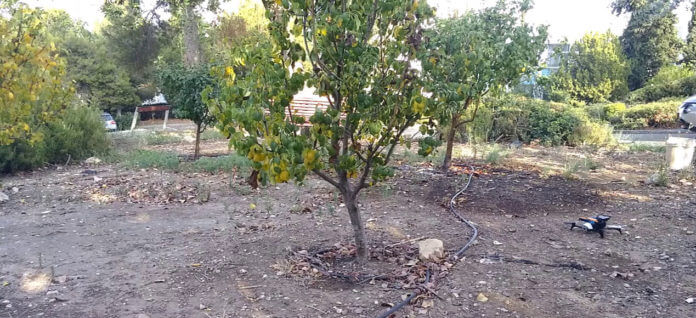
In a new Israeli study, researchers from the Technion developed a ground mobile robot that could drastically advance fruit agriculture and harvesting. The robot, whose development was led by Associate Professor Amir Degani from the Technion’s Environmental, Water, and Agriculture Engineering Department, will have the capability to use one or multiple small-sized drones to perform the operations required in orchards much more accurately and cheaper than the methods used by farmers today.
The study was recently presented at the “Water and Environmental Engineering in the Face of Climate Change” conference of the Environmental, Water, and Agriculture Engineering Department at the Technion’s Faculty of Civil and Environmental Engineering.
The Need for Better Fruit-Picking Robotics
The gap between the number of seasonal laborers and the volume of work is expected to significantly expand as the world population continues to grow. By 2050 there are expected to be more than 9 billion people in the world, and in order to feed them all it will be necessary to increase the volume of food production anywhere from 35-60 percent (unless the whole world switches to a plant-based diet).
One might expect though that with such a highly populated world there would be no shortage of working personnel, but sadly this is not the case.
“People have been moving from villages to cities for decades – and fewer people want to engage in manual labor,” Degani explains. “It’s seen in construction and agriculture, and it happens everywhere – including in countries with very large populations, like India and China. In India, for example, harvesting coconut is a very important task – but fewer and fewer people want to work in that field.”
According to him, the problem also exists in Israel. “As in many Western countries, there are quite a few years in Israel where apples fall to the ground because no one is there to pick them in time.”
Degani believes the solution to these problems lies in robots that know how to pick fruits.
“Just as automation has solved many of the problems that plagued field crops, like using machines such as combine harvesters, once we adapt this strategy to plantations farmers will be able to better streamline and reduce the uncertainty that currently surrounds the acquisition of skilled seasonal labor for specific times of the year,” he says.
It is important to note that automating harvests should be approached differently than those used for field crops, which involve rough, large, and overly expensive machines.
“In field crops, massive harvesting is carried out all over the area––usually indiscriminately,” says Degani. “Picking edible fruit should be gentle and selective. The fruits should be picked one by one and handled carefully.”
Interestingly, he claims that the robotic arms currently used in factories, which have a large range of motion and accurate precision capabilities that humans can only dream of, are not suitable for the task.
“Although these robotic arms know how to perform a pre-planned operation, their sensing and decision making capabilities are limited and are not suitable for agriculture,” he says. “Agriculture is a more difficult world. Agriculture takes place in an uncertain environment with fluctuating changes in light and outdoor conditions, so the robot must have complex sensing and decision making capabilities.” According to him, the robot should not be too expensive of an alternative because otherwise many farmers will not be able to afford it.
Call in Air Support
Degani and his team began to approach the challenge of the harvesting robot’s development by first addressing its maneuverability in the orchard, a task more complicated than it sounds.
“In order for the robot to patrol and weave through all the trees and detect pests or ripe apples, for example, it must know where it exactly is,” Degani explains. The orchard environment is relatively homogeneous from a ground point of view, with most of the trees looking about the same and the GPS reception not being particularly reliable.
This obstacle gave rise to the idea of establishing a connection between a ground mobile robot and a drone. The researchers found that when utilizing the perspective of a low-flying drone, the top-view observation of the orchard provides a unique signature of every tree formed by the shape of its canopy. The first study on the subject was published in the robotics and automation section of the IEEE magazine.
Currently, researchers are working on additional ways in which the farming robot can use small drones to perform the operations required for harvesting orchards. First, they demonstrated that a drone could hover around a tree, creating a detailed three-dimensional image of each of the trees in the area. These are needed to make the harvesting process more efficient and reflect more modern model of precision agriculture.
“The meaning of ‘precision agriculture’ is that instead of making decisions on issues relating to things like fertilization, irrigation, thinning, pest management, or harvesting at the entire field level, we will look at the agricultural plot at a higher resolution and make such decisions down to the individual tree level,” explains Degani.
This will make it possible to increase the volume of produce, by providing the best conditions for each individual tree, and beyond that, save the use of resources such as water, fertilizer, and potentially dangerous pesticides.
Degani believes the solution lies in the capabilities of a ground mobile robot that knows how to navigate around the wood, perform precise mechanical operations, and even pollinate flowers––another separate project currently under development in the laboratory.
A Shift From Human to Robot?
Today, Degani’s studies are in the prototype stage, and they demonstrate possibilities for future development. In any case, there are already several automation attempts in the fruit harvesting industry represented by Israeli companies such as FFRobotics, a robot equipped with the ability to emulate human hand-picking, and Tevel Aerobotics Technologies, which developed a flying harvester that is scheduled to enter its pilot phase in the coming year.
Beyond that, not only is the identity of the harvester expected to shift from human to robot – but the structure of the orchard itself is also speculated to change.
“The way we engineer and grow trees will change, and they will be designed in a way that is right for robotic harvesting,” Degani explains. “Even today you can see in the world apple orchards that look almost like a two-dimensional wall on which fruit grows. This is not genetic engineering but mechanical engineering operations designed to make the orchard grow as efficiently as possible.” The new orchard structure allows for denser planting and is designed to enable easier harvesting for both humans and robots alike. Studies are currently underway to determine the most efficient configuration, in preparation for an era in which robots will enter the agricultural landscape.
In the end, according to Degani, everything is aimed at becoming more efficient simply because we have no other choice.
“Even in modern agriculture, the farmer will be very important, but he will need much fewer working hands,” he says. “Like quite a few things, the data will be at the center, to help him make informed decisions, and the robots will carry out the tasks in the field. This is what will direct the efficiency so that we can reach a sufficient crop target that will feed all humans,” he says.
“Because there will be less land, less resources, and less manpower over time, there is a need to find a solution. Otherwise, fruits like apples will be accessible only to the very rich,” Degani concludes.
Funding will be used to support more than a dozen studies
A new university grant program in Israel with a budget of over $1 million will support researchers in their quest for new food technologies.
The ministries of Agriculture and Innovation, Science and Technology initiated the program with an emphasis on alternative proteins.
The ministries launched a call for proposals last Thursday, in collaboration with the Good Food Institute (GFI) Israel, a non-profit organization that seeks to promote research and innovation in food technology.
The food technology sector is a broad field that includes nutrition, packaging, food safety, processing systems, new ingredients and alternative proteins. These include plant-based meat, dairy and egg substitutes, dairy products, cultured meat and seafood, insect proteins, and fermentation products and processes.
Many of the technologies used in this field are based on academic research.
The technologies of two major Israeli cultured meat companies, Aleph Farms and Future Meat, are based on bioengineering research developed by their respective co-founders, Professor Shulamit Levenberg of the Technion – the Israel Institute of Technology – and Professor Yaakov Nahmias of the Hebrew University of Jerusalem.
Both are leading academics in the field of tissue engineering.
Ministry funding will support a dozen university studies offering science and technology solutions in the areas of cultured meat, fermentation processes and plant-based substitutes.
These studies can be aimed at improving the final product or the production process itself, the ministries said.
The study is related to a problem in AI and robotics called autonomous decision-making under uncertainty.
Researchers at the Technion – Israel Institute of Technology found a way to simplify decision-making and problem-solving under uncertainty in a way that reduces the amount of information computers need to analyze.
A new peer-reviewed study published in the International Journal of Robotics Research, led by Prof. Vadim Indelman, who heads the Autonomous Navigation and Perception Lab (ANPL) at Technion’s Faculty of Aerospace Engineering, and Khen Elimelech, shows the feasibility of reducing the amount of time for computers to process information without compromising the success of completing a function.
“We demonstrate that we can significantly reduce computation time, without harming the successful execution of the task,” the researchers said. “We also demonstrate that computation efforts can be reduced even further if we accept a certain loss in performance loss that our approach can evaluate online. In an age of self-driving cars and other robots, this is an approach likely to enable autonomous online decision making in challenging scenarios, reduce response times, and achieve considerable savings in the cost of hardware and other resources.”
The study is related to a problem in AI and robotics called autonomous decision-making under uncertainty, which concerns the capability of AIs to complete tasks reliably and autonomously over time in an unpredictable environment.
Technion noted that autonomous agents often do not have access to the variables related to a particular problem and instead function based on a “belief” based on probability models and measurements.
Illustrative image of AI. (credit: PIXABAY)
Belief space planning
A major area of research in the new study was computationally efficient decision-making under these conditions, called belief space planning. In order to solve this problem, an AI must weigh the costs and benefits of a potential action, which requires the researchers to predict how the “belief” will change over time.
The findings may help researchers solve decision-making problems using simplification and show that there are ways to save considerable amounts of computation time without a loss of accuracy.
Forsight Raised $10 million in seed funding in March 2021.
Israeli medtech startup ForSight Robotics is developing a surgical robotic platform to deliver what it describes as high precision and cost-effective vision-saving surgery. Forsight just raised $55 million in a Series A round of funding led by The Adani Group alongside existing investors Eclipse Ventures and Mithril Capital.
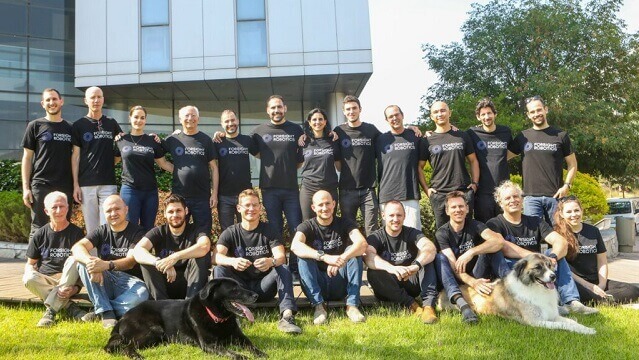
Founded in 2020 CEO Daniel Glozman, Ph.D., Joseph Nathan, M.D. and Moshe Shoham, Ph.D, Forsight declares that its mission is to transform the practice of ophthalmic surgery through a next generation robotic platform combining “state of the art robotic microsurgical technology, advanced visualization technologies, and next generation cognitive computing methods.”
Joseph Nathan previously directed healthcare commercialization at the Technion Israel Institute of Technology, where he forged partnerships worth over $1 billion with global pharmaceutical and med-tech companies. Daniel Glozman has specialized in robotics for medical applications for over 20 years, heading R&D at Medtronic Ventor Technologies, Magenta Medical, Diagnostic Robotics, and Guide-X — which he also founded.
Israeli medical professionals have been behind many new procedures to save people’s vision over the years. Losing your vision is one of the most frightening things which can happen to people. Israeli startup OrCam produces new technology for the blind and other people with visual deficiencies. Its MyEye is wearable technology that can give eyesight to the blind. But it does not heal them.
Forsight Robotics, however, tries to heal blindness. The company explains that many of the leading causes of blindness worldwide can be prevented through timely surgical procedures. Ophthalmic microsurgery is complex and challenging, requiring many years to master, and there is a shortage of trained ophthalmic surgeons to meet the demand worldwide. Creation of a robotic surgical platform will allow one to deliver consistent excellent results while scaling up ophthalmic surgery to solve the problem of preventable blindness worldwide.
“These are exciting times that will enable the transformation of ophthalmic surgery from art to science,” Forsight’s Dr. Joseph Nathan once declared.
“We are thrilled to bring robotics into the world of ophthalmic surgery,” Dr. Glozman once said. “Our goal is to democratize this highly sophisticated procedure, enabling patients around the world to easily access the treatment that can restore their vision.”
Technion-patented technology enables monitoring and early identification of changes in the condition of respiratory patients at home or in hospital.
The Jerusalem Post has partnered with ExitValley, a digital platform that enables anyone to invest in Israel’s start-up ecosystem and share in its success. In this article, we are pleased to introduce NanoVation-GS, an Israeli company that has developed a first-of-its-kind nanosensor-based technology for monitoring and managing chronic respiratory conditions at home or hospitals while reducing hospitalizations.
The patented technology was discovered at the Technion and is undergoing clinical trials in Israel and the EU. “The technology enables surveillance and early identification of changes in the patient’s condition. In addition to reducing hospitalizations, it is also expected to reduce their duration”, says the company’s CEO and co-founder, Dr. Gregory Shuster, Ph.D.
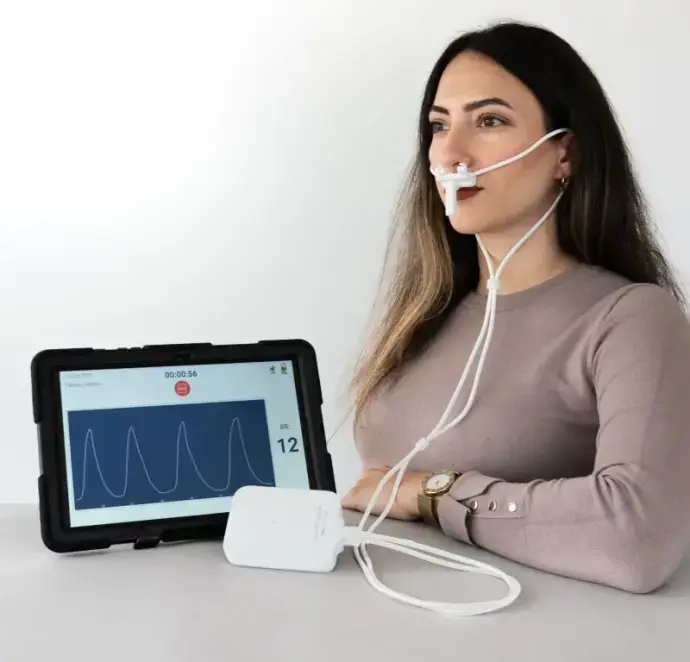
NanoVation-GS has developed a unique technology for monitoring patients with chronic lung diseases, with an emphasis on obstructive diseases such as COPD – Chronic Obstructive Pulmonary Disease, which enables early detection of worsening of symptoms and helps reduce prolonged and frequent hospitalizations by allowing the patient to receive appropriate early treatment. “The device is designed to measure important respiratory parameters without any discomfort or effort needed by the patient,” says Dr. Shuster.
NanoVation company’s CEO and co-founder, Dr. Gregory Shuster, Ph.D. (Credit: NanoVation)
The development is based on advanced nanosensor technology, which for the first time allows accurate monitoring of changes in respiratory function without any discomfort or effort from the patient, and is particularly sensitive to fluctuations and changes in several critical respiratory parameters. “One of the things we identified was the gap in technologies related to respiratory monitoring. When you look at monitoring in cardiology, for example, there are much broader tools than in respiratory monitoring,” Dr. Shuster explains.
The solution provides the ability to manage chronic respiratory diseases via the cloud, allowing doctors to review data from any location, during hospitalization, and during the follow-up period at home, which also enables the creation of “big data”-bases of all relevant information. “The system is simple to use at home without any need for professional assistance or in a clinical environment. It operates in a non-invasive method, measures normal and effortless breathing, and uses exclusive biomarkers which were identified by the company’s technology,” Dr. Shuster adds.
“The system is simple to use at home without any need for professional assistance or in a clinical environment”.
Dr. Gregory Shuster
NanoVation-GS was founded at the Technion by a leading experienced team, including Dr. Shuster- founder and CEO and senior researcher in nanomaterials and materials engineering, and Prof. Hossam Haick, founder and CSO, a leading researcher and expert in nanotechnology. The company has an exclusive license for its first patent from the Technion and two additional patents owned by the company, which are in the registration phase.
NanoVation-GS has been granted a prestigious development grant by the European Innovation Council (EIC), which only supports start-ups identified as companies with a significant impact and groundbreaking technology. In addition, the company has previously received grants from the Israel Innovation Authority. “Breathing monitoring technologies today can be divided into two groups,” says Dr. Shuster. “One is the technologies that measure normal breathing, which are not invasive or annoying to the patient, but the data collected is limited to the parameter of breathing rate only.
Nanovation Technology (Credit: NanoVation)
“The second group provides a series of respiratory parameters, but it requires the patient to perform certain breathing maneuvers. This is a complicated test for the patient to perform at home. It is bothersome, unpleasant for the patient, and the doctor who receives the data cannot know whether the test was performed properly, because he did not see the patient do it.
“What we do is combine the benefits of these two worlds,” says Dr. Shuster. “On the one hand, our measurement takes a few minutes, during which the patient puts on the sensor and does nothing extra. On the other hand, the data we extract provides a series of respiratory parameters, which are very relevant to changes in the disease condition. All this in one simple test, which can also be done routinely at home. The patient cannot get an incorrect measurement, because all he has to do is breathe naturally.”
The company’s SenseGuard product has been tested so far in successful clinical trials at leading partners in Israel and around the world, including Halle-Saale University Hospital in Germany, Nicosia Lung Center in Cyprus, and in Israel at Ichilov Medical Center, Poriah Hospital, Nazareth Hospital, Rambam and Barzilai Hospitals and the Galilee Medical Center.
NanoVation-GS has completed all procedures needed for obtaining the necessary regulatory approvals for medical devices, including CE certification and international ISO standards. The company will work to update its existing CE certification to the new standard (MDR), while also planning to obtain FDA approval at a later date. NanoVation-GS is ready to start marketing activities in Europe towards entry into the COPD monitoring market, which is its first phase destination market, and later will turn to other territories and examine further commercial and clinical applications.
“Right now, we are focusing on the medical field, looking at chronic respiratory patients, but plans for the future are varied,” Dr. Shuster concludes. “The use of our technology can also be extended to other respiratory and non-respiratory diseases, sleep monitoring and even entering the field of wellness, by measuring and helping to manage the level of stress, assisting with breathing exercises in yoga and more.”
Attendees get to experience virtual flights using an in-flight simulator of the personal electric plane, which should go on the market in 2024.
In October 2021, ISRAEL21c reported that an Israeli flying car startup had started taking pre-orders for its personal electric plane (an eVTOL, short for “vertical takeoff and landing,” vehicle).
Now AIR, the company behind this latest and greatest way to commute to work, has unveiled the first full-scale prototype of its inaugural vehicle. The company took the wraps off its high-flying product at the Kentucky Derby.
Attendees were able to sit inside the aircraft and experience “virtual flight” using a simulator. The craft didn’t actually take off and fly, though.
Also at the Derby launch, AIR announced a new partnership with Aeroauto to establish a UAM (an “urban air mobility” vehicle) showroom and dealership in Florida.
A simulation of the AIR ONE in flight. Photo courtesy of AIR
“People have been dreaming of these incredible machines for decades,” notes Sean Borman, CEO of Aeroauto. “It is a great honor to [bring] an international manufacturer to North America as an AIR Brand Ambassador, while becoming their North American Flagship retailer for sales, service, and customer training center.”
Despite the excitement, the company still has plenty of work left to do. AIR is currently preparing to begin “hover testing” and is working with the FAA to formalize its application to operate flying cars in the US. Customer deliveries are still expected by 2024 – a couple of years wait but years ahead of the competition.
So far, AIR has completed a successful drop test and has finalized the first stage of the power and communication system integration on the craft. The company’s flagship eVTOL, the AIR ONE, has a number of unique features, including foldable wings and retracting landing gear that allow it to fit inside an average suburban garage.
Rani Plaut, CEO of AIR. Photo courtesy of AIR
The AIR ONE is an electric battery-powered, fixed-wing, two-person craft propelled by eight vertical lift rotors. It has a range of 110 miles on a single charge at speeds up to 150 mph. It can carry a maximum payload of 440 pounds and charges up in less than an hour. The floor of this innovative eVTOL is partially made of glass – great for passing the time on the way to work.
AIR CEO Rani Plaut told ISRAEL21c last year that the company’s goal is “to make something as easy as a car with a practical range and a practical price. If we can do that, I think we can make a real difference.”
Other Israeli startups working on flying cars include Urban Aeronautics, Eviation, Pentaxi and Flytrex.
Netafim analysis shows corn grown with drip irrigation releases 53% fewer carbon emissions compared to flood-irrigated corn.
Corn is the third largest plant-based food source in the world and the most important crop in the United States, where 1.2 billion metric tons of corn were produced last year.
Corn is also cultivated in China, South America, India, Ukraine and across Europe, as food for both humans and livestock, as a biofuel and as a crude material for industrial purposes.
Now, results of a Life Cycle Analysis study show that the environmental impact of all those cornfields is significantly reduced by the use of drip irrigation as opposed to flood or sprinkler irrigation.
The study was conducted by EcoChain during 2020 for Israel’s Netafim, the global leader in sustainable precision irrigation solutions.
Highlights of the study:
Corn grown with drip irrigation releases 53 percent fewer carbon emissions compared to flood-irrigated corn and 39% fewer carbon emissions compared to sprinkler irrigation.
Drip-irrigated corn requires 24% less fertilizer than when it is grown with flood irrigation, and nearly 17% less fertilizer than when it is grown with sprinkler irrigation.
Drip-irrigated corn produces 45% more per kilograms per hectare when compared to flood, and 23% more when compared to sprinklers.
An earlier study showed that rice grown using Netafim’s drip irrigation technology out-produces conventional paddy rice farming, uses 70% less water, and diminishes methane emissions to almost zero.
“We’ve been showing the world how to grow more with less for nearly 60 years and our pioneering technology is now critical to mitigate the impacts of climate change,” said Netafim Global Chief Sustainability Officer John Farner.
“Today, farmers are not only challenged by record-high energy and fertilizer costs, but also increased pressure to reduce their overall environmental footprint, all while producing our global food supply,” said Farner.
“Adoption of precision irrigation for corn, along with other crops around the world, is critical to stabilize farmer livelihoods, reduce the carbon footprint of farming, and ensure a food-secure future.”
With 33 subsidiaries and 17 manufacturing plants worldwide, Netafim offers customized irrigation and fertigation solutions to millions of farmers, from smallholders to large-scale agricultural producers, in over 110 countries.
Electreon demonstrates a prototype stretch of road to Italian ministers, company executives; luxury car firm Maserati expresses interest in installing tech too
Israeli company Electreon, whose technology is integrated into roads that recharge the batteries of electric vehicles as they travel on them, is on track to design a lane for shuttles and service vehicles at Bergamo Airport northwest of Milan, Italy, the company said in a statement.
The project was clinched Friday at an event that officially launched a one-kilometer (0.62 miles) recharging circuit that Electreon has been testing in Brescia, northern Italy, since November 2020.
The launch was attended by Italian ministers along with senior executives from vehicle, infrastructure, and tech companies.
Bergamo Airport staff members are to test their vehicles out on the prototype road, called Arena of the Future, and if all goes to plan, the airport will move toward a commercial agreement with Electreon to create an electric lane on the airport’s tarmac.
According to an Electreon press release, the luxury car company Maserati also said it wanted to try its e-vehicles out at the Arena, with a view to acquiring the technology at its plants.
The prototype road was built following the October 2020 signing of a memorandum of understanding between Electreon and the Italian toll road infrastructure company Societa’ di Progetto Brebemi SpA. The goal of the MOU is to integrate Electreon’s wireless electric road system into infrastructure projects in Italy.
Cutting the ribbon to officially open the Arena of the Future, a demonstration electric charging road created in Brescia, northern Italy, by Israeli start-up Electreon. (Electreon)
At Friday’s event, Francesco Bettoni, head of the holding company that administers the A35 toll road, known as BreBeMi, set out the company’s vision for integrating Electreon’s technology into a stretch of road from Bergamo to Turin.
Solar fields are to be built along the road to power the system renewably.
“Europe has clearly stated its goals for the transition to sustainable transportation. We are ready for the commercial phase of the Arena of the Future technology,” Bettoni said.
He added, “I’m pleased to say that there’s great interest in the technology and we’re getting inquiries from many local authorities who are interested in integrating the technology into intercity roads.”
Aimed at reducing air pollution, the electric road does away with the need for recharging stations. According to Electreon’s website, a system of copper coils is laid beneath the asphalt to transfer energy from the electricity grid to the road and to manage communication with approaching vehicles. Receivers are installed on the floor of the vehicles to transmit the energy directly to the engine and the battery while the vehicles are on the go. Communication with all management units and all registered vehicles is via cloud technology.
The system allows for smaller batteries on electric buses, releasing more room for passengers, utilizes existing roads, and saves time because vehicles do not have to stop to charge or refuel.
An electric bus and an electric Fiat 500 try out the circuit at Arena of the Future, a demonstration electric charging road created in Brescia, northern Italy, by Israeli start-up Electreon. (Electreon)
During Friday’s event, an electric Fiat 500 car driving at 84 kilometers (52 miles) per hour around the track started with a battery that was charged 22 percent and finished with a charge of 48%.
An IVECO bus driving at up to 60 kilometers (37 miles) per hour also finished with an increased charge.
Electreon has numerous projects across Europe and in the US.
In Israel, it is partnering with the city of Tel Aviv-Jaffa and the Dan Bus Company in a large-scale commercial deployment of its wireless charging infrastructure to power electric buses.
Last year, Electreon was one of four Israeli firms named to TIME magazine’s annual list of “100 Best Inventions.”