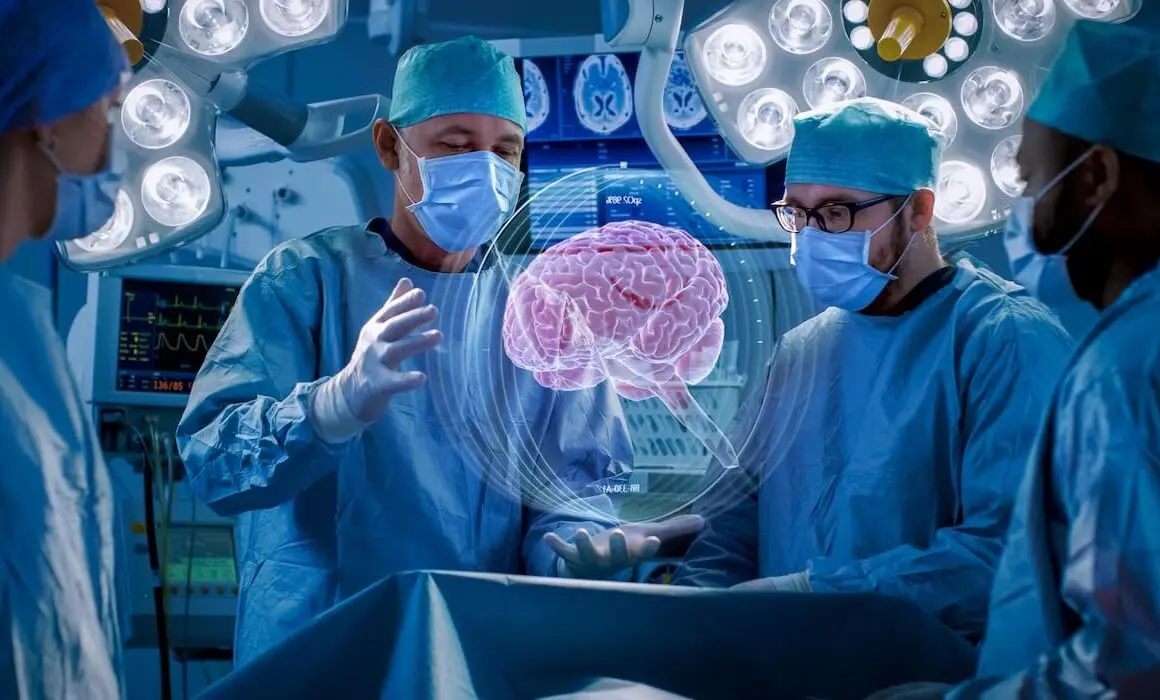
Nora Nseir, the founder and co-CEO of Nurami Medical, knows that the Haifa-based biomed company’s groundbreaking product may not seem particularly impressive at first glance. It looks like a plain white bandage, just 5 cm in width and length, but if everything goes according to plan, it could fundamentally change the way doctors treat brain and spinal cord injuries. The product’s ability to regenerate meningeal tissue after complex neurological surgeries sets it apart. So far, $16 million has been invested in Nurami, and the company is now completing another funding round—this time for $30 million. There is still a long road ahead, but the market in which the company operates is so vast that if the product succeeds, Nurami could reach a valuation in the billions of dollars.

Nseir, who holds a bachelor’s degree in biomedical engineering and a master’s degree in biomechanical engineering from the Technion, founded Nurami with her partner, Dr. Amir Bahar. The two met in 2011 while working together on developing a hemostatic agent for Bioline. “Amir has a doctorate from the Weizmann Institute and had just returned to Israel after seven years at Mount Sinai Hospital in New York,” she says. “We worked on the project together, but at some point, Bioline discontinued it due to shifting priorities and cost-cutting. We thought our paths would diverge, but then we decided to start something of our own. Academia moved at too slow a pace for me—I’m a results-driven person. Amir and I have great chemistry at work, so I felt that launching a startup together would help me fulfill my dream.”

What if the digital world offered not just sight and sound but also the ability to feel?

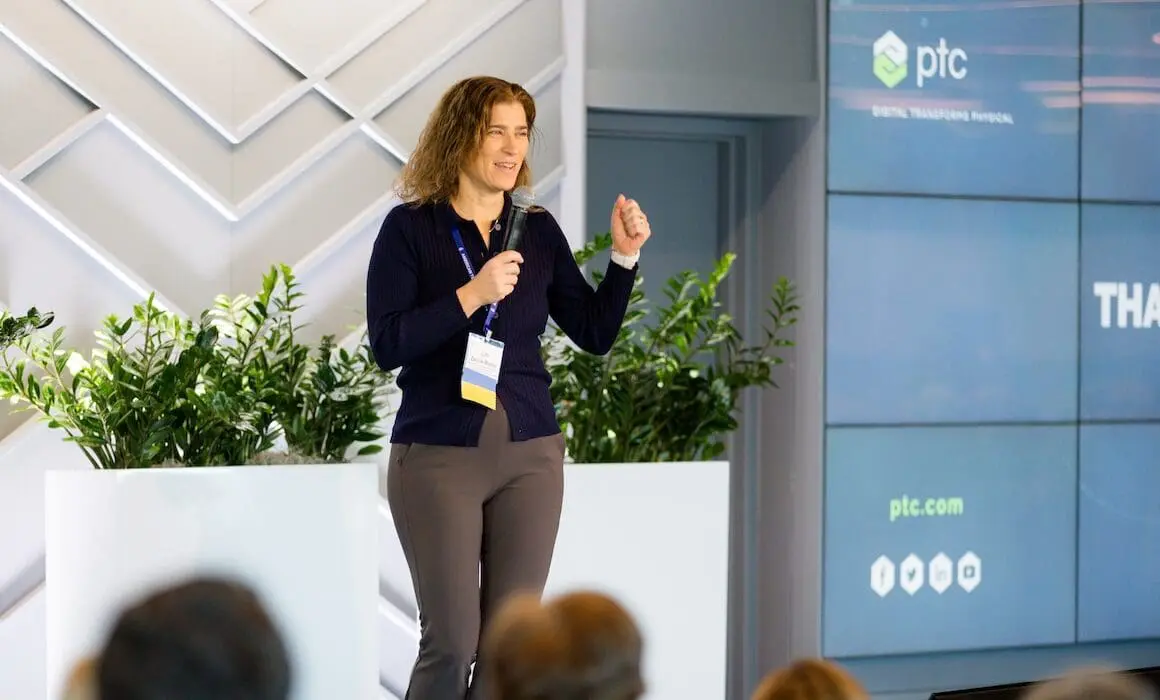
Imagine a future where technology allows us not only to see and hear each other from great distances but also to feel  – examining a sick patient or tucking in a grandchild from across the globe. Techion Professor Lihi Zelnik-Manor is on a mission to hone technologies that will realize these possibilities.

“I love thinking about the applications of technologies that simulate the sensation of touch: providing medical professionals with new tools, helping people who are blind, and even enabling family members to virtually touch one another across geographical distances,” she says. “The extraordinary promise of such technologies motivates my work.”

The challenge of simulating touch — especially textures — is decades away from full realization. Currently, haptic systems, systems that relate to the sensation of touch, rely on simple vibration motors to simulate touch. These motors are used to provide sensory feedback in devices like haptic gloves or robotic arms, which allow users to “feel” when they grip an object. However, when it comes to simulating detailed textures like the roughness of concrete or the smoothness of fabric, the technology has been limited.

Prof. Zelnik-Manor is working on new innovations that aim to replicate the tactile experience of touching real-world textures. In one experiment, she and her team built a tablet with air pressure systems, which resembled an air hockey table, to simulate tactile feedback and explore the possibility of conveying images to blind individuals through touch. The project faced challenges as the team ultimately realized that humans struggle to understand complex spatial layouts through touch alone. Nonetheless, the experiment provided valuable information about haptic technology.

In a more promising recent experiment, Prof. Zelnik-Manor aimed to create a small device that resembled a computer mouse which could provide tactile feedback for users to recognize textures — a “haptic mouse” with an array of vibrating pins. The pins simulate various textures by stimulating the finger in a way that mimics the sensation of touching real surfaces. The device capitalizes on the brain’s ability to reconstruct textures as users move their fingers across the pins.

The device was tested against real-world 3D-printed materials, and results showed that while the device was not as accurate as physically touching the materials, it was still effective. In the experiment, participants were able to recognize textures with 86% accuracy using the haptic device, compared to 97% accuracy with the 3D-printed surfaces. The recognition process was slower with the device, taking around two minutes versus one minute with the 3D prints. Despite these limitations, the experiment demonstrated the potential of virtual haptic feedback for texture recognition, moving beyond basic tactile tasks to more complex real-world textures.

One of the most exciting applications of haptic technology lies in medicine, particularly in laparoscopic surgery. Surgeons currently rely on visual feedback to differentiate between healthy and unhealthy tissue. If haptic feedback could be integrated into surgical tools, doctors could “feel” the difference between tissues, improving precision and reducing errors. This advancement could be a game-changer in procedures like tumor removal or organ surgery.

The future of touch is just beginning to unfold. As research progresses, the digital world will become more immersive, offering not just sight and sound but also the ability to feel. Though such progress will take decades to achieve, Prof. Zelnik-Manor believes the charge fits squarely within the realm of academia and the mission of the Technion.

“To work on problems whose solutions lie 20 or 30 years in the future, this is the domain of academia,” she says. “While industry is driven to tackle problems with more near-term results, we as Technion researchers have the challenge and privilege of working on deeper, more complex mysteries.”

Technion plays a crucial role in Israel’s infrastructure, security and economy. Industries in which it has made life-changing advancements include energy, water and healthcare, and it’s impossible to look at the diverse student body, 20 per cent of whom are Arab, and not feel hope.

There’s a saying – conveyed in many ways – that to love another, one must first love oneself. Given, then, that the very foundation of Israel hinged on the Technion – Israel Institute of Technology, it is no wonder that the country loves it so.

Described as the technological backbone of the country even before its establishment – expressed by the New York Times quite perfectly as “Israel’s hard drive” – the Technion was crucial in the infrastructure, security and economy necessary for the state’s survival, and without which it would simply not exist today.

Set up decades before the state of Israel was established through the prism of Zionism by visionaries including Israel’s first president, Chaim Weizmann, and Theodor Herzl, it was understood that if the country was not only to survive but to thrive, it needed to invest in science and technology. A Jewish state alone would never be enough; it needed to benefit the entire world, starting with the local Arab population – more on this soon.

Rapid progress in biotechnology, drug development, and stem-cell technology.

For before anything else, without the means to defend itself, Israel could not survive, let alone make advancements in any other area. Fortunately, the Technion’s role in the country’s security is no less prevalent today than it was in the years leading up to and immediately after the state’s establishment. Missile defence systems, such as the remarkable Iron Dome developed by Technion alumnus Chanoch Levin that has saved thousands of lives and, most recently, David’s Sling and Iron Beam, as well as underground tunnel detection devices and drone technology, are just a few examples of the role the Israel Institute of Technology has supported in the protection of Israel and its citizens, through a plethora of disciplines offered at the university such as aerospace, engineering and computer science.

In this area the Technion has form; on March 17, 1948, just two months before Israel’s founding, the Haganah recruited physics and chemistry students from the university, among others, to Givatayim, where a radar detection unit was set up. Similarly, it continues to play a pivotal role in securing the country and its people, most recently in the ongoing war since October 7. There are too many examples to list, but they include some 3,000 students – 21 per cent of the student body – being called up as reservists and supported by the university with financial, psychological and educational help. Others include the Faculty of Medicine’s transformation of what usually functions as a car park in peacetime to a 2,000-bed fortified underground hospital and the establishment of the “Give Help, Get Help” scheme, which has been responsible for hosting dozens of internally displaced people, opening schools on campus for Technion staff children, clearing out bomb shelters, baking challah, organising blood drives, giving haircuts to soldiers and donating packages.

Companies including Google, Microsoft, IBM, Qualcomm, Yahoo!, Hewlett-Packard and others have established their operation near or even on campus, where they can take advantage of the Technion’s research power and outstanding graduates.

It’s because of all this that the Technion has also been able to live up to the nickname of “the Startup Nation”. According to Stanford Graduate School of Business research, the Technion is 25 times more likely to produce a US-based unicorn startup than any other non-US university. Industries in which the institute has made life-changing advancements include energy, water and health (with groundbreaking inventions such as the PillCam – a tiny, wireless, capsule-encased camera the size of a jelly bean and small enough to be swallowed, which hundreds of UK hospitals are using – and novel drug Rasagiline to treat Parkinson’s disease, approved by the American Food and Drug Administration in 2006).

Yet perhaps we need only look closer to home when we answer why Israel loves the Technion. Circling back to our earlier point of how the Israel Institute of Technology benefits not only the Jewish people but its Arab population, too, it’s impossible to look at the diverse makeup of the student body, 20 per cent of whom are Arab, and not feel an overwhelming sense of hope for the future.

It’s clear that the Technion feels exactly the same about Israel as Israel feels about the Technion, and there’s nothing quite like requited love, is there?

“When I return from reserve duty, I need to rest but usually cannot, as there is work, studies, exams, and family life to catch up on. But I am proud and happy to serve, like all us reservists.”

Meet Amotz , an IDF combat reservist now serving another long stretch, warrior, Technion student and teaching assistant, spouse, father.

The name is a pseudonym. IDF reserve soldiers have been threatened with arrest when abroad by pro-Palestinian activists employing the International Court of Justice genocide calumny. I choose not to give them ammunition.Amotz is a student of electrical engineering at the Technion. He works as a teaching assistant as well, and, in my opinion, excels at it, as he does in everything he tackles.

Amotz is married to Chava, an architect, and is father of their daughter, Bruriah, age three. (Those are pseudonyms as well.) Chava is expecting another child. The couple live in Technion student dorms.
Amotz serves in a renowned special forces commando unit. As I write this, he has begun another long stint as an IDF combat reserve soldier. Reports indicate there are 169,000 IDF soldiers on active duty, and some 465,000 in the reserves. In the ongoing October 7 war, some 350,000 reserve soldiers were reported to have been called up to defend their country. Many returned home hastily from abroad to join their units.

Student, instructor, spouse, parent, warrior. This is the reality many Israeli men and women grapple with, playing multiple roles and juggling them now for 453 days, as I write this.

I choose to tell Amotz’s story in his own words. In my view, Amotz is an outstanding teaching assistant, a diligent student, loving spouse, dedicated father, and brave warrior. I salute him and many thousands like him, who defend their country with courage and sacrifice. More than 800 Israeli soldiers have died in battle, which includes 43 women.


Here is Amotz’s story, in his own words:

“I was a yeshiva student, studying Talmud mostly and learning secular subjects for no more than two hours daily. I did not do the full high school matriculation exams. As a yeshiva student, I initially planned to do abbreviated IDF service. But after Operation Pillar of Defense, the eight-day campaign in Gaza in November 2012, I decided to do full IDF service.
I studied at yeshiva in Hebron, then in Yeruham. My leg was injured in an accident, causing severe infection, and for a time it was not clear if I would walk again. I was determined to recover, worked out hard, and eventually I did recover fully. I volunteered for an elite commando unit, even though I was less physically fit than most of the other recruits. [Candidates for special forces units go through a rigorous week-long ordeal during which, among other things, they carry a heavy sandbag up a high sand dune, come down, and repeat this up to 30 times or more.]

IDF soldiers conduct training exercises near the northern border and at command headquarters, September 30, 2024. (credit: IDF SPOKESPERSON’S UNIT)

I think I made it because of willpower rather than fitness. Soldiers in the unit did strenuous exercises to raise their heart rates to 200 beats a minute – not an easy goal to reach for a fit person. For me it was easy, as I was less fit.Eventually I was released from this unit and joined another commando unit, serving as a team leader. In this unit, I managed to come up with a number of innovative ideas related to the use of specific equipment; these ideas were tested and adopted widely.

After my IDF service, I began studies at the Open University. Later, despite having only a partial matriculation diploma, I was accepted to the Technion because of my high grades.

Well before the October 7 war, I did long stretches of reserve duty. In Operation Swords of Iron, I was called up and served in Gaza. Several times I was called up, then told that the call-up was deferred. This was disruptive to my studies and married life.

I have been trying hard to catch up with my studies and complete the semester exams. My goal is to add an undergraduate degree in physics to an undergraduate degree in electrical engineering. The Technion’s combined electrical engineering/physics program is difficult and challenging, but knowing physics is important because it explains the theory underlying engineering principles.

My wife is a talented architect who has put her profession on hold. She had to quit her full-time job and can do only temporary work. This has caused us some economic hardship. When I return from reserve duty, I need to rest but usually cannot, as there is work, studies, exams, and family life to catch up on. But I am proud and happy to serve, like all us reservists.

My wife is incredible. She has enormous strength and sends me off to serve in the IDF with pride. Our little daughter has become frightened of loud noises. I am an optimist. I see many good things happening and meet many good people. I think today, after October 7, people are far less judgmental. Most people have moved on, moved forward from the bitter dissension we had before October 7. In the reserves, leftists and rightists fight as a unit and are brothers.

In my opinion, our political system is outdated. Social media rewards negative statements and very short-term goals. We need more long-term thinking.”

Life after October 7

ACCORDING TO the Bank of Israel, Israel’s war-related costs from 2023 to 2025 could end up amounting to $55.6 billion, costing Israel 10% of its economy. And the war is far from over. Long term, that figure may well double.The human toll of October 7 is, of course, immense. Some 1,139 people were killed, among them 695 Israeli civilians (including 38 children), 71 foreign nationals, and 373 IDF soldiers. Some 364 civilians were killed and many more wounded while attending the Supernova music festival. About 250 Israeli civilians and soldiers were taken as hostages to the Gaza Strip, alive or dead, including 30 children. Almost 100, alive and dead, remain in Gaza.

There is immense suffering among the Palestinians in Gaza. Hamas claims that the Gaza war has killed at least 45,553 Palestinians and wounded 108,379 since October 7, 2023.

UN Secretary-General António Guterres, no friend of Israel, reportedly commented to Israel, “What did you expect?” when he was informed of the Hamas atrocities. That comment applies far more accurately to Hamas.

I ask the terrorists: “When you attacked, murdered, pillaged, raped, and burned – what did you expect in response? Does your death-is-salvation ideology welcome the enormous suffering you brought on your people? Really?”

As the shaky Netanyahu coalition slaps together a new draft law for the ultra-Orthodox, exempting a majority of them, injustice screams to the heavens. Amotz, from a strong yeshiva background, became a disciplined courageous warrior. This is proof of concept. Proof of need? It’s obvious.
Let us direct resources to IDF reservists like Amotz who are struggling, and not to able-bodied yeshiva students who dodge the draft. The Hassidic rabbis who fanatically oppose army service for their young men and leverage their political power will not be forgiven.

Proteins, the pillars of cellular function, often assemble into “complexes” to fulfill their functions. A study by the University of Geneva (UNIGE) and the Weizmann Institute, in collaboration with the Technion, reveals why this assembly often begins during the very process of protein synthesis or “birth.”

These early interactions involve proteins whose stability depends on their association. They can be compared to a couple in which each partner supports the other. This model paves the way for new strategies to understand and correct assembly errors, which are often associated with pathologies, including neurodegenerative disorders and certain cancers. The findings are published in the journal Cell.

Proteins are large molecules composed of a chain of amino acids. They are produced by the ribosome, a cellular “machine” that reads the instructions contained in messenger RNAs. Once the protein is formed, interactions between the amino acids induce the chain to fold onto itself and adopt a specific structure. While some proteins function independently, many must assemble with specific partners into complexes to fulfill their roles.

The formation of these complexes is a delicate process. If proteins fail to find their partners or fold incorrectly, this can lead to cellular dysfunction and pathologies such as Alzheimer’s disease or certain cancers. Until very recently, scientists believed that proteins only formed complexes after being fully synthesized (post-translational assembly).

However, the recent study revealed that assembly between nascent proteins—co-translational assembly—is widespread. This study identified thousands of proteins involved but did not determine the specific pairs of proteins formed or the molecular signatures underlying this early recognition.

Thousands of protein structures analysed

The group led by Emmanuel Levy, a full professor in the Department of Molecular and Cellular Biology at the UNIGE Faculty of Science—previously a professor at the Weizmann Institute—in collaboration with the group of Ayala Shiber, a professor at the Technion, focuses on the fundamental principles governing protein self-organization. In other words, these scientists aim to identify the general rules of protein assembly.

For this study, the team analyzed a list of proteins involved in co-translational assembly. By comparing their structures to those of proteins that assemble after translation, they were able to establish fundamental differences between these two mechanisms

“Our bioinformatics analyses revealed that proteins interacting with their partners while still being synthesized tend to be unstable when isolated. These proteins depend on their partners and if they do not find it, they adopt a wrong shape and get degraded,” explains Saurav Mallik, a researcher at the Weizmann Institute and co-first author of the study.

A predictive model

“Using this approach, we developed a model based on a large corpus of structural data, using both experimentally determined structures and those predicted by the artificial intelligence software AlphaFold. Our model leveraged structural properties of a complex to predict whether it associated co- or post-translationally,” add Johannes Venezian and Arseniy Lobov, co-first authors of the study. The scientists notably discovered that binding sites are exposed early in these proteins, enabling them to interact with their partner shortly after emerging from the ribosome.

These predictions were validated using experimental data focused on several proteins. “These findings pave the way for a better understanding of protein assembly within cells and highlight the global impact of protein structure on the regulation of their synthesis,” says Levy.

Many diseases, including neurodegenerative disorders and certain cancers, are linked to misfolded proteins or defective complexes. By understanding the rules of co-translational assembly, scientists could develop strategies to prevent these errors and design new therapeutic approaches to correct them.

Business Intelligence Group Innovation Awards recognize ideas, organizations and people that are positioned to change how we experience the world.

The Philadelphia-based Business Intelligence Group honored three Israeli companies at its 2025 BIG Innovation Awards, which “recognize all ideas, organizations and people – no matter how big or small – that are positioned to change how we interact and experience the world around us.”

ICL Group of Tel Aviv won in the agriculture category.

This global specialty minerals company focuses on sustainable solutions for the food, agriculture, and industrial markets. Its agricultural products include fertilizers using minerals mined from the Dead Sea, and advanced ag-tech products to increase yield, growth, quality, and harvesting of crops.

Dr. Ofer Sharon, CEO of OncoHost. Photo courtesy of OncoHost

OncoHost of Binyamina (Israel) and North Carolina won in the healthcare category.

The precision oncology company’s PROphet platform provides reliable biomarkers to optimize immunotherapy treatment decisions and improve patient outcomes. The platform’s initial commercialized test is the first and only liquid biopsy standalone proteomics test on the market and the first AI-based blood test to guide first-line immunotherapy decisions in metastatic non-small cell lung cancer. In addition, OncoHost is developing PROphetirAE, a test designed to predict immune-related adverse events prior to the start of treatment.

Trax Retail of Singapore and Tel Aviv won in the retail category.

Founded in 2010 by Israeli entrepreneurs Joel Bar-El and Dror Feldheim, Trax developed a first-in-market image-capture solution that sees every product on a store’s shelves, coolers, displays, bar taps and back rooms. The BIG award is specifically for Trax’s signal-based merchandising system that provides brands and retailers with ongoing access to critical insights for addressing out-of-stocks, phantom inventory and pricing disparities. Trax is active in more than 90 countries.

The BIG Innovation Awards program receives nominations from across the globe. Nominees are judged by a panel of experienced business executives. They use a proprietary unique scoring system that “selectively measures performance across multiple business domains and rewards those companies whose achievements stand above those of their peers.”

What if we could provide groundbreaking accessibility solutions to people with disabilities?

How can technology be harnessed to offer unique solutions to people with disabilities? The Technion has designed a new course to empower students to do just that through social-technological entrepreneurship. Open to all Technion students as well as University of Haifa physiotherapy students, the course fosters interdisciplinary collaboration to address real-world challenges.

Students will explore topics such as accessibility, the psychology of people with disabilities, and principles from biomedical engineering, physiotherapy, and occupational therapy. Visits to Loewenstein Rehabilitation Hospital and Sheba Medical Center will provide firsthand insights into rehabilitation needs, enriching the learning experience.

Dr. Yacov Malinovich, the course leader, highlighted its timely significance: “Awareness of the needs of disabled people has increased, and this has become even more important in light of the ongoing war. Developing suitable technologies for rehabilitation offers students and engineers an opportunity to directly improve people’s well-being. Israel has extensive knowledge in this field, with examples like unique wheelchairs, emergency bracelets, and special surfboards.”

Dr. Malinovich, a founder of Haifa3D, brings expertise in designing assistive devices for individuals with upper limb disabilities. Haifa3D’s impactful work includes creating robotic hands for children and collaborating with the Technion’s Biorobotics and Biomechanics Lab to develop customized solutions.

“The new course will feature guests from various academic and rehabilitation institutions,” explained Dr. Malinovich. “By connecting with rehabilitation centers and individuals with disabilities, we aim to create technological solutions that truly assist those in need. Each student team will submit a product as their final project.”

Held in the Faculty of Mechanical Engineering, the course is a collaboration between t:hub – the Technion Innovation and Entrepreneurship Hub, the University of Haifa’s Physiotherapy Department, and the Technion Social Incubator. Offering six academic credits, it provides students with hands-on experience to develop innovative solutions that can transform lives.

“I’m part of the division that protects civilians in Israel and that makes me very proud,” said Technion alumna Maya Shnur. “Every morning when I go to work, I feel like I’m on a mission.” Shnur works at the vaunted Israeli defense company Rafael Advanced Defense Systems as the deputy general manager of Mergers, Acquisitions, and Subsidiaries in the Air Defense Division, which produces Iron Dome and David’s Sling.

Almost every day since October 7, bombs have fallen on her village just south of Lebanon, said Shnur at the time of this interview. “When you’re living in the line of fire, it becomes personal.” Her older daughter is in the Israel Defense Forces and the younger will join soon. On October 7, one of Shnur’s sisters hid with her children for 10 hours after terrorists entered her kibbutz. A resident of Shnur’s village was kidnapped. Shnur and her Rafael colleagues worked 24/7, some going into the battlefield to help with the equipment.

“When the sirens start and I take my little boy down into the bomb shelter, I say ‘thank you Rafael for saving our lives.’ I’m grateful that I can explain how Israel is protecting him. But we are eight months into a non-stop war. As a human, I am very sad.”

Shnur lost both parents as a teenager — her mother from cancer and her father from heart disease. The losses, coupled with the responsibility of caring for her little sister, made her more driven. “I remember looking outside the window and saying to myself, ‘I can be a success even though I don’t have parents.’” On the day she completed her military service, “I gave back my army uniform at noon, then started working.” She woke up at 4 a.m. each day to catch a bus to her job making salt at the Dead Sea Works, while studying for her undergraduate degree at night.

In 2010, she joined Rafael, where her husband was already working. One day her husband came home with a half-smile and said, “How do you do it? I’ve been at Rafael for years before you and people ask me, ‘are you Maya’s husband?’”

Shnur started in Rafael’s Human Resources group before moving into business management, a field long dominated by men in the industry. Such a move was not often granted and rarely to a woman. “But my manager believed in me,” she said, and in the value of a Technion education. “If you want my permission,” he told her, “Get an MBA at the Technion. They will teach you how to look at financial issues, deal with conflicts, and allow you to continue progressing in your career.”

In 2017, Shnur earned her Technion MBA in the Innovation and Entrepreneurship track. As the number two person in the Mergers, Acquisitions, and Subsidiaries group of Rafael’s Air Defense Division, she is responsible for growing six subsidiaries, including a collaboration with Raytheon to build an Iron Dome system in the U.S. She also scouts for new companies with technologies that can enhance Rafael. “My MBA from the Technion helped me arrive at the next level. It took me to a place where I feel I’m contributing more than ever.”

Shnur’s calling is twofold: contributing to Israel’s security and to women’s rise in the workplace. “It’s no secret that the defense industry is not dominated by women, far from it, so getting to my current position was breaking the glass ceiling,” she said. “Sometimes I’m the only woman in the room. My message to women in similar situations: bring your potential and be yourself. It matters less who is in the room or their gender.” Through the Director’s Association, she mentors female managers with inspiring advice. “Don’t be afraid to express your desire to reach the top,” she says. “In my life, there have been times when people disliked my ambition and even tried to stop me. I taught myself to persevere and move through these challenges.”

Despite the ongoing war and its effects on Israel’s younger population, an Israeli team won first place at the international robotics competition in Houston, Texas, at the end of April, for the first time in twenty years.

This competition is run by a non-profit organization called FIRST which strives to expose students to STEM-related subjects through different robotics competitions. With the support and sponsorship of the Technion – Israel Institute of Technology, FIRST Israel offers children programming from when they are in primary school to when they attend high school through which they can learn about robotics as part of a team and community.

These programs – FIRST LEGO League Challenge for primary school students and FIRST Robotics Competition for high school students – also provide a platform for kids to learn about core values such as teamwork, the importance of the process of learning, and inclusion.

In the time it takes to read this article, several people in the United States will likely experience a heart attack — according to the CDC, someone in the US suffers from one every 40 seconds.

That morbid statistic highlights the importance of coronary artery disease detection methods, and companies developing them.

One such company is Israeli startup AccuLine, which recently secured $4.2 million in seed funding for the development and commercialisation of its CORA (Coronary Artery Risk Assessment) system, designed to improve the early detection of coronary artery disease (CAD), a leading cause of heart attacks.

CORA detects two bio-signals in the heart’s electrical activity, providing insights into coronary artery health. The system uses artificial intelligence and machine-learning algorithms to analyse this data, identifying patterns that may indicate CAD.

The CORA assessment improves upon current CAD diagnostic tools by means of a noninvasive, radiation-free test that evaluates three vital signs — the heart’s electrical activity, oxygen saturation levels and respiratory phase — in four minutes.

The system is designed to be operated by medical staff in various healthcare settings, with immediate results. By potentially replacing some existing stress test examinations, CORA could reduce medical expenses while maintaining diagnostic accuracy.

AccuLine, based in Petah Tikva, estimates the market potential for the technology at $7 billion annually in the United States.

The company has conducted two clinical studies in Israel to validate CORA’s diagnostic capabilities. The first involved 100 participants, while the second, larger study included 300 participants across seven medical centers. A third study is planned for next year in the US to seek US Food and Drug Administration (FDA) approval.

“Diagnosing patients at very early stages of risk for CAD without invasive testing will add value to patients, healthcare systems, doctors and insurance organisations,” said AccuLine cofounder and CEO Moshe Barel.

“This test has the potential to save millions of lives a year and save hundreds of millions of dollars for healthcare systems on unnecessary tests or expensive treatments for patients after a heart attack, including rehabilitation and medication.”