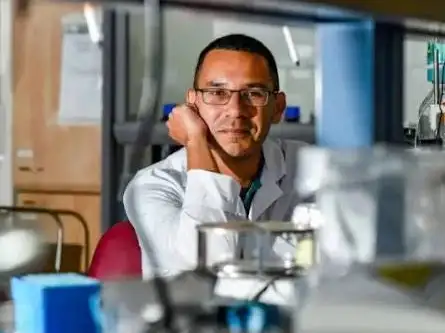
The laser missile defense system will be managed by the newly established Energy Warfare Administration in Rafael’s Land and Naval Systems Division.

With Israel’s Iron Beam laser missile defence system to become operational in the fourth quarter of 2025 Rafael Advanced Defense Systems today announced the establishment of a new Energy Warfare Administration in its Land and Naval Systems Division. The new administration will manage high-power laser systems projects.

The new administration head named only as Dr. Y. will serve under Rafael EVP & General Manager of the Land & Naval Systems Division Tzvi Marmor. Dr. Y., a graduate of the Technion with a Ph.D. in physics, joined Rafael about 12 years ago and has since held a series of senior positions in the engineering sector while leading the development and production of groundbreaking systems for national security. Among other things, she served as head of Israel’s Iron Dome production line and as head of electro-optics, which is integrated into most of the company’s advanced systems.

Rafael’s Land and Naval Systems Division at Rafael will continue to be responsible for the development, production and marketing of complete and integrative products and solutions in the areas of precision attack, including the Spike missile family, active, reactive and passive defense systems for tanks and armored vehicles, including Trophy, and Iron Beam.

The new administration will be responsible for Iron Beam in particular and the development and production of Rafael’s laser systems in general.

Rafael CEO Yoav Tourgeman said, “Dr. Y. brings with her extensive management experience of teams of hundreds of developers, as well as a deep understanding of technological needs and operational requirements. All of this will allow her to promote these flagship projects and realize the marketing and business potential in Israel and around the world.”

High-power laser system for ground-based air defense

Iron Beam is a high-power laser system for ground-based air defense, against aerial threats (rockets, mortar bombs, drones, and cruise missiles). The Ministry of Defense Directorate of Defense R&D (DDR&D) (MAFAT) is leading the project, along with Rafael, the main developer, and Elbit Systems.

Iron Beam be integrated into Israel’s multi-layered air defense system, alongside Iron Dome, which is an interception system for rocket threats within a range of 40 kilometers. Iron Beam will be a complementary system for intercepting rockets within a range of up to 10 kilometers, using a powerful 100 kilowatt laser beam. The major advantage of Iron Beam is in significant cost savings. While each interception with Iron Dome costs an estimated $30,000, each interception with Iron Beam will cost just $5-$10.

A new study introduces choice engineering—a powerful new way to guide decisions using math instead of guesswork. By applying carefully designed mathematical models, researchers found they could influence people’s choices more effectively than relying on gut instincts or even traditional psychology. This discovery could pave the way for smarter, more ethical tools to improve decision-making in areas like education, health, and everyday life.

The new study, published in Nature Communications, demonstrates that mathematical models can be more effective than psychological intuition when it comes to influencing human decisions. Led by Prof. Yonatan Loewenstein from Safra Center for Brain Sciences (ELSC) at Hebrew University, in collaboration with Dr. Ohad Dan from Yale University and Dr. Ori Plonsky from the Technion, the research introduces a novel concept: choice engineering.

The study draws a distinction between two approaches to influencing behavior. The first, known as choice architecture, has gained widespread popularity since one of its pioneers, Richard Thaler, was awarded the Nobel Prize in Economics in 2017—with behavioral insights (“nudge”) teams emerging in governments around the world.

Choice architecture relies on psychological principles—such as primacy, anchoring, or intuitive heuristics—to subtly steer decisions. The second approach, proposed by the researchers, is choice engineering: a method that uses computational models and optimization techniques to systematically shape behavior with precision.

To put these approaches to the test, the team launched an academic competition where international academic teams were tasked with designing an incentivization mechanism (“reward schedule”) that would get people to choose one of two objectively equal-value options.

More than 3,000 participants took part in the experiment, each exposed to one of several reward strategies. Some were built on intuition and psychological insights, while others were crafted using computational models.

The most effective schedule was based on a computational model called CATIE (Contingent Average, Trend, Inertia, and Exploration), designed by Dr. Ori Plonsky together with Prof. Ido Erev from the Technion. The model integrates multiple behavioral tendencies into a unified predictive framework. This CATIE-based strategy significantly outperformed those based on the widely used machine-learning model Q-learning, and those informed by qualitative intuition alone.

“Our study shows that just as engineers use mathematical models to build bridges or design aircraft, we can use models of learning and decision-making to influence behavior—reliably and efficiently,” said Prof. Loewenstein.

The findings demonstrate that behavior can be engineered with surprising accuracy when guided by well-calibrated models. Moreover, the study offers a new method for evaluating cognitive models—not only by their explanatory power, but also by their effectiveness in shaping real-world decisions.

The implications are far-reaching. In fields ranging from education and public health to digital design and policy-making, choice engineering could enable the development of empirically optimized, scalable interventions. At the same time, the researchers note that ethical frameworks will be essential to guide the responsible application of these tools.

As a proof of concept, this study underscores the emerging potential of mathematical modeling in the cognitive sciences—not just for understanding behavior, but for actively guiding it.

Is there a difference in brain structure between men and women? If we were to find such a difference in a single neuron, would it matter?

One of the most useful models for studying these questions is the nematode Caenorhabditis elegans (C. elegans). This tiny worm has several characteristics that make it an excellent research model, one of which is that every cell in its body has a predetermined identity and lineage.

Like humans, C. elegans has two sexes. However, instead of male and female, the two sexes of this worm are male and hermaphrodite—a self-fertilizing individual capable of producing both male and female gametes (sperm and eggs), allowing it to reproduce without a partner.

Researchers from the Faculty of Biology at the Technion-Israel Institute of Technology have examined these sex-specific differences (sexual dimorphism) in C. elegans, and uncovered surprising findings.

The study, published in Proceedings of the National Academy of Sciences, was led by Dr. Yael Iosilevskii and Dr. Menachem Katz from Prof. Beni Podbilewicz’s Lab, in collaboration with Prof. David H. Hall of the Albert Einstein College of Medicine in New York.

The researchers discovered that a highly branched neuron called PVD, previously characterized in hermaphrodites, forms a different structure in males. Moreover, while in hermaphrodites, PVD functions primarily in pain sensing, in males, it has an additional role during mating; when its development is disrupted, males are slower and less coordinated. This discovery provides a unique example of sexual dimorphism in the structure of a single neuron, which is linked to behavioral differences.

‘Male’ vs. ‘female’ brains

It has long been established that men and women have different susceptibilities to various neurological disorders. For example, women are more prone to depression, while men have a higher risk of Parkinson’s disease. Could these differences be linked to the structure of individual neurons in the brain? This is difficult to determine due to the sheer number of neurons in the human brain—approximately 75 billion.

Even if a difference were found between the sexes in just one neuron, pinpointing its exact contribution would be challenging, as even the simplest tasks require a multitude of intricately interconnected neurons.

To explore the significance of a single neuron’s spatial structure, researchers have turned to the nematode C. elegans, just one millimeter long. A unique feature of this organism is that the identity of all 302 neurons in the hermaphrodite is invariant, allowing scientists to map their placement, spatial structure, and connections fully.

“Furthermore,” said Prof. Podbilewicz, “within the nematode population, there are also male individuals with distinct anatomy, additional neurons, and different behavior. This makes for a remarkably simple system where we can directly ask: What determines the structure of each neuron in the nervous system? Are there sex-specific differences, and do they affect behaviour?”

To answer these questions, Dr. Iosilevskii and Dr. Katz studied the development of the sensory neuron PVD. This neuron has a highly branched structure, with repetitive subunits resembling a candelabra (“menorahs”). Its distinctive shape and its development during the organism’s maturation have made it a research focus for over a decade. While much is known about its development in hermaphrodites, PVD had not been characterized in males or examined for sexual dimorphism.

The Technion researchers set out to determine whether male PVD neurons develop a different spatial structure and whether this difference influences a male’s behavior.

When examining PVD development in males, the researchers found that its menorah-like structures remained consistent across both sexes. However, they were surprised to discover that in adult males, PVD extends additional branches into the tail fan—a specialised male organ used for mating. Along with Prof. Hall, they found that these branches are entirely separate from the previously known neurons in this region.

This unique branching of PVD does not occur during the tail fan’s development but emerges immediately afterward, during the final molt from juvenile to adult. Shortly afterwards, the male begins to exhibit his sex-specific mating behavior. The researchers further discovered that when PVD does not develop properly, this mating behavior is impaired, causing males to become slower and less coordinated.

This discovery of sexual dimorphism in the structure of a single sensory neuron, which also relates to male-specific behaviour, provides a unique example in C. elegans and opens new avenues for studying sex-based neural differences. The discovery is expected to enhance our understanding of how such sexual dimorphisms alter responses both at the single-cell level and the behaviour of the whole organism.

Haifa-based Pluri entered into an exclusive collaboration with Ukrainian umbilical cord blood bank Hemafund last month to stockpile and distribute its placental expanded cell therapy, PLX-R18, as a potential treatment for life-threatening radiation sickness. Under the terms of the collaboration agreement with Hemafund, Pluri will produce and supply an initial capacity of 12,000 doses of its PLX-R18, sufficient to treat 6,000 people. Pluri was founded in 2001 by Technion alumnus Shai Meretzki, who made use of a stem cell patent developed during his Ph.D. studies in the Rappaport Faculty of Medicine

Amid rising threat from Russia, Pluri partners with Ukrainian blood bank to stockpile remedy for deadly radiation poisoning that uses cells grown from donated placentas.

About two weeks after a Russian drone struck the cover built to contain radiation at the Chernobyl nuclear power plant, Israeli biotech firm Pluri, a developer of placenta-based cell technology, landed an agreement to help Ukraine develop an emergency response to life-threatening radiation sickness in case of a radiological event.

The nearly three-year war between Russia and Ukraine has underscored the ever-rising threat of nuclear fallout amid repeated shelling of a nuclear power plant in southern Ukraine and Russian President Vladimir Putin’s threat to use nuclear weapons.

Last month, Haifa-based Pluri (formerly Pluristem) entered into an exclusive collaboration with Ukrainian umbilical cord blood bank Hemafund to stockpile and distribute its placental expanded cell therapy, PLX-R18, as a potential treatment for life-threatening radiation sickness.

The condition, also known as hematopoietic acute radiation syndrome (H-ARS), occurs when a person is exposed to high levels of ionizing radiation, such as during a nuclear attack or accident. Destruction of the bone marrow and blood cells ensues, leading to severe anemia, infection and bleeding.

Death can occur in four to eight weeks if effective treatment is not received.

Over the past two decades, Pluri has focused on developing 3D technology to mimic how living cells communicate and interact with the body to grow and expand. The biotech firm harnesses stem cells extracted from placenta donated by healthy women who have given birth by cesarean section in hospitals around the country. The single placenta cells are cultivated in a proprietary 3D bioreactor system with a micro-environment that resembles and simulates the human body.

“Cells are the building blocks of life — everything in our world starts and ends with cells,” Pluri chief commercial officer Nimrod Bar Zvi told The Times of Israel. “These tiny cells are amazing creatures that exist in almost any aspect of our life, whether we get them from humans, animals, or plants.”

Bar Zvi explained that once placed inside bioreactors, the stem cells latch onto scaffolds and start “to communicate with each other and proliferate, similar to what happens in the human body, and they are secreting proteins as we mimic the conditions of the natural environment they need to expand.”

Using the 3D cell expansion technology method, a single placenta cell can be multiplied into billions of distinct cells, Pluri said. As a result, cells from a single placenta can treat more than 20,000 patients.

“In the end of that process, we have a vial that contains a specific amount of our placental expanded cells depending on the dosage needed for the patient,” said Bar Zvi. “Once the vial with the cells is injected into the muscle, it stimulates the human body’s own capabilities for the reactivation and regeneration of blood cells, mitigates the effects of radiation exposure and we see the recovery happening.”

Pluri says that its cell-based treatment stimulates and regenerates the production of all three types of blood cells produced in the blood marrow: white and red blood cells as well as platelets.

Under the terms of the collaboration agreement with Hemafund and subject to receiving external government and private sector funding, the veteran biotech firm will produce and supply an initial capacity of 12,000 doses of its PLX-R18, sufficient to treat 6,000 people. The doses will be stored and managed by Hemafund and delivered to medical institutions across Ukraine in case of need.

“At present, there are no other treatments for radiation poisoning that use stem cells taken from a placenta as far as we know,” said Bar Zvi. “The ability to treat acute radiation exposure with cell therapy and to scale it up for mass production is where we are unique since we can supply thousands and thousands of vials to large numbers of people.”

Pluri is publicly traded on the Nasdaq as well as the Tel Aviv Stock Exchange. At the Matam Advanced Technology Park in Haifa, the biotech firm operates a cell therapy production facility, which it says has been designed to handle large-scale manufacturing of cellular therapies. It could also be mobilized for mass production to respond to global emergencies if nuclear threats escalate. The firm employs a total of 130 people.

Pluri and Hemafund said they will also seek to advance clinical trials to register the PLX-R18 therapy as a radiation countermeasure and obtain necessary regulatory approvals from Ukraine’s health ministry. The collaboration is expected to potentially generate over $100 million in value for both parties.

“Our cryostorage facilities and logistics network position us well to support the introduction of PLX-R18 as a potential vital tool for radiation emergency preparedness in Ukraine,” said Hemafund founder Yaroslav Issakov. “While we hope such treatments remain precautionary, our goal is to stand ready to distribute this potential therapy in the event of an emergency.”

Pluri uses patented technology to create cell-based pharmaceutical and food products. (Courtesy)

Pluri said that its PLX-R18 has been safely tested in both humans and animals. Results from a series of recent studies in animals of its stem cell therapy after radiation exposure demonstrated an increase in survival rates from 29% in the placebo group to 97% in the treated group.

The administration of PLX- R18 as a prophylactic measure 24 hours before radiation exposure, and again 72 hours after exposure, resulted in an increase in survival rates, from 4% in the placebo group to 74% in the treated group.

The FDA previously cleared an Investigational New Drug application for PLX-R18 for the treatment of radiation sickness and granted it Orphan Drug Designation. This means that should a nuclear event take place, Pluri could use the drug to treat victims.

Pluri’s bioreactors for the cultivation of cell-based therapy products. (Courtesy/Michael Brikman)

In July 2023, Pluri was awarded a three-year $4.2 million contract by the US National Institutes of Health to continue to develop its novel treatment for deadly radiation sickness and to collaborate with the US Department of Defense’s Armed Forces Radiobiology Research Institute in Maryland.

As part of the contract, the NIH’s National Institute of Allergy and Infectious Diseases (NIAID) will fund final studies required to complete the biotech firm’s application for FDA approval to market its PLX-R18 therapy.

Pluri hopes that the approval would make it eligible for purchase by the US Strategic National Stockpile — the country’s repository of critical medical supplies — as a medical countermeasure for exposure to nuclear radiation.

The Technion is the only Israeli university in the top 100 and ranks 89th worldwide

The U.S. National Academy of Inventors (NAI) has ranked the Technion – Israel Institute of Technology  first in Israel and second in Europe for the number of U.S. patents approved in  2024, with 43 patents registered last year. The Technion is the only Israeli university on this prestigious list, placing 89th globally.

Rona Samler, general manager of T3 – the Technion’s commercialisation unit, stated:

“I am extremely proud of our ranking among the world’s top 100 universities and our first-place standing in Israel for the fourth consecutive year. This recognition is a testament to the excellence of Technion researchers in scientific and engineering innovation and the institution’s strength in translating ideas into research and research into world-changing technologies. This is one of the key ways the Technion makes a lasting impact on society and the economy.”

Patent registration in the U.S. enables academic institutions to transform groundbreaking technologies into competitive global products, significantly benefiting consumers and industries worldwide.

Dr. Paul Sanberg, president of the NAI, emphasised: “By recognising this crucial step in the commercialisation process, we highlight the role of intellectual property in benefiting inventors and institutions while encouraging the development of technologies with a potentially significant societal and economic impact.”

The NAI ranking is based on data from the United States Patent and Trademark Office (USPTO) for 2024 and includes 100 institutions and 9,600 patents.

Israel’s oldest university is playing an integral role in tearing down walls between academia and business, helping the so-called “Startup Nation” better compete in future-facing industries at a time of rapid technological change. 

Technion — Israel Institute of Technology was founded in 1924, 24 years before the establishment of Israel, on the idea that if a Jewish state were to come into existence, it would first need technical expertise to develop the country. 

Most of Israel’s railroads, highways and bridges were designed and built by Technion grads, along with its advanced telecom infrastructure, desalination plants and electrical grid. Chip design, aerospace engineering and optoelectronics all have a home in the university, which awards about 30 percent of all Israel’s engineering undergraduate degrees and half of its Ph.Ds. Pioneering work in micro-electronics started at the Technion, and innovations like the Iron Dome air-defense system were developed by alumni.

“The impact is really unparalleled,” said Uri Sivan, president of the Technion, during a visit to Atlanta along with startups from Drive TLV, a mobility incubator in Tel Aviv. 

But that competitive edge is at risk for all universities that keep their inventions locked in ivory towers and fail to keep up with the adapting needs of companies. 

“I believe that universities … need to reposition themselves, or in a sense they’re going to become somewhat irrelevant,” he told a group of entrepreneurs and corporate development executives during a keynote at Curiosity Lab in Peachtree Corners. 

He pointed to a fundamental shift taking place at the nexus between education and practice. This “changing interface” requires educators to be nimble and open to new modes of collaboration, said Dr. Sivan, an expert in physics and nanotechnology.

“When I studied 40 years ago there was a clear dividing line — basic research done at the university and applied research in industry; academic degree at the university, training in industry. This line is completely blurring,” Dr. Sivan said.

This started in computer science with companies like Google and Microsoft, but it’s happening today in a wider variety of fields like AI and quantum computing, where companies are often the ones driving primary research forward. 

Universities, for their part, are also working more intently on how their research can address real-world problems. The Technion spins out about 15 companies per year, and the university has learned to embrace commercialization while remaining committed to its primary role of education, Dr. Sivan said.

As spinoffs increase by a factor of three to five per year, the question has become how to keep faculty engaged while also enabling them to explore ways to capitalize on their research.  The university already allows faculty to consult one day a week for companies and take leaves of absence of up to four years. 

“Very few don’t come back,” he said.  

He pointed to the Dyson Institute in England as a new model for integrating work and study.

While it’s accredited to grant engineering degrees, students also spend much of their time working directly for the vacuum and electronics innovator. 

“Students don’t pay tuition — zero tuition. They spend half the week in the company hub, doing research … and they get a salary. So you can see that this is a disruptive event for academia.” 

One solution for the Technion has been to invite innovators on-campus to create an optimal blend of theory and practice. PTC, a Boston-based software company that helps manufacturers simulate not only the physical design of their parts but also their thermal and electronic properties. 

“They moved a body of about 100 researchers moved into our campus, and they’re completely integrated now into our academic system. So their researchers take part in teaching, they take part in mentoring students, mentoring graduate students, and they actually built some research facilities that are now available to all researchers on campus,” Dr. Sivan said. 

The approach echoes that of Georgia Tech, which has been a magnet for corporate innovation centers in Midtown’s Tech Square. Dr. Sivan had meetings at the university during his Atlanta trip, soaking in the atmosphere of a growing tech hub. 

“There is an entrepreneurial spirit in the air. That’s where we would like to be,” he said. 

Technion has also created a new academic position that serves as a reciprocal of the common practice of professors acting as consultants for industry.

With Research Associates From Industry, business leaders with knowhow in critical sectors spend a day or two per week in the university setting, working with students directly and integrating into research projects. 

In a university with 600 faculty, some 60 associates have already joined, including Intel chip designers that are providing greater depth to existing courses. Meanwhile, they gain access to students and cutting-edge knowledge. 

“They’re exposed to research which is more blue-sky than what they do in their companies,” Dr. Sivan said. 

Capitalizing on Constraints

Israel is not new to seeding the links between researchers and entrepreneurs. The Israel Innovation Authority has long funded such initiatives, and in 1977, the country worked with the U.S. to establish the BIRD Foundation to underwrite joint innovation between U.S. and Israeli companies. The effort has led to 16 joint projects involving Georgia firms as recently as 2021. 

Dr. Sivan told Global Atlanta in an interview facilitated by the American Technion Society that Israel reached a “tipping point” in its innovation ecosystem years ago, in part because it has had to operate with constraints on funding and a small internal market that has force companies to look outward for growth and investment.

“You need necessity and you need constraints: If you have unlimited sums of money, and you don’t really have particular necessities, you don’t have to be creative,” he said. “Being a small country under constant stress from the outside, with limited resources and so on, I believe, drives people to innovation.”

Dr. Sivan said he would like to see the Technion deepen its institutional collaboration with Georgia Tech and added that he explored the idea during a meeting with his counterpart there, President Angel Cabrera. 

His speech during the Drive TLV event was followed by a panel on 2035: Shaping the Next Decade of Mobility with representatives from Honda Innovations, Wheels LLC and 19Y Advisors. Atlanta-based Cox Automotive and Novelis are partners in Drive TLV. 

Pitches followed from the latest (10th) batch of Drive TLV Fast Lane accelerator startups:

  • Arbell Energy Ltd. 
  • Deontic
  • dataspan.ai
  • Monogoto 
  • NUGEN 
  • Whilx Technologies

Unlike artificial language models, which process long texts as a whole, the human brain creates a “summary” while reading, helping it understand what comes next.

In recent years, large language models (LLMs) like ChatGPT and Bard have revolutionized AI-driven text processing, enabling machines to generate text, translate languages, and analyze sentiment. These models are inspired by the human brain, but key differences remain.

A new Technion-Israel Institute of Technology study, published in Nature Communications, explores these differences by examining how the brain processes spoken texts. The research, led by Prof. Roi Reichart and Dr. Refael Tikochinski from the Faculty of Data and Decision Sciences. It was conducted as part of Dr. Tikochinski’s Ph.D., co-supervised by Prof. Reichart at Technion and Prof. Uri Hasson at Princeton University.

The study analyzed fMRI brain scans of 219 participants while they listened to stories. Researchers compared the brain’s activity to predictions made by existing LLMs. They found AI models accurately predicted brain activity for short texts (a few dozen words). However, for longer texts, AI models failed to predict brain activity accurately.

The reason? While both the human brain and LLMs process short texts in parallel (analyzing all words at once), the brain switches strategies for longer texts. Since the brain cannot process all words simultaneously, it stores a contextual summary—a kind of “knowledge reservoir”—which it uses to interpret upcoming words.

In contrast, AI models process all previously heard text at once, so they do not require this summarization mechanism. This fundamental difference explains why AI struggles to predict human brain activity when listening to long texts.

To test their theory, the researchers developed an improved AI model that mimics the brain’s summarization process. Instead of processing the entire text at once, the model created dynamic summaries and used them to interpret future text. This significantly improved AI predictions of brain activity, supporting the idea that the human brain is constantly summarizing past information to make sense of new input.

This ability allows us to process vast amounts of information over time, whether in a lecture, a book, or a podcast. Further analysis mapped brain regions involved in both short-term and long-term text processing, highlighting the brain areas responsible for context accumulation, which enables us to understand ongoing narratives.

Prof. Shai Shen-Orr of the Ruth and Bruce Rappaport Faculty of Medicine showcased his lab’s trailblazing efforts in harnessing computational tools and innovative methodologies to redefine our understanding of the immune system. A leading immunologist and director of the Zimin Institute of AI Solutions in Healthcare at the Technion and the new Technion Institute for Healthy Aging, his work spans from developing metrics like “immune age” to spearheading global health projects, promising transformative implications for medicine.

Immune Age and Predictive Medicine

One of Prof. Shen-Orr’s standout contributions is the concept of immune age, a metric that quantifies the immune system’s state. This marker has shown predictive power for various health outcomes, including cardiovascular disease, paving the way for early diagnosis and intervention.

“Your immune system is a learning system,” Shen-Orr explained, emphasizing how the immune system evolves over time and adapts to environmental challenges. “By understanding an individual’s immune age, health care providers can better predict and manage potential health issues, leading to more personalized and effective treatments.”

Developed using advanced mass cytometry and machine learning, this metric represents a leap in precision medicine, shifting the focus from general health indicators to immune-specific markers.

Bridging the Data-Insight Gap With AI

Prof. Shen-Orr’s research tackles a critical bottleneck in biomedical science: the gap between vast amounts of data and actionable insights. He has pioneered computational disease models that leverage artificial intelligence to improve drug development efficiency. For example, his lab’s algorithm, “Found in Translation,” enhances the predictability of findings from animal models, like mice, to human systems by up to 50%. “We train the computer system to learn the difference between a mouse and a human,” he said.

“Most drugs fail during development. It costs about $2.5 billion to bring a single drug to market, primarily because of failed trials. By improving the translational accuracy between species, we can reduce time, cost, and animal use significantly.”

The Human Immunome Project: A Global Collaboration

One of his most ambitious initiatives, Shen-Orr is co-chief science officer of the Human Immunome Project. This global nonprofit aims to map baseline immune variations across populations, genders, and geographic regions, addressing a fundamental gap in immunological research. The project holds the potential to revolutionize vaccine development and personalized immunotherapies by understanding how different immune systems respond to treatments.

An example that underscores this need is the malaria vaccine. While it demonstrated over 90% efficacy in trials conducted in the U.S., its effectiveness dropped to less than 20% in African populations, a disparity attributed to baseline immune variations.

“We’re at a singularity moment in immunology,” Shen-Orr said. “The tools to measure the immune system comprehensively, along with AI capabilities, have matured. Now is the time to leverage them for global impact.”

From Academia to Real-World Applications

The Technion’s emphasis on translational research is evident in Shen-Orr’s dual roles as an academic leader and entrepreneur. He co-founded CytoReason, a company that integrates AI-driven disease models into pharmaceutical research and development. The platform has already gained traction with leading industry players like Pfizer and Sanofi, demonstrating its potential to streamline drug development and reduce costs.

Moreover, his collaboration with other Technion researchers is pushing the boundaries of innovation. For instance, partnerships exploring the impact of diet on immune health are underway, aiming to create tailored nutritional solutions for aging populations.

Shen-Orr also advocates for equipping biologists and clinicians with computational and data science skills to harness the explosion of data in immunology. The Technion’s curriculum now incorporates quantitative thinking from the first year of medical school, preparing future physicians to engage with cutting-edge technologies.

Looking Ahead

Prof. Shen-Orr’s work exemplifies the Technion’s commitment to groundbreaking science with tangible societal benefits. By bridging biology, AI, and global collaboration, his research not only advances our understanding of the immune system but also lays the foundation for a future where medicine is predictive, personalized, and precise.

His collaborative efforts with institutions like Stanford University and the National Institutes of Health aim to deepen our understanding of immune health and develop new diagnostic tools and therapies. “We are studying the effects of the environment and pollution on immune health,” for example.

As he puts it, “We’re moving toward a world with less trial and error and more informed decisions in medicine. The immune system, with all its complexity, is the key to unlocking this future.”

From predictive medicine to global health initiatives, Shen-Orr’s work is paving the way for a deeper understanding of the immune system and its applications in improving human health. As the field continues to evolve, the Technion remains at the cutting edge, driving innovation and collaboration in immunology research.

Nora Nseir, the founder and co-CEO of Nurami Medical, knows that the Haifa-based biomed company’s groundbreaking product may not seem particularly impressive at first glance. It looks like a plain white bandage, just 5 cm in width and length, but if everything goes according to plan, it could fundamentally change the way doctors treat brain and spinal cord injuries. The product’s ability to regenerate meningeal tissue after complex neurological surgeries sets it apart. So far, $16 million has been invested in Nurami, and the company is now completing another funding round—this time for $30 million. There is still a long road ahead, but the market in which the company operates is so vast that if the product succeeds, Nurami could reach a valuation in the billions of dollars.

Nseir, who holds a bachelor’s degree in biomedical engineering and a master’s degree in biomechanical engineering from the Technion, founded Nurami with her partner, Dr. Amir Bahar. The two met in 2011 while working together on developing a hemostatic agent for Bioline. “Amir has a doctorate from the Weizmann Institute and had just returned to Israel after seven years at Mount Sinai Hospital in New York,” she says. “We worked on the project together, but at some point, Bioline discontinued it due to shifting priorities and cost-cutting. We thought our paths would diverge, but then we decided to start something of our own. Academia moved at too slow a pace for me—I’m a results-driven person. Amir and I have great chemistry at work, so I felt that launching a startup together would help me fulfill my dream.”

What if the digital world offered not just sight and sound but also the ability to feel?

Imagine a future where technology allows us not only to see and hear each other from great distances but also to feel  – examining a sick patient or tucking in a grandchild from across the globe. Techion Professor Lihi Zelnik-Manor is on a mission to hone technologies that will realize these possibilities.

“I love thinking about the applications of technologies that simulate the sensation of touch: providing medical professionals with new tools, helping people who are blind, and even enabling family members to virtually touch one another across geographical distances,” she says. “The extraordinary promise of such technologies motivates my work.”

The challenge of simulating touch — especially textures — is decades away from full realization. Currently, haptic systems, systems that relate to the sensation of touch, rely on simple vibration motors to simulate touch. These motors are used to provide sensory feedback in devices like haptic gloves or robotic arms, which allow users to “feel” when they grip an object. However, when it comes to simulating detailed textures like the roughness of concrete or the smoothness of fabric, the technology has been limited.

Prof. Zelnik-Manor is working on new innovations that aim to replicate the tactile experience of touching real-world textures. In one experiment, she and her team built a tablet with air pressure systems, which resembled an air hockey table, to simulate tactile feedback and explore the possibility of conveying images to blind individuals through touch. The project faced challenges as the team ultimately realized that humans struggle to understand complex spatial layouts through touch alone. Nonetheless, the experiment provided valuable information about haptic technology.

In a more promising recent experiment, Prof. Zelnik-Manor aimed to create a small device that resembled a computer mouse which could provide tactile feedback for users to recognize textures — a “haptic mouse” with an array of vibrating pins. The pins simulate various textures by stimulating the finger in a way that mimics the sensation of touching real surfaces. The device capitalizes on the brain’s ability to reconstruct textures as users move their fingers across the pins.

The device was tested against real-world 3D-printed materials, and results showed that while the device was not as accurate as physically touching the materials, it was still effective. In the experiment, participants were able to recognize textures with 86% accuracy using the haptic device, compared to 97% accuracy with the 3D-printed surfaces. The recognition process was slower with the device, taking around two minutes versus one minute with the 3D prints. Despite these limitations, the experiment demonstrated the potential of virtual haptic feedback for texture recognition, moving beyond basic tactile tasks to more complex real-world textures.

One of the most exciting applications of haptic technology lies in medicine, particularly in laparoscopic surgery. Surgeons currently rely on visual feedback to differentiate between healthy and unhealthy tissue. If haptic feedback could be integrated into surgical tools, doctors could “feel” the difference between tissues, improving precision and reducing errors. This advancement could be a game-changer in procedures like tumor removal or organ surgery.

The future of touch is just beginning to unfold. As research progresses, the digital world will become more immersive, offering not just sight and sound but also the ability to feel. Though such progress will take decades to achieve, Prof. Zelnik-Manor believes the charge fits squarely within the realm of academia and the mission of the Technion.

“To work on problems whose solutions lie 20 or 30 years in the future, this is the domain of academia,” she says. “While industry is driven to tackle problems with more near-term results, we as Technion researchers have the challenge and privilege of working on deeper, more complex mysteries.”