
For generations, observant Jews accepted certain culinary boundaries as fixed. Butter on a burger? Impossible. A creamy cappuccino after a meat meal? Out of the question. Cheeseburgers were perhaps the most famous symbol of what Jewish dietary law forbids.
Today, science is quietly dismantling those assumptions.
In laboratories and food technology start-ups across the world, researchers are reimagining the foods we eat. Plant-based milks, precision-fermented dairy proteins and cultivated meats are no longer futuristic curiosities; they are appearing on supermarket shelves and restaurant menus, reshaping both the food industry and religious practice.
At the heart of this revolution is Israel, the world’s original start-up nation. In 2024, Israel became the first country to approve the sale of cultivated beef to consumers. By 2026, it ranked second only to the United States in alternative protein investment, attracting more than $1.3 billion in venture capital.
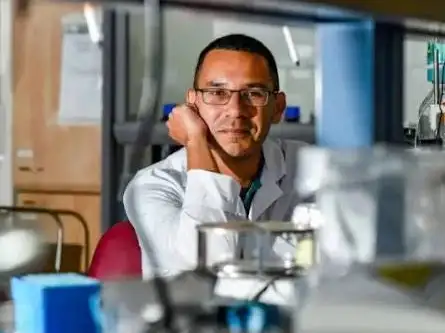
One of the scientists helping to drive this transformation is Professor Uri Lesmes of Technion – Israel Institute of Technology, where he is training a new generation of food engineers to tackle problems others consider impossible.
Milk Without a Cow
Among the innovations that excite Lesmes most is Remilk, a company co-founded in part by two of his former students.
“It’s a proper alternative to cow’s milk,” Lesmes explains. “And quite distinct from soy milk, which isn’t dairy.”
Remilk’s product is made through precision fermentation. Scientists identified the genes responsible for producing milk proteins in cows and inserted them into yeast. As the yeast ferments and multiplies, it produces proteins that are biochemically identical to those found in conventional milk.
The result is genuine dairy protein, but without the cow.
According to the company, the milk contains no cholesterol, lactose, hormones or antibiotics. Yet its molecular structure is the same as that of traditional dairy.
In Israel, Remilk and its competitor Cow-Free are already being produced at scale. Their absence from European shelves is not due to scientific limitations, Lesmes says, but regulatory ones.
“Many regulations in Europe are yet to catch up on such rapid innovations.”
For observant Jews, however, the implications are extraordinary. Because these products are not derived from animals, rabbinic authorities have ruled them to be parev – neither meat nor dairy. Suddenly, the once-forbidden cheeseburger becomes a halachic possibility.
Teaching Through Beer
While Lesmes’ research is transforming global food systems, he is equally passionate about teaching.
One of his most imaginative projects combines food science, entrepreneurship and rehabilitation. Working with Beit Halochem (House of Warriors), Lesmes developed a course in which students are paired with wounded veterans and given 1,500 shekels – roughly £360 – to brew 25 litres of beer.
The teams use Technion’s facilities to create their own recipes, brands and production processes. At the end of the course, a professional panel judges the beers in a blind tasting.
“It’s a huge celebration,” Lesmes says with a smile, “with a lot of beer.”
One group attracted national attention when they created a beer called HEROES. The label featured the faces of four fallen friends and family members, transforming a scientific exercise into a moving act of remembrance.
Feeding Soldiers in Wartime
Like every Israeli, Lesmes’ life changed after the Hamas attacks of 7 October 2023.
Though exempt from military service since 2015, he felt compelled to contribute.
“Like everybody, I wanted to chip in,” he recalls.
He contacted friends in the Israel Defense Forces and offered his expertise in nutrition and food engineering. The army accepted, and Lesmes became a consultant tasked with improving meals for frontline soldiers.
The outcome was a range of sterilised pouch meals that could withstand battlefield conditions while providing comfort and nutrition. Menu options included shawarma, mujaddara – a Middle Eastern rice and lentil dish – and tofu-based meals.
In wartime, food becomes more than sustenance. It becomes a source of morale, familiarity and resilience.
Nutrition for an Ageing World
Lesmes is also focused on another pressing challenge: global ageing.
“One cannot avoid the fact that the world is ageing,” he says.
At Technion, this demographic shift is treated as a grand challenge. Lesmes and his colleagues are redesigning everyday foods to meet the nutritional needs of older adults, many of whom struggle to consume enough calories and protein.
One product he highlights with particular pride is a reformulated breakfast cereal.
“We’re giving it a higher protein content and a higher calorific content, and we cut down on sugar by almost five times to make space for the other things,” he explains. “You have to make every bite count.”
He describes this approach as “health by stealth” – improving nutrition without requiring consumers to change their habits or preferences.
The concept has proven effective before. In the United States, the fortification of bread with folic acid dramatically reduced neural tube defects in newborn babies. Lesmes believes similar strategies can enhance quality of life for ageing populations around the world.
A Culture of Solutions
What distinguishes Technion, Lesmes says, is its mindset.
“We’re trained to think about what other people are missing, or what they think is impossible – and then we try to do it.”
It is a philosophy rooted in practical optimism.
“I was taught not to talk about problems, but to talk about solutions,” he says. “And we’re looking for solutions to things that people are yet to identify as problems.”
That ethos has helped turn Israel into a global centre for food innovation. From dairy without cows to meat without slaughter and cereals designed to combat malnutrition, scientists are redefining what food can be.
Science in Service of Humanity
For Lesmes, the ultimate goal is not novelty for its own sake, but human wellbeing.
“My responsibility is to make more products which contain everything, so that people have better choices,” he says.
Then he offers a reflection that captures both his humility and his ambition.
“Life is not perfect. But through science, we can try to shed light on things we don’t understand, so that we can make them better for everyone.”
It is a sentiment that resonates far beyond the laboratory.
In an era defined by environmental pressures, health challenges and changing traditions, the foods of the future are being shaped by people willing to question what is possible.
And sometimes, that future tastes remarkably like a cheeseburger.