
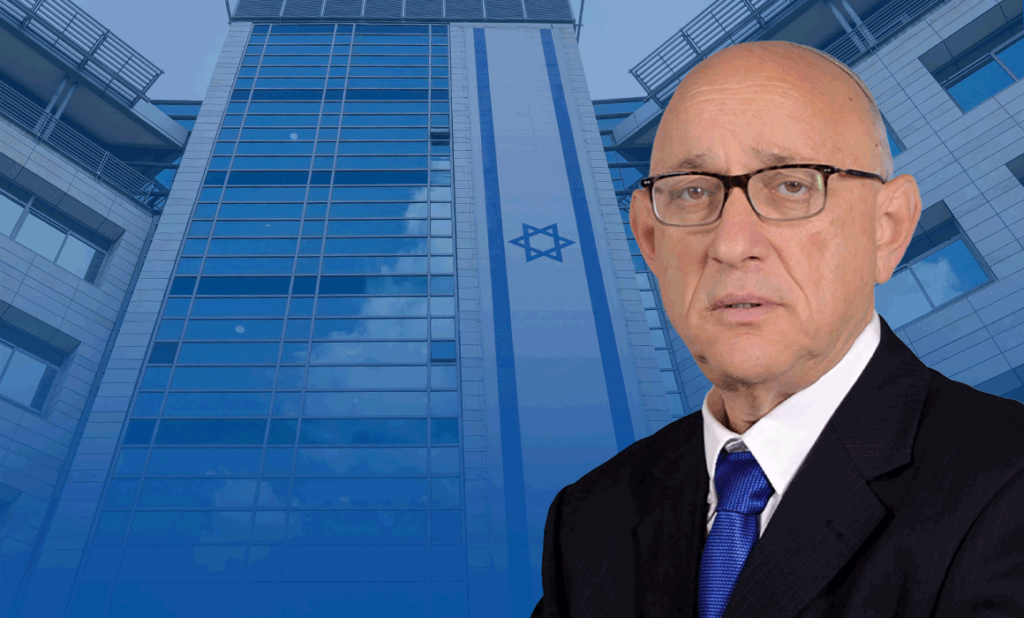
Jacob Nagel on the U.S.-Israel War With Iran:
Threats, Strategy, and an Unprecedented Alliance
Prof. Jacob Nagel is a brigadier general (res.) and former acting national security adviser and head of Israel’s National Security Council. He has twice chaired government-appointed Nagel Committees, including the most recent commission established after the October 7 Hamas attack, which delivered strategic and budgetary recommendations to Prime Minister Benjamin Netanyahu on the IDF’s force buildup and long-term defense posture. A key figure behind Israel’s decision to develop the Iron Dome missile defense system, he is currently a professor at the Technion, where he heads the Center for Security Science and Technology and leads advanced defense research initiatives.
In a candid webinar held nine days after the war with Iran began, Brig. Gen. (res.) Prof. Jacob Nagel offered a sobering assessment, outlining what he described as the regime’s core threats, Israel’s military and intelligence achievements, and the cooperation between Israel and the United States.
Nagel began by defining what he called the four central threats posed by Iran — not only to Israel, but to the entire Middle East, the U.S., and the wider world. “The four main threats are, of course, the nuclear capability; ballistic missiles — including, in the future, intercontinental ballistic missiles; UAVs, drones, and cruise missiles; and continuous terror support by the Iranian regime,” he said. A fifth danger, he added, is “the threat of depressing the Iranian people,” as the regime diverts national wealth away from its citizens and toward military aggression and terror proxies.
At the heart of Nagel’s analysis was the conviction that military action alone is insufficient if the regime itself remains in place. “If the regime stays, after we finish this round, we’ll have to do it again,” he warned. “Maybe not in eight months — maybe in 18 months — but we’ll have to do it again.” For Nagel, success must be measured not only by battlefield achievements but by whether those gains endure.
He acknowledged that there are nuanced differences between Israeli and American leadership styles but stressed that strategic alignment remains firm. “The cooperation between Israel and the United States is unprecedented,” Nagel emphasized, spanning intelligence sharing, operational planning, technology, and logistics.
Nagel pointed to Iran’s energy sector as a central vulnerability. Oil and gas revenues, he noted, fund the regime’s military ambitions and terror activities. “Instead of taking this money for their people and making Iran one of the most flourishing countries in the world, they are making it one of the poorest and one of the worst places to live,” he said. Decisions around whether and how deeply to target Iran’s economic infrastructure are complex, but potentially transformative.
Reflecting on the opening days of the war, Nagel described what he called three major achievements thus far. The first was operational capability: air power, intelligence, space technology, communications, and logistical support working in concert. The second was political and international coordination, particularly the deepening partnership between Jerusalem and Washington. The third, and in his view most consequential, was intelligence superiority.
“It’s not magic,” Nagel said of Israel’s intelligence achievements. “It’s 10, 15, sometimes 20 years of very specific work.” Thousands of people, he explained, labor behind the scenes to ensure readiness long before conflict erupts. Iran, he argued, failed to grasp the depth of that capability.
“Israel surprised Iran,” he said. “They learned a lot about technology, but they didn’t learn about our intelligence superiority.”
BRIG. GEN (RES.) PROF. JACOB NAGEL
Nagel also highlighted the Technion’s central role in underpinning Israel’s technological edge. Many of the systems deployed today, he noted, began development more than a decade ago and were advanced by Technion alumni working across Israel’s defense and technology sectors. “I’ll be humble,” he said, “but I know that about 80% of all defense technologies were developed by Technion graduates.”
From air-defense systems such as Iron Dome, David’s Sling, and Arrow to emerging laser technology, Nagel stressed that innovation saves lives. “People said Iron Dome would never work,” he recalled. “It works. It saves lives.”
On the diplomatic front, Nagel described constant, high-level coordination between Israeli and American leaders, underscoring the depth of consultation shaping decisions on both strategy and timing. While not willing to elaborate, Nagel also mentioned implicit messages being sent to China, Russia, and North Korea, and the strategic importance of Taiwan.
While much of his focus was on Iran, Nagel also turned briefly to Lebanon, arguing that Hezbollah’s actions have backfired strategically. “If I were an investor looking for ROI,” he said, “the worst investment Iran ever made is in its terror organizations.”
Hezbollah’s failure to decisively aid Iran during last June’s 12‑day conflict, he suggested, altered regional calculations and opened new — if fragile — possibilities for change. By entering the war now, Hezbollah “dug themselves into a deep hole,” he said, giving Israel “the legitimacy to attack deeply into Lebanon.” As a result, Lebanon’s prime minister, for the first time in the country’s history, appealed to Europe and the U.S. to help broker direct peace negotiations with Israel.
Nagel closed with a stark reminder. Iran’s leadership, he believes, is unlikely to surrender voluntarily.
“Only the people of Iran can take the country from them… and they can’t do it alone.”
Whether that moment comes soon or far later remains uncertain, but for Israel and its allies, preparation, unity, and long-term resolve are essential.
Hear from Brig. Gen (res.) Prof. Jacob Nagel directly in this webinar recording.