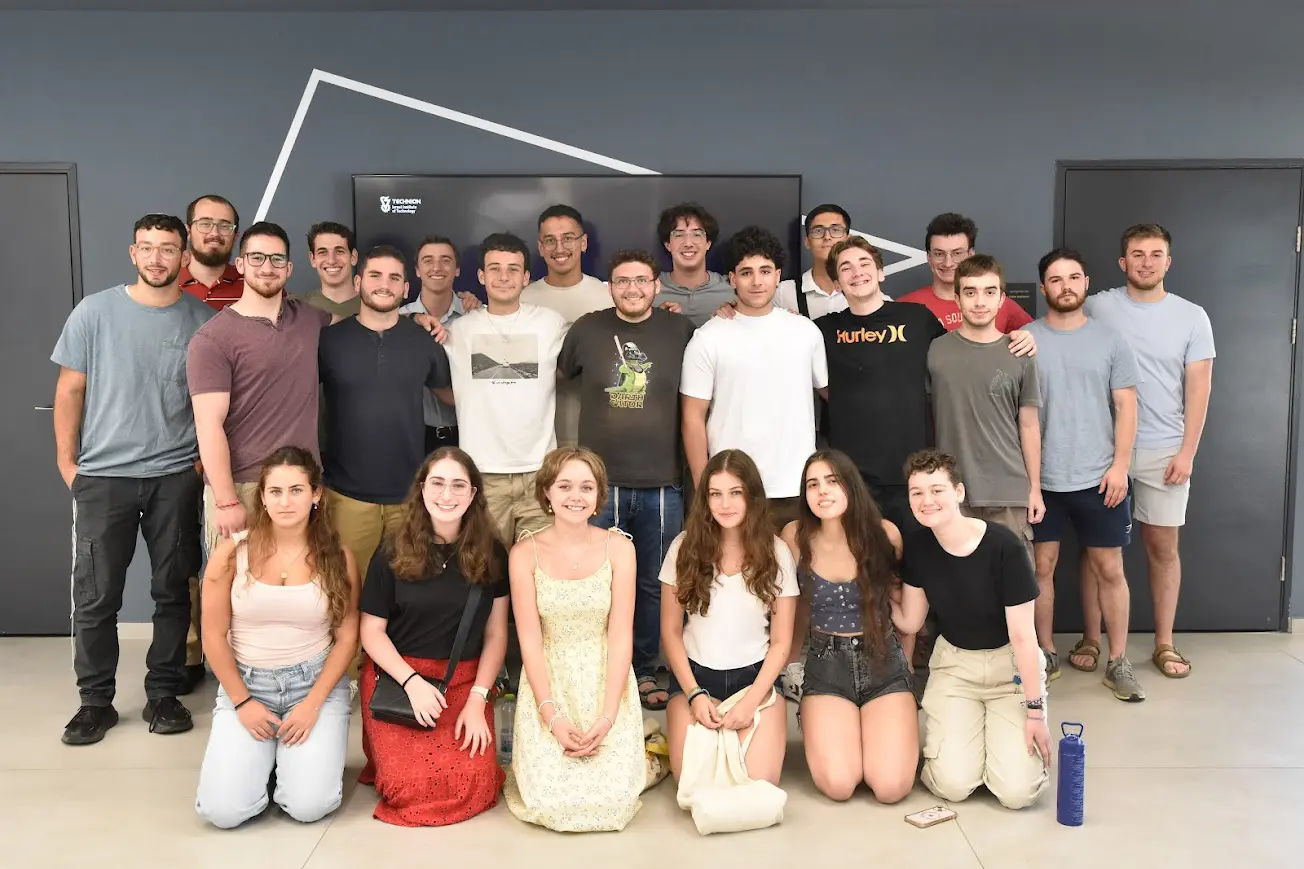
Against the backdrop of a worrying rise in antisemitism on campuses worldwide, the Technion is offering international students a safe, supportive, and academically world-class alternative

The Technion opened a new program for international students developed in response to waves of antisemitism on campuses in the U.S. and Europe. The program is the Technion’s first such initiative and aims to attract talented young people from around the world and integrate them into the Israeli academic community.

“Antisemitism in Canada is soaring – it’s worse than it looks,” said Anna Durov, a 19-year-old student from Canada. “I had already been accepted to a mathematics program at the University of Toronto, but because of reports of antisemitism at the university, I preferred to study at the Technion.”

Students in the program will receive extensive support, including housing, social mentors, team-building activities, and academic assistance, to ensure a smooth transition and full integration into campus life and studies. “It feels almost unreal,” shared Yael Cowly, 18, from Barcelona. “I registered immediately. I’ve heard so much about the Technion, and I know it’s considered the ‘MIT of Israel.’”

The first cohort includes 26 students from eight countries: the United States, Brazil, Russia, Canada, Spain, Germany, Azerbaijan, and Israel. They will take English-taught foundation courses in mathematics, science, and engineering, along with an intensive Hebrew ulpan, enabling them to join regular faculty tracks in their second year.

“Thanks to the program, I can study in English with my group during the first year while improving my Hebrew in the ulpan,” added Anna. “It makes continuing my studies easier and creates a supportive community.”

The students will participate in orientation and preparatory courses in mathematics, chemistry, and physics until the Technion’s academic year begins in October 2025. Later, they will choose from degree programs in eight Technion faculties: Mechanical Engineering, Aerospace Engineering, Chemical Engineering, Civil and Environmental Engineering, Biotechnology and Food Engineering, Materials Science and Engineering, Chemistry, and Biology.

“I still don’t know what I’m going to study, and that’s the beauty of the program – it keeps my options open and lets me explore first,” said Gabriel Takeuchi from Brazil, who has already been in Israel for a while and even found love here. “For me, learning Hebrew is a big bonus – it means I’ll be able to talk to my girlfriend’s grandparents at Friday night dinners.”

The Technion sees it as an opportunity to offer Jewish and international students a safe, advanced, and welcoming academic environment. “There’s a wave of antisemitism right now in Barcelona, and I definitely feel safer here – and I want to contribute to the country,” said Yael. “I’m in the Academic Reserve track, and after I finish my degree, I want to enlist.”

“This program opens a new path for outstanding students from all over the world to earn their undergraduate degree at the Technion, a leading institution in engineering and science, and in doing so gives Israel a new generation of graduates connected to Israeli academia and society,” said Emma Afterman, director of the Technion International School. “The program enables students to quickly learn Hebrew and join regular faculty programs from their second year. It’s the first initiative of its kind at the Technion, and we are thrilled to welcome our first cohort.”

Technion President Prof. Uri Sivan said: “This new program is our response to the rising antisemitism on campuses in North America, Australia, and Europe. The Technion, which opened its doors a quarter of a century before the State of Israel was established, was founded, among other reasons, to serve as a refuge for those who felt threatened abroad. In this spirit, already in November 2023, with the outbreak of protests around the world, we opened the Technion to visiting students and researchers from abroad, inviting them to benefit from the supportive environment we provide for their studies and research. The new program offers a framework for undergraduates who wish to study on a welcoming campus free of antisemitism and hate. The young people who come to us from around the world are a testament to the Technion’s scientific and engineering excellence and its international standing as one of the world’s leading technological universities. I am excited to welcome our new students and wish them great enjoyment and success in their studies.”
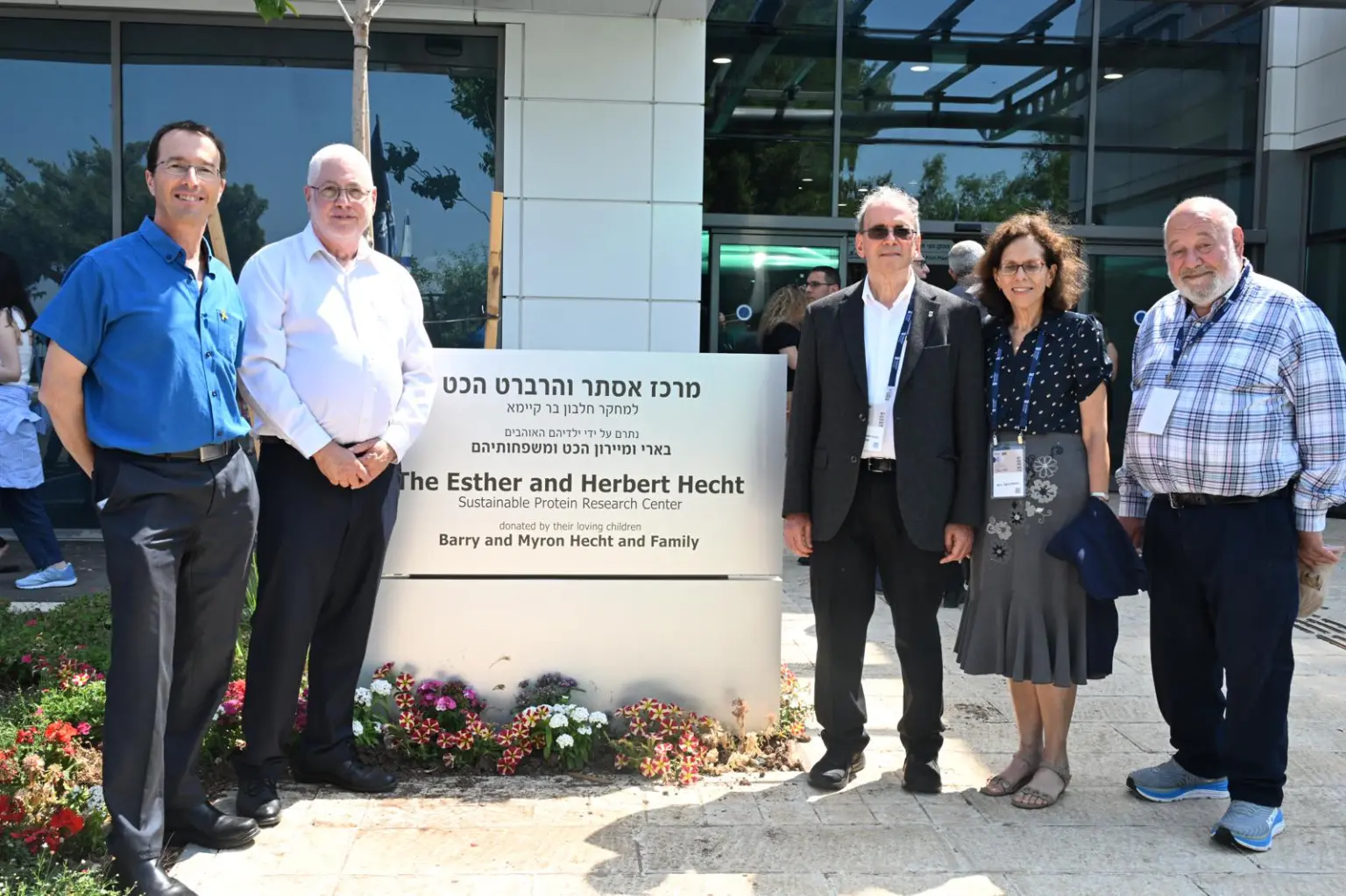
The Carasso and Hecht Centre’s will drive innovation, research, and industry collaboration in food production and biotechnology

These new centre’s established at the Technion, will promote education, research, and innovation in the food sector and strengthen the connection between the Technion and the entire food industry, from traditional to cutting-edge.

Eliminating hunger and improving food security are among the major challenges facing humanity in the 21st century, as defined by the United Nations’ Sustainable Development Goals. The Technion houses the only faculty in Israel dedicated to food engineering, leading the Israeli food-tech industry.

Dean of the Faculty of Biotechnology and Food Engineering, Prof. Esty Segal, added, “As dean, I see the establishment of these two centre’s as a clear manifestation of our vision—to position the Technion and the State of Israel at the global forefront of innovation in food. This field is not only an industrial growth engine—it is a profound scientific, environmental, and social challenge, integrating biotechnology, engineering, health, life sciences, and sustainability. Both centre’s were born out of a multidisciplinary pursuit of excellence, enabling us to develop breakthrough technologies, bridge basic and applied research, and lead food solutions for a world facing climate change, nutritional inequality, and resource depletion. It is also a commitment to Israel’s future, ensuring food security, advancing sustainability, and training the next generation of visionary, bold, and responsible scientists and engineers. This is a powerful link between science and purpose, between knowledge and impact—for Israel and the entire world.”

The new centre will support the Technion and the faculty in their mission—to bridge science, engineering, and technology in shaping the future of food production, preservation, and consumption, while advancing key goals such as waste reduction and environmental protection. We face major research challenges that intertwine health, sustainability, and innovation, alongside the educational task of training the next generation of scientists and engineers. This center will allow Technion researchers to translate ideas into real-world impact. We thank the Carasso family across generations, including the younger generation, for enabling the establishment of this important center. Let us celebrate this milestone—and now, to work.”

The Carasso family’s contribution, which will strengthen Israel’s footprint in global food research, is intended to support and realize their values and those of their company, emphasizing Zionism, excellence in science education, reducing disparities, and investing in infrastructure. The upgraded, expanded facility will be unique in Israel and among the most advanced in the world. It will include a research and development center for industrial-scale production, equipment for scaling lab processes to pilot scale, laboratories for food and biomaterials analysis, a fermentation lab, an industrial kitchen, and a tasting room—all designed to support teaching, research, and collaboration with industry and startups.

The Esther and Herbert Hecht Sustainable Protein Research Center is a multidisciplinary center that brings together approximately 50 researchers from various Technion faculties to develop food solutions for a better future. The center will serve as a model for sustainable protein research, promote collaborations within and beyond the Technion, and foster innovation, entrepreneurship, and the training of professionals in this field.

The centre is the world’s first academic centre in this field. Its vision is to serve as a multidisciplinary hub for researching and developing sustainable sources of protein. Its activities are grounded in Technion excellence and the rapid global development of this field. The center promotes research, attracts outstanding new researchers, trains graduate and postdoctoral students, and provides cutting-edge research infrastructure. It offers competitive research grants to launch initial interdisciplinary projects and holds conferences to strengthen connections between relevant researchers at the Technion and beyond.

Pitch Night isn’t just a student competition — it’s a launchpad for the next generation of Technion innovators. By turning bold ideas into real-world solutions, these students are gaining hands-on experience in entrepreneurship, engineering, and impact. It’s a powerful glimpse into how the Technion is shaping Israel’s future, and the future of technology itself. Keep scrolling to see what innovation in action really looks like.

I think there’s something entrepreneurial in Israeli DNA. I feel beyond privileged to have listened to all the wonderful pitches tonight and hopefully follow up with them.” – ERIC BRANDON, STARTUP BUSINESS DEVELOPMENT

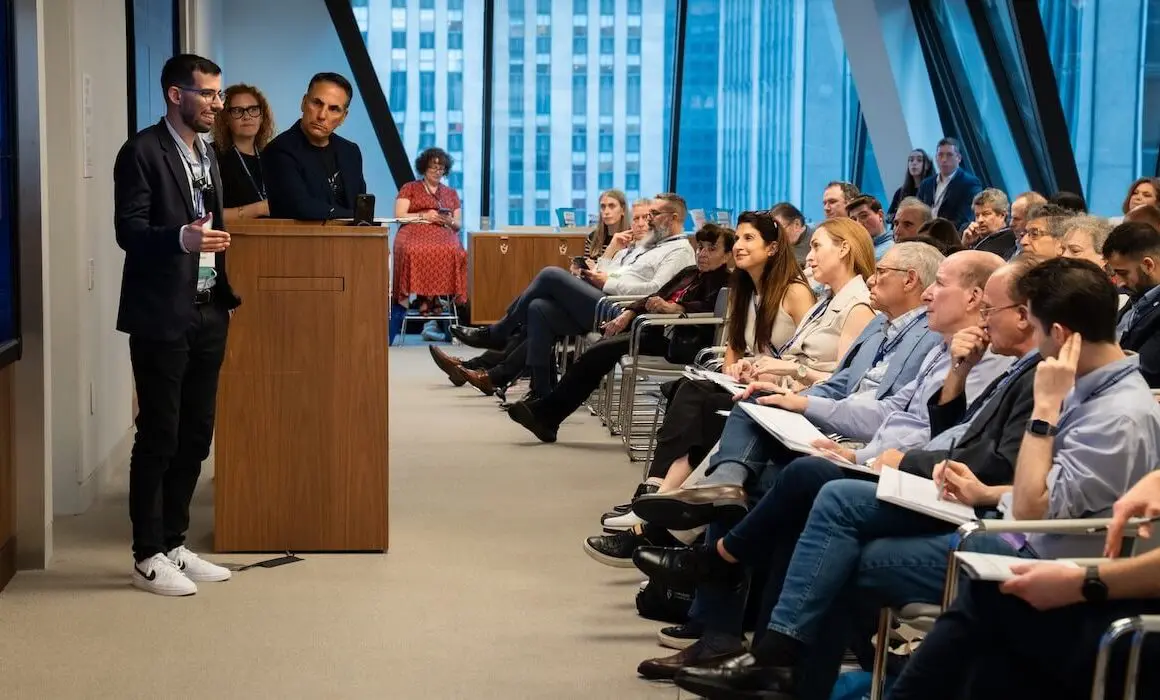
On June 18, 2025, Pitch Night brought together food, networking, and fierce innovation as Technion t:hub students took the stage to present the next generation of Israeli startups. From AI to sustainable solutions, each team unveiled their business plans, elevator pitches, and bold visions for the future.

An esteemed panel of investors and entrepreneurs challenged the students on everything from scalability to go-to-market strategy, culminating in the selection of a standout winner: Omer Sabary, whose pitch left the judges and audience inspired.

Whether you’re passionate about Israel, technology, or the future of global innovation, Pitch Night offered a front-row seat to what’s next from Startup Nation.

The crew of the cargo ship Eternity C could hardly believe their eyes – within minutes, their vessel was sunk in broad daylight in the Red Sea by an unmanned boat and RPG missiles, and they were taken captive by Houthi rebels. The next day, another container ship was attacked in the Red Sea – and it too was sunk. Just a few years ago, such a scenario would have sounded completely far-fetched. Yet these two alarming incidents occurred just this past month – and they are not the only ones. Worse still – they are only part of a growing wave of threats to the global supply chain, driving up the costs of production, transport, and logistics.

In recent years, the global supply chain has been severely shaken by a series of crises and events: the COVID-19 pandemic, the war in Ukraine, the Houthi attacks on the maritime route through which approximately 50% of global goods once passed, and the latest disruptive development – the U.S. administration’s new tariff policies.

Pickommerce CTO Amir Shapiro and Cybord Founder and CTO Eyal Weiss and CEO Oshri Cohen are both Technion alumni.

By all appearances, Decart is moving fast. The Tel Aviv-based AI startup has secured $100 million in new funding at a $3.1 billion valuation, just two years after it was founded. It now counts 60 employees and a growing global presence. At the center of its pitch: the belief that AI’s next frontier won’t be text or images, but real-time video.

While others rushed to build language models, Decart started with the hardware layer, developing a GPU optimization stack that it quietly licensed to major cloud providers in multi-million dollar deals. That foundation gave the company early revenue, and the technical leverage to go further.

Today, Decart’s flagship models Oasis and Mirage aim to do something few others have achieved: generate and manipulate video on the fly. Oasis, which the company says is the first real-time video generation model launched at scale, attracted a million users within days of release. Mirage, its newest tool, lets users modify live video streams with text prompts, tailored for use cases like streaming and gaming.

Decart CEO Dean Leitersdorf is a Technion alumnus.

Michael Belkin is a serial entrepreneur of a particularly rare breed. Like other serial entrepreneurs, he never stopped developing, researching, and inventing throughout his life, but he did so not out of a pursuit of money, but primarily out of the joy of creation, curiosity, and a desire to bring medicine to the world. It so happened that he made his first exit when he was already 68 years old. At an age when most of his peers were retiring, Belkin sold a company he founded for $180 million. Even then, he had no intention of retiring, but continued to research and invent. Last year, when he was 82, the second exit came: one of his greatest inventions, an automated device for treating glaucoma, was sold for $466 million to the eye care giant Alcon.

And there’s still no talk of rest. Every morning, as he has for 30 years, Belkin shows up at the same office at the Eye Research Institute at Sheba Medical Center, turns on the fluorescent light above him, and begins his workday in a space that looks like a small museum. The room is packed with compact binders, framed certificates, photos, posters of organs of vision, and medical models collected over decades. It perfectly suits his image as a professor of ophthalmology at Tel Aviv University who has authored more than 500 scientific articles and holds over 40 patents.

In a year marked by war, political upheaval, and global economic volatility, Israel’s tech sector continues to defy the odds — and the Technion is once again at the heart of its resilience. Three of the standout companies on Calcalist’s 2025 list of the 50 most promising Israeli startups — Decart, ForSight Robotics, and OX Security — all trace their roots to the Technion, where bold ideas and deep scientific training are shaping real-world solutions. These startups aren’t just succeeding; they’re changing the game across AI, healthcare, and cybersecurity.

Decart: Accelerating the Generative AI Revolution

Just 18 months after its founding, Decart has raised $53 million, earned a half-billion-dollar valuation, and captured the attention of top-tier venture firms like Sequoia Capital and Benchmark. At its core is a powerful systems-level AI infrastructure that enables a tenfold improvement in training and inference speed for large generative models, unlocking real-time AI applications previously limited to tech giants.

The company’s momentum is fueled by deep academic and technical foundations. Technion alumnus Dean Leitersdorf, Decart’s CEO and co-founder, launched the company with fellow co-founder Moshe Sason during a period of reserve duty — building their team and vision under extraordinary pressure. Their platform dramatically reduces the resource load of generative AI, allowing them to train and deploy their own foundational models. It’s a leap forward in making powerful AI not only faster and cheaper, but more accessible to companies and creators around the world.

ForSight Robotics: Precision Eye Surgery for a World in Need

More than 2 billion people worldwide suffer from vision impairment, but there aren’t nearly enough trained eye surgeons to meet the growing demand. ForSight Robotics aims to bridge that gap with a robotic microsurgery platform that delivers 10x the accuracy of a human hand. Their technology integrates robotics, machine learning, and computer imaging to perform delicate eye procedures with unprecedented precision, starting with cataract surgery.

The company was co-founded by Technion alumnus and company President and Chief Medical Officer Dr. Joseph Nathan. A practicing ophthalmologist and engineer, Dr. Nathan helped launch ForSight alongside Technion Professor Moshe Shoham, a pioneer in medical robotics and founder of Mazor Robotics. Together with CEO Dr. Daniel Glozman, they’ve built a platform with the potential to democratize surgical care, especially in regions with limited access to specialists. With the world’s aging population and rising chronic disease rates, ForSight’s mission is not just to enhance surgical performance, but to make sight-saving procedures globally scalable.

OX Security: Cutting Through the Noise in Cyber Defence

In today’s cybersecurity landscape, overwhelmed teams are bombarded with alerts — many of them low-risk. OX Security takes a radically different approach, focusing only on the small percentage of vulnerabilities that could truly cripple a business. That philosophy, born in the wake of the SolarWinds hack, has resonated strongly with customers and investors alike. Since emerging from stealth in 2022 with a $34 million Seed round — one of the largest in Israeli cybersecurity history — OX Security has quickly amassed hundreds of paying clients.

The company was founded by Technion alumnus Neatsun Ziv, former VP of Threat Prevention at Check Point, alongside CPO Lior Arzi. Both are Unit 8200 veterans and cybersecurity experts with decades of combined experience. Their mission is to cut through the noise, reduce alert fatigue, and help organizations defend themselves more effectively against the threats that truly matter. With most of its early competitors already acquired, OX Security is now a standout in a space that demands clarity, speed, and precision.

Together, Decart, ForSight Robotics, and OX Security reflect the Technion’s role as a launchpad for ideas that matter — and for startups built not just to survive disruption, but to lead through it.

Outstanding Achievements for the Israeli Chemistry Team Trained at the Technion

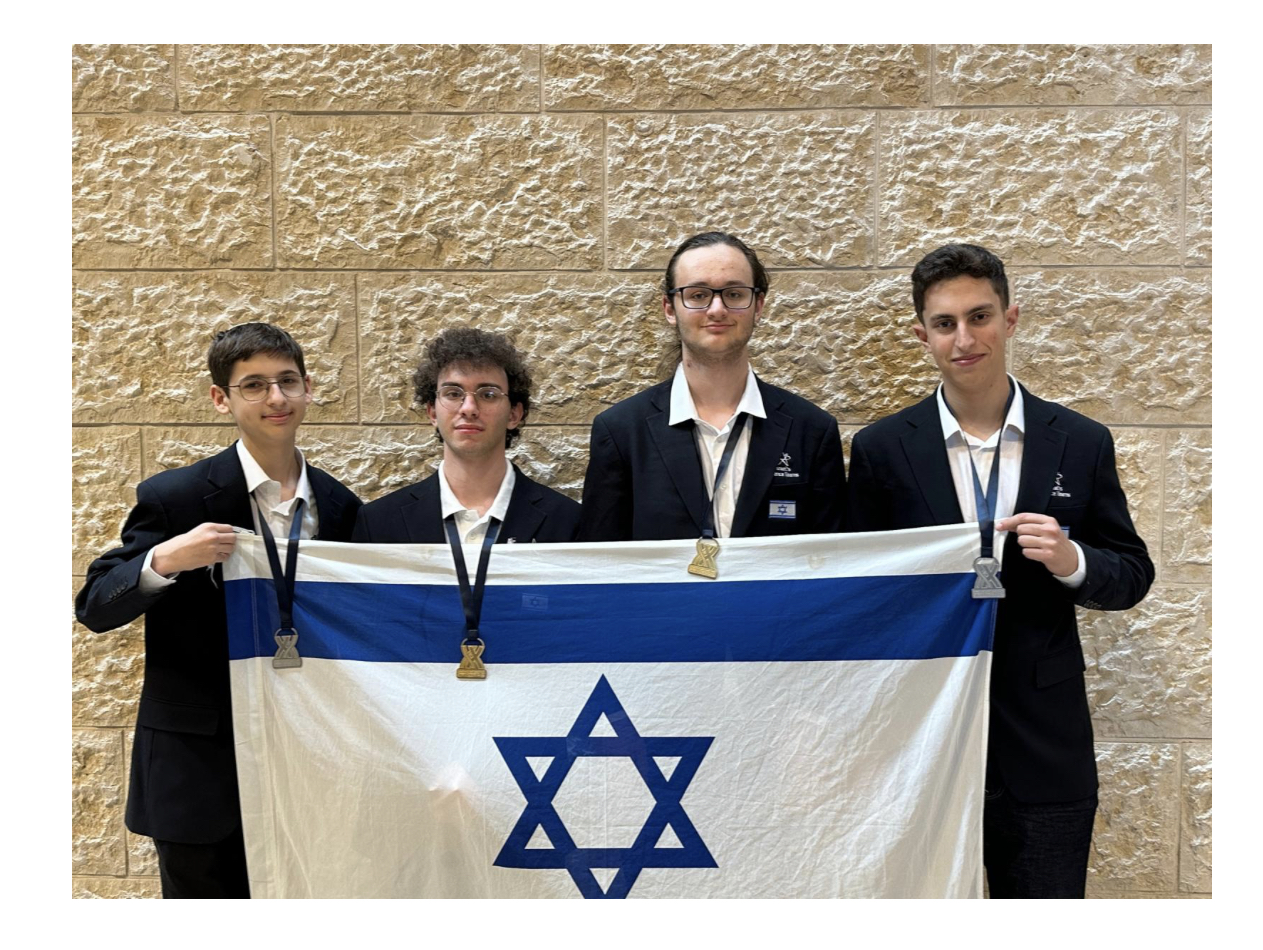
The Israeli National Chemistry Team has won four Olympic medals — two gold and two silver — at the International Chemistry Olympiad held in the United Arab Emirates, with participation from 90 countries.

At the International Chemistry Olympiad (IChO), held this year in the UAE, 354 competitors from 90 countries around the world took part. The Israeli Chemistry Team proudly representing Israel:

  • Itamar Ben Shmuel – from Ramat Gan, 11th-grade student at the Kfar HaYarok School – Gold Medalist
  • Jonathan Gontmakher– from Rishon LeZion, 12th-grade student at the Krieger Real Gymnasium – Gold Medalist
  • Omer Zachary Ben-Ami – from Tel Aviv, 12th-grade student at Ironi Dalet High School – Silver Medalist
  • Yehonadav Marienberg – from Mazkeret Batya, 10th-grade student at the Har Etzion Yeshiva High School for Youth, Alon Shvut – Silver Medalist

The Ministry of Education and the Maimonides Fund’s Future Scientists Center lead the preparation of Israel’s national science teams for participation in international olympiads. The Israeli Chemistry Team was trained at the Schulich Faculty of Chemistry at the Technion, led by Academic Director Prof. Zeev Gross and Head Coach Dr. Reut Shapira. Accompanying the delegation were Prof. Gross, Dr. Eyal Barnea, and Dr. Zack Patrick Sarcel.

Minister of Education, Yoav Kisch: “Behind every medal stands an Israeli student with a spark in their eyes, curiosity in their heart, and a willingness to work hard – children like Itamar, Jonathan, Omer, and Yehonadav, who dared to dream big and saw it through to the end. Each one of them represents a story of persistence, talent, and educational support that believes in the student every step of the way. The achievement at the Chemistry Olympiad is not just a peak – it’s the result of daily quiet effort, a deep partnership between the Ministry of Education, the Maimonides Fund’s Future Scientists Center, and the Technion, and teams who never stop seeing the child, even when immersed in science. This is how we build an education system that moves forward: not waiting for success, but growing it. With consistency, humility, and deep faith in our children’s abilities.”

Technion President, Prof. Uri Sivan, thanked the Technion team that trained the delegation and said: “At the Technion, we are proud to train the next generation of Israeli scientists. The students competing in the International Chemistry Olympiads undergo screening and preparation in a special program that has been running for years at the Schulich Faculty of Chemistry at the Technion, under the direction of Prof. Zeev Gross. Winning the international competition is a major achievement. Jonathan, Itamar, Omer, and Yehonadav – I congratulate you. You reached the competition after much effort and have proven your excellence. I hope to see you in the future as students at the Technion – fulfilling your potential and bringing us academic pride.”

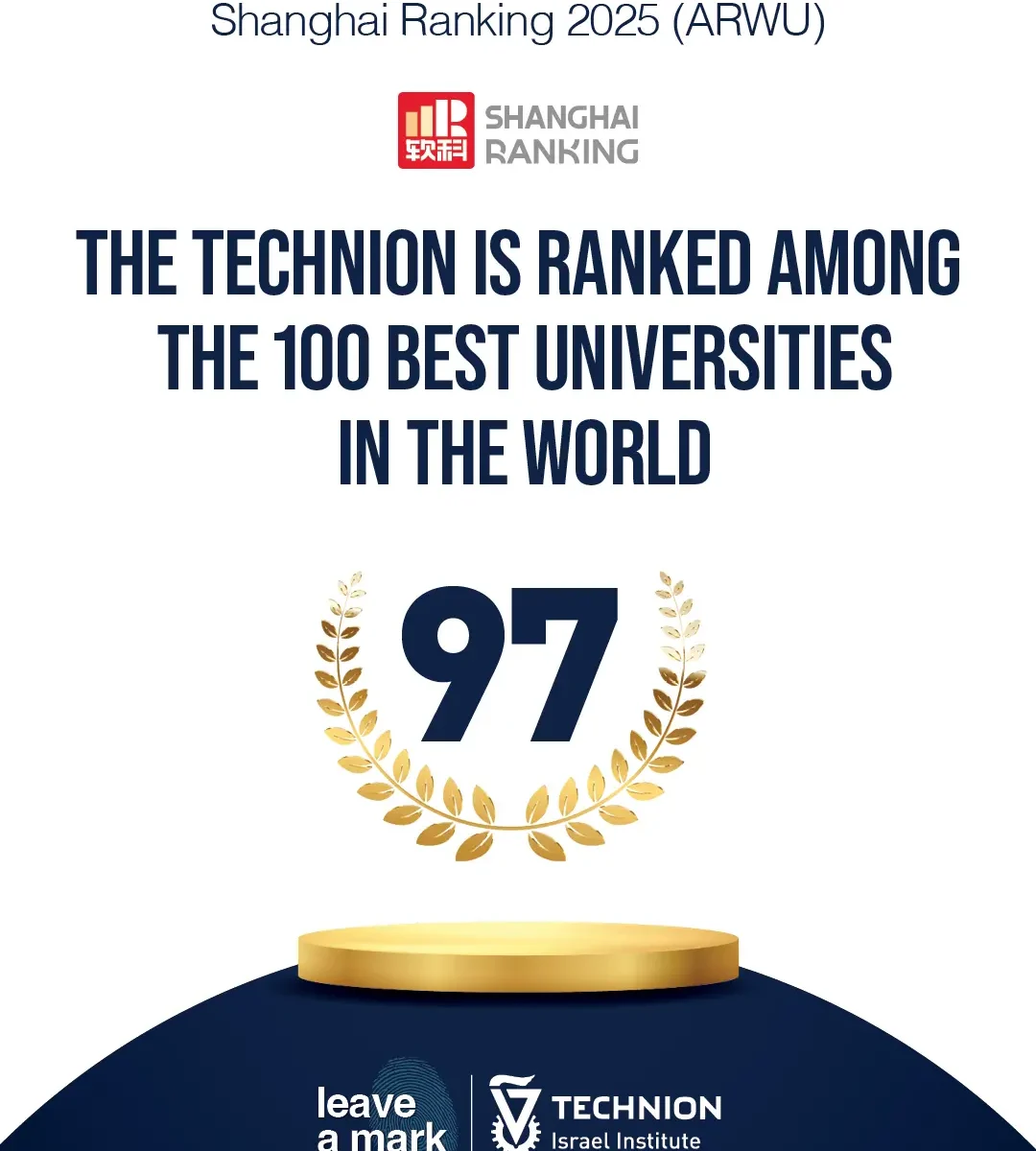
The Technion has once again proven its standing as a world-class institution, in the newly released Shanghai Ranking (ARWU). The index shows that the Technion was ranked 12th among technological universities in the world.

When academic achievements are adjusted for university size – comparing relative output to the number of faculty members – the Technion is ranked 28th worldwide out of all Universities.

The Technion also ranks highly in the prize-related categories of the index, which are based on Nobel Prize and Fields Medal wins – 25th in the world for faculty members and 55th for alumni.

The Shanghai Ranking is the world’s leading index for ranking higher education institutions, and since 2012 (except 2020), it has consistently placed the Technion in its Top 100 list, with rankings ranging between 69 and 97.

The Shanghai Ranking, published since 2003, evaluates the research level of universities worldwide according to various criteria, including the number of Nobel Prize and Fields Medal laureates among faculty and alumni, the number of scientific articles published in the leading journals Nature and Science, and other research performance indicators. The ranking covers more than 2,500 universities, with the publication listing the top 1,000. This year’s ranking is headed by Harvard University, followed by Stanford University and MIT.

Technion team discover proteins in human breast milk can help deliver sensitive medical compounds, such as vaccines and insulin, through digestive system into bloodstream

Technion Prof. Assaf Zinger is working to make medications and vaccines more accessible by allowing people to take them in liquid form rather than by injection. The concept is based on how breastmilk delivers sensitive compounds directly into the bloodstream via the digestive system, which his team aims to replicate. They plan to combine nanoparticles and breast milk proteins, which they believe could develop into “taxis” to transport drugs, vaccines, and other vital compounds into the bloodstream. Such a breakthrough could help prevent and treat conditions such as inflammation, diabetes, infections, cancer, and malnutrition, significantly improving patient care, particularly for those with chronic or acute illnesses. Their study was recently published in the Journal of Controlled Release.

Imagine a world where antibodies, proteins such as insulin, and even COVID-19 and flu vaccines could be consumed orally instead of injected. This vision is closer than ever. The fundamental idea is to make medications and vaccines more accessible by allowing people to take them in liquid form rather than by injection.

The inspiration for this research came from home—literally. Dr. Asaf Singer, a researcher at the Technion-Israel Institute of Technology, observed his wife, Noa, breastfeeding their two daughters. He wondered how breast milk could naturally deliver so many essential substances to infants. 

The deeper he delved into the topic, the more he realized that breast milk is far more than just nutrition—it is a sophisticated biological transport system capable of something that medicine has long struggled with: delivering sensitive compounds directly into the bloodstream via the digestive system. This is exactly what his research team aims to replicate.

Their study was recently published in the Journal of Controlled Release under the title: “Harnessing the Potential of Human Breast Milk to Enhance Intestinal Permeability for Nanoparticles and Macromolecules.” Conducted in collaboration with two Technion faculties, the research highlights the importance of interdisciplinary cooperation.

The Secret of Breast Milk

Breast milk is a remarkable fluid containing a wide range of essential components. To affect an infant’s health, these substances must pass from the digestive system into the bloodstream. This requires crossing biological barriers, including the intestinal barrier—a large membrane separating the inside of the gut from the circulatory system. The body typically distinguishes between beneficial and harmful substances, which is why some oral medications fail to reach their intended targets. However, breast milk contains special proteins that “convince” the body to let them pass.

Doctoral student Si Naftaly, who co-led the study with Singer, posed a crucial question: If substances in breast milk can cross this barrier, then the milk must contain “keys” that enable them to do so. What are these keys? To investigate, the researchers compared human breast milk, cow’s milk, and infant formula. Breast milk demonstrated the highest permeability through the intestinal barrier.

To conduct the research, a significant supply of breast milk was needed. Due to the October 7 attack and its aftermath, breast milk donations in Israel were directed toward orphans. As a result, the research team turned to mothers at the Technion to collect donations for the study.

How Does It Work?

The study uncovered a key mechanism: a natural protein coating from breast milk, termed Human Breast Milk Protein Corona, which facilitates the passage of nanoparticles (ultra-small particles) through the intestinal wall. This discovery was confirmed in both human intestinal cells and pig intestines, which closely resemble human digestive physiology.

Breast milk serves as the primary, and sometimes only, source of nutrition for infants. It is a complex and dynamic liquid that adapts to a baby’s needs, supplying enzymes, growth factors, hormones, antibodies, nucleic acids, extracellular vesicles, carbohydrates, lipids, vitamins, minerals, proteins, and cells. These components are crucial for the development of various bodily systems. Unlike infant formula, which is uniform in composition, breast milk varies based on numerous factors related to the mother. Awareness of its medical value has grown in recent years, and it is now recognised as a natural remedy for various diseases, particularly those affecting the intestines.

The study provides a solution for delivering nanoparticles and molecules from the digestive system to the bloodstream. Based on these findings, the next step is an engineering and applied research phase—developing nanoparticles that mimic this mechanism, ensuring their successful passage through the intestinal barrier. These nanoparticles could carry various medical payloads, including RNA vaccines, proteins, and contrast agents for imaging. Their protective properties help shield medical compounds from the harsh conditions of the digestive system, making them a promising drug delivery method.

What Does This Mean for the Future of Vaccines?

By combining two natural elements—nanoparticles and breast milk proteins—the researchers believe they can develop tiny “taxis” to transport drugs, vaccines, and other vital compounds into the bloodstream. This concept could revolutionize medicine by replacing injections with orally administered treatments. Such a breakthrough could help prevent and treat conditions such as inflammation, diabetes, infections, cancer, and malnutrition, significantly improving patient care, particularly for those with chronic or acute illnesses.

The study was led by Dr. Asaf Singer and doctoral student Si Naftaly, along with Prof. Maya Davidovich-Pinhas from the Faculty of Biotechnology and Food Engineering at the Technion, and four additional students from the Faculty of Chemical Engineering and the Faculty of Biotechnology and Food Engineering. 

It was supported by the Israel Science Foundation, the Israel Cancer Research Fund, the Stuart & Linda Resnick Sustainability and Catalysis Institute at the Technion, the Russell Berrie Nanotechnology Institute, the Bruce & Ruth Rappaport Cancer Research Institute, the Alon Fellowship, the Noam Seiden Fellowship in Nanotechnology and Optoelectronics, and the European Research Council’s “Milkosomes” grant.